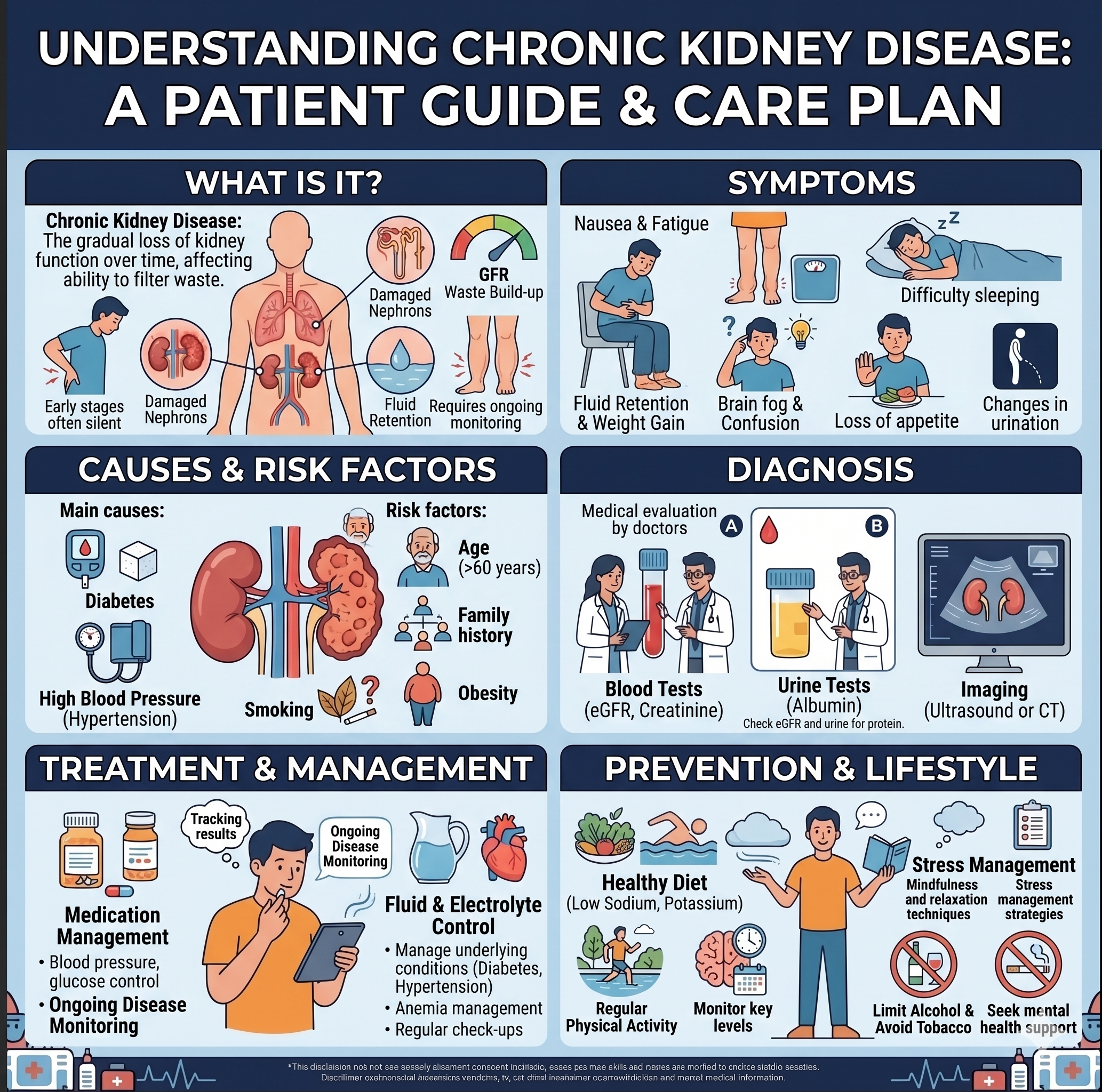
Chronic Kidney Disease (CKD) occurs when your kidneys are damaged and can't filter blood properly for more than a few months. Kidneys play vital roles: they clean waste and excess fluid from your blood, which leaves as urine; they regulate blood pressure; balance salt and minerals; and help produce red blood cells and keep bones strong. In early stages, CKD often has no noticeable symptoms, meaning you might not know you have it until it's more advanced. If untreated, CKD can worsen, potentially leading to kidney failure, requiring dialysis or a transplant to survive.
Understanding the Condition
Chronic Kidney Disease: A Guide
Understanding the Condition
Chronic Kidney Disease (CKD) occurs when your kidneys are damaged and can't filter blood properly for more than a few months. Kidneys play vital roles: they clean waste and excess fluid from your blood, which leaves as urine; they regulate blood pressure; balance salt and minerals; and help produce red blood cells and keep bones strong. In early stages, CKD often has no noticeable symptoms, meaning you might not know you have it until it's more advanced. If untreated, CKD can worsen, potentially leading to kidney failure, requiring dialysis or a transplant to survive.
Common Symptoms
Loss of Appetite: Reduced desire to eat.
Fatigue and Weakness: Persistent tiredness and lack of energy.
Sleep Problems: Difficulty falling or staying asleep.
Decreased Mental Sharpness: Trouble concentrating or changes in thinking.
High Blood Pressure: Blood pressure that is difficult to manage.
Shortness of Breath: May occur if fluid builds up in the lungs.
Consultation Guide
Which Specialist to Meet
Before your visit, gather medical history, a list of all medications/supplements, and note symptoms. Prepare questions for your team.
Book a doctor visit near me
Consultation Guide
Manage Medical Conditions: Work with your healthcare team to effectively control conditions like high blood pressure and diabetes, which are major causes of CKD.
Regular Check-ups: Undergo routine blood and urine tests, especially if you have risk factors, to detect kidney damage early.
Diagnostic Procedures
Blood Urea Nitrogen (BUN) Test
Measures urea nitrogen, a waste product from protein breakdown. High levels indicate kidneys may not be working properly.
What to Expect
A blood sample is drawn, usually from your arm. No special preparation is typically needed.
Measures creatinine, a waste product from muscle activity. High blood levels can signal kidney damage.
What to Expect
A blood sample is taken. You might fast overnight or avoid meat and creatine supplements before the test.
Estimated Glomerular Filtration Rate (eGFR)
Calculates how well kidneys filter waste using blood creatinine, age, sex, and other factors, estimating kidney function percentage.
What to Expect
This is a calculation based on your blood test results, not a separate procedure.
Examines urine for appearance, concentration, and content (e.g., protein, blood). Abnormal findings can indicate infection or kidney disease.
What to Expect
You'll provide a urine sample. For some tests, you might collect urine over 24 hours.
Ultrasound (Sonography)
Uses sound waves to create pictures of your kidneys, showing their size, shape, and any blockages.
What to Expect
A gel is applied to skin, and a device (transducer) moved over the abdomen. It's painless. You may need to fast or have a full bladder.
Uses X-rays to create detailed cross-sectional images of kidneys and surrounding structures, identifying issues like tumors or stones.
What to Expect
You'll lie on a table inside a scanner. You may receive contrast dye and be asked to hold your breath briefly.
Kidney Biopsy (Renal Biopsy)
Takes a tiny tissue sample from your kidney to examine under a microscope for damage or disease.
What to Expect
Local anesthetic numbs the area. A thin needle is inserted through skin into the kidney, guided by ultrasound. You must lie still; pressure may be felt.
MRI (Magnetic Resonance Imaging)
Uses magnets and radio waves for detailed kidney images, assessing damage or blockages.
What to Expect
You'll lie on a table inside a noisy machine. If contrast is needed, newer gadolinium agents are generally safe, but inform your doctor about kidney issues.
Treatment Options
Blood Pressure Control: Managing blood pressure with diet, exercise, and medication to protect kidneys. (Duration: Ongoing)
Blood Sugar Management: Careful control of blood sugar for individuals with diabetes. (Duration: Ongoing)
Medications
Blood Pressure Lowering Drugs: Prescribed medicines to reduce blood pressure and protect kidney function. (Duration: Ongoing)
Diabetes Medications: Drugs to manage blood sugar levels and prevent further kidney damage. (Duration: Ongoing)
Anemia Treatment: Supplements or injections to correct low red blood cell count. (Duration: As needed, ongoing)
Bone Health Supplements: Medicines to maintain strong bones and proper mineral balance. (Duration: Ongoing)
Cholesterol Management: Medications to lower cholesterol, reducing heart disease risk. (Duration: Ongoing)
Kidney Replacement Therapies
Hemodialysis: A machine filters waste, salts, and fluids from the blood, typically performed several times a week in sessions lasting a few hours. (Duration: Ongoing, typically 3-5 hours, 3 times weekly)
Peritoneal Dialysis: A cleansing fluid is introduced into the abdomen to absorb wastes, then drained. Can be done daily at home or overnight. (Duration: Ongoing, daily or overnight sessions)
Kidney Transplant: Surgical placement of a healthy donor kidney. Requires lifelong anti-rejection medications to prevent rejection. (Duration: Lifelong anti-rejection medication; graft survival varies, typically 10-20+ years.)
Clinical Trials: Participating in research studies for potential new treatments, requiring careful consideration of risks and benefits. (Duration: Varies by trial, typically months to years)
Mindful Medication Use: Follow instructions for over-the-counter pain relievers and other medications, as prolonged or excessive use can damage kidneys.
Adhere to Treatment Plan: Consistently take prescribed medications and follow dietary and lifestyle recommendations.
Monitor Blood Pressure at Home: Regularly check and record your blood pressure to help your care team adjust treatment if needed.
Partner with Your Healthcare Team: Maintain open communication with your doctors, reporting any side effects or changes in your condition promptly.
Understand Your Condition: Educate yourself about CKD and its progression to make informed decisions about your health.
Prevention & Long-Term Wellbeing
Consult your primary care physician, who may refer you to a kidney specialist (nephrologist). A registered dietitian can also guide dietary changes.
Preparations Before Your Visit
Lifestyle and Dietary Management
Dietary Modifications: Adjusting diet to limit sodium, phosphorus, potassium, and regulate protein/fluid intake. (Duration: Ongoing)
Weight Management: Achieving and maintaining a healthy weight. (Duration: Ongoing)
Prevention
Maintain Healthy Weight: Engage in regular physical activity and a balanced diet to achieve and maintain a healthy body weight.
Avoid Smoking: Smoking significantly harms kidneys and can worsen existing damage. Seek support to quit if you smoke.
Tags & Topics
Notice an error or need an update?
Help us keep medical information accurate. Report incorrect info or suggest an edit.


