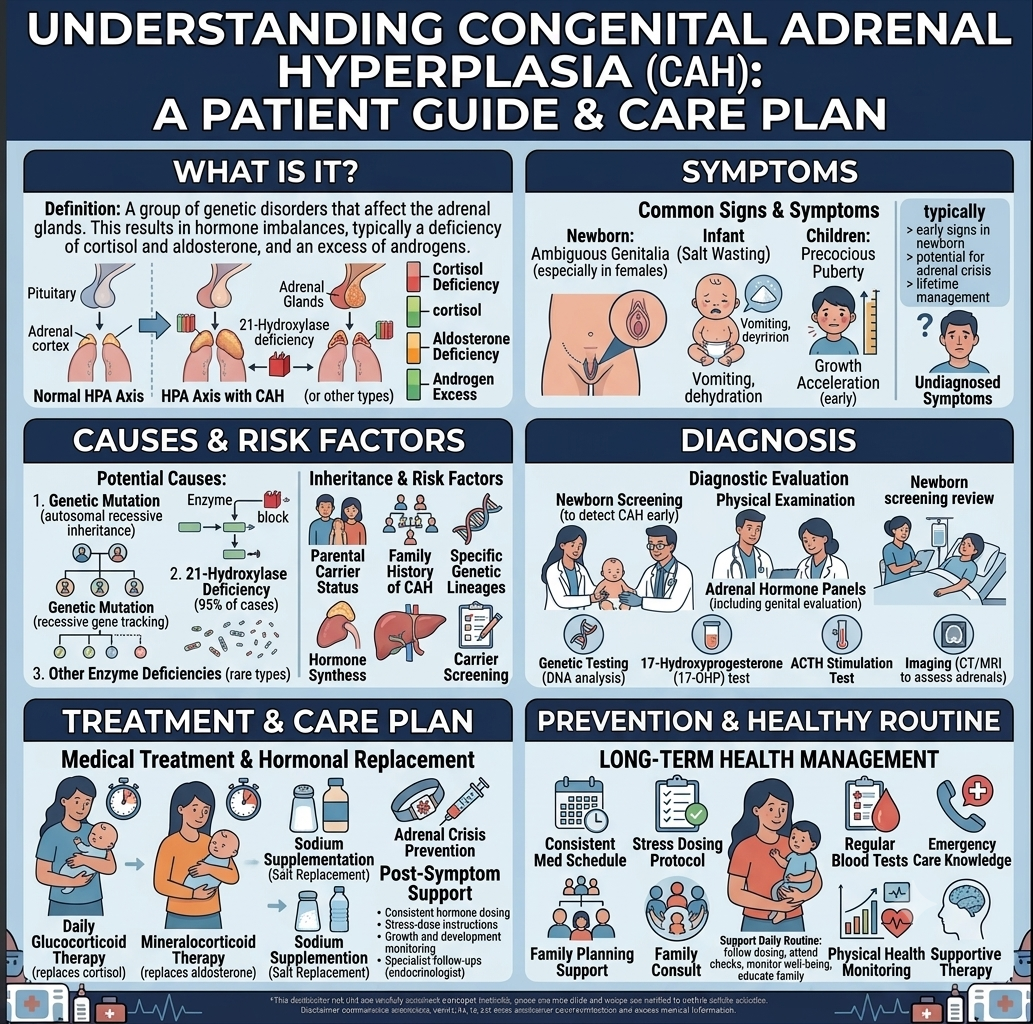
Congenital Adrenal Hyperplasia (CAH) is a group of inherited conditions that affect the adrenal glands, which are small organs located above the kidneys. These glands are crucial for producing important hormones: cortisol (manages stress and illness), mineralocorticoids like aldosterone (regulate salt and potassium), and androgens like testosterone (sex hormones vital for growth). In CAH, a genetic change causes a shortage of an enzyme needed to make these hormones, leading to an imbalance. There are two main types: Classic CAH, which is more severe and detected early, and Nonclassic CAH, which is milder and may not show symptoms until later in life. While there's no cure, proper management allows most individuals with CAH to lead full and healthy lives.
Understanding the Condition
Congenital Adrenal Hyperplasia (CAH): Understanding a Genetic Hormone Disorder
Understanding the Condition
Congenital Adrenal Hyperplasia (CAH) is a group of inherited conditions that affect the adrenal glands, which are small organs located above the kidneys. These glands are crucial for producing important hormones: cortisol (manages stress and illness), mineralocorticoids like aldosterone (regulate salt and potassium), and androgens like testosterone (sex hormones vital for growth). In CAH, a genetic change causes a shortage of an enzyme needed to make these hormones, leading to an imbalance. There are two main types: Classic CAH, which is more severe and detected early, and Nonclassic CAH, which is milder and may not show symptoms until later in life. While there's no cure, proper management allows most individuals with CAH to lead full and healthy lives.
Common Symptoms
Hormone Imbalance: CAH disrupts the body's hormone balance, often leading to too little cortisol, too little aldosterone, or too much androgen (male sex hormone), or a combination of these issues. Symptoms vary depending on the specific gene affected and the severity of the enzyme deficiency.
Classic CAH Symptoms: Severe Cortisol Deficiency: A lack of cortisol can impair the body's ability to maintain healthy blood pressure, blood sugar, and energy levels, especially during physical stress or illness. This can trigger an 'adrenal crisis,' a life-threatening emergency where very low cortisol and/or aldosterone can cause severe dehydration, dangerously low blood sugar, low sodium, and high potassium.
Classic CAH Symptoms: Genital Differences at Birth: Female infants with Classic CAH may have external genitals that appear different from typical female anatomy. For example, the clitoris might be enlarged, resembling a small penis, and the labia may be partially fused, appearing like a scrotum. The urethra (tube for urine) and vagina may share a single opening. Internally, the uterus, fallopian tubes, and ovaries usually develop typically. Male infants with Classic CAH typically have normal-looking genitals, though sometimes they may be larger than usual.
Classic CAH Symptoms: Excess Androgens: Too much of the male sex hormone (androgen) can lead to early signs of puberty in children, such as the appearance of pubic hair at a very young age, rapid growth, and advanced bone development for their age, often resulting in shorter adult height. Severe acne can also occur. In females, excess androgens can cause facial hair growth, increased body hair, and a deeper voice.
Classic CAH Symptoms: Fertility Issues: Women with Classic CAH may experience irregular or absent menstrual periods and can have difficulty becoming pregnant. Fertility challenges can also sometimes affect men with the condition.
Nonclassic CAH Symptoms: Babies with Nonclassic CAH often show no symptoms at birth, and the condition is not usually picked up by routine newborn screenings. Some individuals may never develop symptoms. If symptoms do occur, they typically emerge in late childhood or early adulthood and are generally milder. Females with Nonclassic CAH usually have typical genitals at birth but may later experience irregular periods, facial hair, or acne due to higher androgen levels.
Consultation Guide
Which Specialist to Meet
Before your visit, gather any available medical records, including family history of genetic conditions. Make a list of all symptoms you've noticed, when they started, and how often they occur. Write down any questions you have for the doctor. Be prepared to discuss your personal and family medical history in detail.
Book a doctor visit near me
Hormone Replacement Therapy (Glucocorticoids): This involves taking medication to replace the cortisol your adrenal glands cannot produce. This helps restore hormone balance, prevent symptoms of cortisol deficiency, and suppress the overproduction of other hormones like androgens. (Duration: Lifelong, typically taken daily.)
Adherence to Medication Regimen: Taking prescribed hormone replacement medications consistently and exactly as directed is vital for preventing symptoms and avoiding life-threatening adrenal crises.
Emergency Preparedness: Individuals with Classic CAH should carry emergency information and potentially an injectable form of stress-dose medication (hydrocortisone) for immediate use during severe illness or injury, to prevent or manage an adrenal crisis. Families should be educated on recognizing and responding to crisis symptoms.
Education and Awareness: Understanding CAH, its symptoms, and management is empowering. Educate family, friends, and school/work colleagues about your condition, especially regarding emergency situations.
Consultation Guide
A healthcare professional will collect a small blood sample, usually from your baby's heel, shortly after birth. This quick procedure causes minimal discomfort.
Genetic testing examines your DNA to identify specific changes (mutations) in genes known to cause CAH. This can confirm a diagnosis, identify carriers, or assess prenatal risk.
Diagnostic Procedures
For suspected CAH, you should consult an endocrinologist (a hormone specialist) who can diagnose and manage the condition. A genetic counselor can provide information on inheritance patterns and risks for family planning. Pediatricians manage the overall health of children, and an OB/GYN may be involved for women's reproductive health and fertility concerns.
Preparations Before Your Visit
Many regions include CAH in their routine newborn blood screening tests. This test helps identify Classic CAH early by measuring levels of certain hormones that indicate an enzyme deficiency.
What to Expect
What to Expect
This typically involves a simple blood draw or a cheek swab. For prenatal testing, a sample may be obtained via amniocentesis or chorionic villus sampling. Results can take several weeks.
Blood tests measure the levels of various hormones and related substances produced by the adrenal glands. This helps determine if there's a hormone imbalance characteristic of CAH.
What to Expect
A nurse or technician will draw a blood sample, usually from a vein in your arm. You may be asked to fast before some hormone tests. The procedure is quick and generally well-tolerated.
Amniocentesis (Prenatal Testing)
Amniocentesis is a prenatal test performed during pregnancy to collect a sample of the amniotic fluid surrounding the baby. This fluid contains fetal cells that can be tested for genetic conditions like CAH.
What to Expect
You will lie on an examination table. An ultrasound will be used to guide a thin needle through your abdomen and into the uterus to withdraw a small amount of amniotic fluid. You might feel some pressure or mild cramping. The procedure typically takes about 10-15 minutes.
Diagnostic ultrasound uses sound waves to create images of internal body structures, such as the adrenal glands, uterus, and ovaries. In some cases, it can help visualize the adrenal glands or assess reproductive organ development.
What to Expect
A gel will be applied to your skin over the area to be examined. A small handheld device called a transducer will be moved over the gelled area. You will feel pressure, but it is generally a painless procedure. For some internal ultrasounds, a small device may be placed internally.
A urinalysis is a test of your urine to detect and manage a wide range of disorders. In the context of CAH, it might be used to check for electrolyte imbalances or levels of certain hormone byproducts.
What to Expect
You will be asked to provide a urine sample, typically a 'midstream clean catch' to ensure a sterile sample. The sample is then analyzed in a lab.
Genetic Counseling for Family Planning: If you or your partner are carriers of the CAH gene or have a family history of the condition, genetic counseling can help you understand the risks of passing it on to your children and discuss options like prenatal testing.
Regular Medical Check-ups: Ongoing follow-up with an endocrinologist and other specialists is crucial to monitor hormone levels, adjust medication dosages, and manage any complications that may arise. This includes regular blood tests to ensure proper hormone balance.
Treatment Options
Medications
Mineralocorticoid Replacement (Aldosterone Supplement): For individuals with a deficiency in aldosterone, this medication helps regulate the body's salt and potassium levels, preventing dehydration and electrolyte imbalances, especially crucial for preventing adrenal crises in infants. (Duration: Lifelong, typically taken daily.)
Emergency Stress Dosing: During periods of illness, injury, or surgery, the body needs more cortisol. Patients on hormone replacement therapy will need to temporarily increase their medication dose (stress dosing) to prevent an adrenal crisis. (Duration: As needed during times of stress, illness, or surgery.)
Surgical Procedures
Genital Reconstructive Surgery: For female infants born with significant differences in external genital appearance due to CAH, surgery may be an option to reshape the genitals to a more typical female appearance. This decision is often made in consultation with a multidisciplinary team and family. (Duration: Single procedure, often performed in infancy or early childhood, with potential for follow-up procedures later.)
Therapies
Psychological Support and Counseling: Dealing with a chronic condition like CAH, especially one that can affect physical appearance or fertility, can be challenging. Counseling can help individuals and families cope with the emotional and psychological aspects of the condition. (Duration: As needed, ongoing.)
Managing Stress and Illness: Learning to recognize early signs of illness or increased physical stress and adjusting medication as instructed by your doctor (stress dosing) is crucial to prevent adrenal crises. Communicate with your healthcare team about any changes in health.
Prevention & Long-Term Wellbeing
Prevention
Lifestyle Adjustments
Tags & Topics
Notice an error or need an update?
Help us keep medical information accurate. Report incorrect info or suggest an edit.


