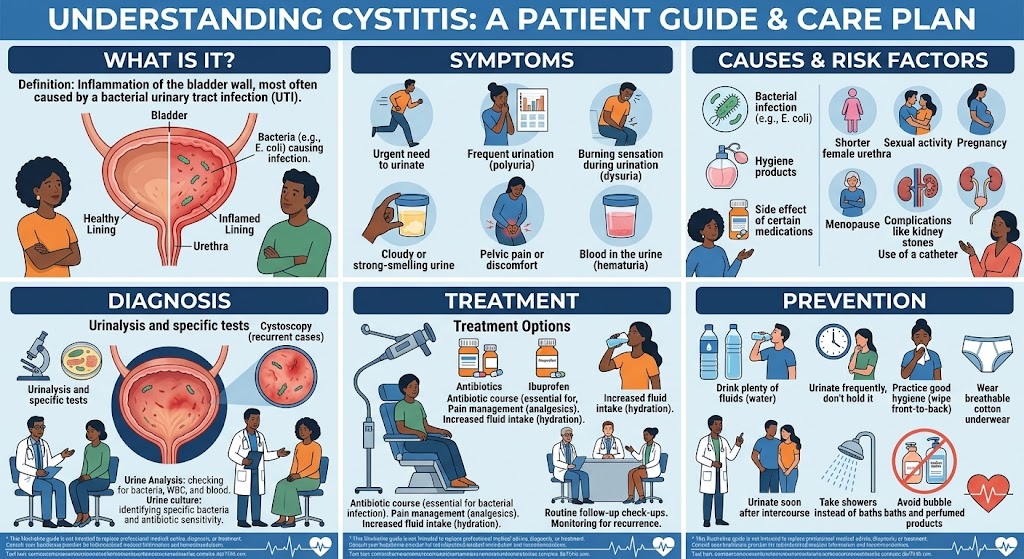
Cystitis (sis-TIE-tis) is bladder inflammation, meaning the bladder is swollen, warm, painful. Most commonly, it's caused by a bacterial infection, known as a urinary tract infection (UTI). While a bladder infection is uncomfortable, it can become serious if it spreads to the kidneys. Cystitis can also result from reactions to certain medications, radiation therapy, irritants (like hygiene products or long-term catheter use), or as a complication of other illnesses. Bacterial cystitis is usually treated with antibiotics; other types are treated based on their cause.
Understanding the Condition
Understanding Cystitis: Bladder Inflammation and Infections
Understanding the Condition
Common Symptoms
Strong, persistent urge to urinate: Constant, urgent need to urinate.
Pain or burning during urination: Discomfort or stinging when you pee.
Frequent, small amounts of urine: Needing to urinate often, but only passing a little each time.
Blood in the urine (hematuria): Urine may appear pink, red, or cola-colored. Sometimes, blood is only visible under a microscope.
Cloudy or strong-smelling urine: Urine that isn't clear or has an unusual odor.
Pelvic discomfort: Pain or uneasiness in your lower abdomen.
Pressure below the belly button: A feeling of fullness or pressure in the lower stomach area.
Low-grade fever: A slight temperature increase.
New daytime wetting in children: For young children, new accidental wetting during the day can indicate a bladder infection.
Consultation Guide
Which Specialist to Meet
List your symptoms (when they started, frequency), any home remedies, current medications, and medical history.
Book a doctor visit near me
A procedure to visually examine the lining of your bladder and urethra using a thin, flexible tube with a camera and light (cystoscope). It helps diagnose causes of symptoms like blood in urine or recurrent infections.
Pain Relievers: Over-the-counter medications to ease discomfort and pain. (Duration: As needed for symptom relief.)
Consultation Guide
Cystitis (sis-TIE-tis) is bladder inflammation, meaning the bladder is swollen, warm, painful. Most commonly, it's caused by a bacterial infection, known as a urinary tract infection (UTI). While a bladder infection is uncomfortable, it can become serious if it spreads to the kidneys. Cystitis can also result from reactions to certain medications, radiation therapy, irritants (like hygiene products or long-term catheter use), or as a complication of other illnesses. Bacterial cystitis is usually treated with antibiotics; other types are treated based on their cause.
Start with your primary care doctor. Depending on the cause or complexity, they may refer you to a urologist (urinary tract specialist), gynecologist (women's health), or nephrologist (kidney specialist).
Preparations Before Your Visit
Address Risk Factors: Work with your doctor to identify and manage any underlying factors contributing to infections, such as anatomical issues or other medical conditions.
Maintain Overall Health: Good general health, including managing conditions like diabetes, supports bladder wellbeing.
Diagnostic Procedures
A urine test to check its appearance, concentration, and content for signs of infection (e.g., bacteria, white blood cells) or other disorders.
What to Expect
You'll provide a "clean catch" urine sample by cleaning your genital area, urinating a small amount into the toilet, then collecting the midstream urine in a sterile cup. This ensures an uncontaminated sample for lab analysis.
Uses sound waves to create live images of internal organs like the bladder and kidneys, helping detect issues like stones or structural problems without radiation.
What to Expect
You'll lie down while a gel is applied to your skin. A handheld device (transducer) is moved over the area, sending sound waves to generate images on a screen. You may need a full bladder for clearer views. It's generally painless.
What to Expect
A numbing gel is applied to your urethra, and sometimes a sedative is given. The cystoscope is gently inserted. Fluid may be used to fill your bladder. You might feel pressure or an urge to urinate. The procedure typically lasts 5-20 minutes.
A quick imaging test using a small amount of radiation to create pictures of dense structures (e.g., bones, kidney stones) inside the body.
What to Expect
You'll lie on a table or stand still while a technician positions the X-ray machine. You might need to hold your breath briefly. Sometimes, a contrast liquid is given to highlight specific organs or vessels. The process takes a few minutes.
Treatment Options
Medications
Antibiotics: For bacterial infections, prescribed to kill bacteria. (Duration: Usually 3-7 days, longer for severe cases.)
Bladder-Specific Medications: For chronic bladder inflammation (e.g., interstitial cystitis), oral drugs or direct bladder instillations may reduce pain and frequency. (Duration: Ongoing, as prescribed.)
Bladder Instillation: Medicine delivered directly into the bladder via a catheter for certain types of cystitis. (Duration: Weekly for several weeks, then maintenance.)
Nerve Stimulation: For chronic pelvic pain, mild electrical pulses can relieve pain and reduce urinary urgency. (Duration: Ongoing therapy, adjusted as needed.)
Addressing Underlying Issues: If cystitis stems from another condition (e.g., kidney stones, enlarged prostate), treating that primary condition is essential. (Duration: Varies based on the specific underlying condition.)
Home Remedies & Supportive Care
Hydration: Drink plenty of water to help flush bacteria. (Duration: Ongoing, especially during an infection.)
Heat Application: A warm compress on the lower abdomen can soothe discomfort. (Duration: As needed.)
Avoid Irritants: Steer clear of scented hygiene products or spermicides that can irritate the bladder. (Duration: Long-term avoidance.)
Regular Check-ups: If you have recurrent infections or chronic cystitis, follow up with your doctor for ongoing monitoring and treatment adjustments.
Prevention & Long-Term Wellbeing
Prevention
Drink Water: Stay well-hydrated to help flush bacteria from your urinary tract.
Urinate Regularly: Don't hold your urine; empty your bladder completely when you feel the urge.
Wipe Front to Back: For women, always wipe from front to back after bowel movements to prevent bacteria spread.
Shower: If prone to infections, choose showers over tub baths.
Gentle Hygiene: Wash genital skin daily with plain water or mild soap; avoid harsh products.
Urinate After Sex: Empty your bladder soon after sexual activity and drink water to flush bacteria.
Avoid Irritating Products: Do not use deodorant sprays, scented hygiene products, or spermicides in the genital area.
Cranberry Products: Some evidence suggests cranberry products may help prevent recurrent infections for some, but results are inconsistent. Discuss with your doctor.
Long-Term Management
Tags & Topics
Notice an error or need an update?
Help us keep medical information accurate. Report incorrect info or suggest an edit.


