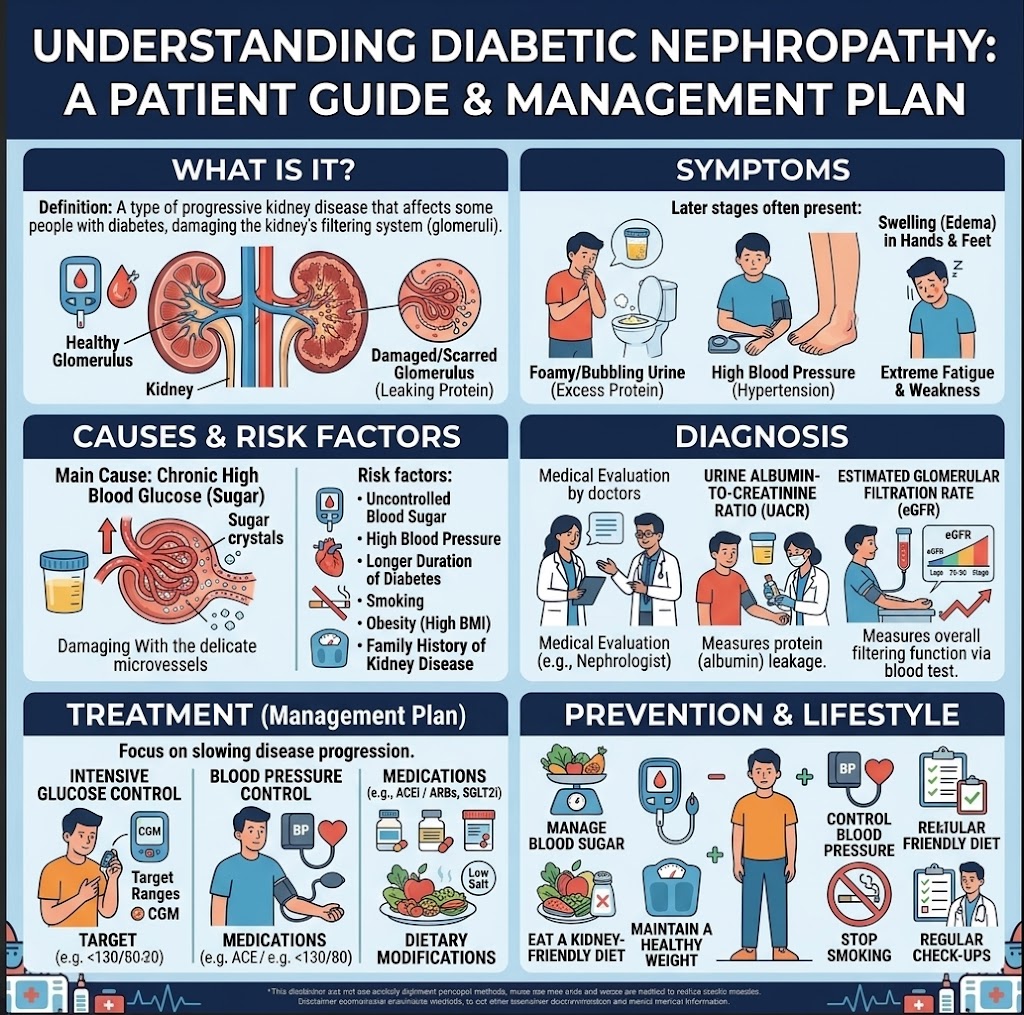
Diabetic kidney disease, also known as diabetic nephropathy, is a serious complication for individuals with type 1 or type 2 diabetes. It develops when persistently high blood sugar damages the tiny blood vessels within the kidneys, impairing their vital role in filtering waste and excess fluid from the body. Approximately one in three people with diabetes in the United States develops this condition. If left unmanaged, it can gradually lead to kidney failure (end-stage kidney disease), a life-threatening condition requiring dialysis or a kidney transplant. Early detection and diligent management of diabetes and blood pressure are essential to prevent or slow its progression.
Understanding the Condition
Diabetic Kidney Disease: Understanding, Symptoms, and Management
Understanding the Condition
Diabetic kidney disease, also known as diabetic nephropathy, is a serious complication for individuals with type 1 or type 2 diabetes. It develops when persistently high blood sugar damages the tiny blood vessels within the kidneys, impairing their vital role in filtering waste and excess fluid from the body. Approximately one in three people with diabetes in the United States develops this condition. If left unmanaged, it can gradually lead to kidney failure (end-stage kidney disease), a life-threatening condition requiring dialysis or a kidney transplant. Early detection and diligent management of diabetes and blood pressure are essential to prevent or slow its progression.
Common Symptoms
High Blood Pressure: Blood pressure increasingly difficult to control.
Swelling: Puffiness in feet, ankles, hands, or around the eyes from fluid buildup.
Foamy Urine: Urine appears unusually foamy due to excess protein.
Confusion: Difficulty thinking clearly or confusion.
Shortness of Breath: Feeling winded, often from fluid in the lungs.
Loss of Appetite: Reduced desire to eat.
Nausea and Vomiting: Feeling sick to your stomach and throwing up.
Tiredness and Weakness: Persistent fatigue and general weakness.
Consultation Guide
Which Specialist to Meet
Start with your primary care doctor. They may refer you to an endocrinologist (diabetes specialist) or a nephrologist (kidney specialist).
Preparations Before Your Visit
Before your visit, list all medications (including supplements), any symptoms, your family's history of diabetes or kidney disease, and your questions for the doctor.
Book a doctor visit near me
This test detects small amounts of a protein called albumin in your urine, which can be an early sign of kidney damage, often before symptoms appear.
Consultation Guide
A procedure to remove a small piece of kidney tissue for microscopic examination, helping to determine the exact cause and extent of kidney damage.
Diagnostic Procedures
Glomerular Filtration Rate (GFR) and Creatinine Blood Test
These blood tests measure creatinine, a waste product in your blood, to estimate how well your kidneys are filtering waste.
What to Expect
A healthcare professional will draw a small amount of blood from a vein in your arm. This is a quick procedure, typically involving only a brief pinch.
Blood Urea Nitrogen (BUN) Test
Measures another waste product in your blood, providing more insight into kidney function.
What to Expect
Similar to other blood tests, a sample will be drawn from your arm.
Hemoglobin A1c (HbA1c) Test
While not a direct kidney test, this measures your average blood sugar levels over the past 2-3 months, vital for diabetes management.
What to Expect
A blood sample will be taken from your arm.
Checks levels of cholesterol and other fats in your blood, as high levels can increase kidney disease risk.
What to Expect
A blood sample will be drawn. You might be asked to fast (not eat or drink anything but water) for several hours before the test.
Urine Albumin-to-Creatinine Ratio (UACR) Test
What to Expect
You will be asked to provide a urine sample in a sterile cup. Sometimes a 24-hour collection is required, where you collect all your urine over a full day.
Uses sound waves to create images of your kidneys, showing their size, shape, and checking for any blockages or abnormalities.
What to Expect
You will lie on an examination table. A clear gel will be applied to your abdomen, and a handheld device (transducer) will be moved over your skin. It is painless and typically takes 15-30 minutes.
Kidney Biopsy (if necessary)
What to Expect
Performed in a hospital, you'll receive a local anesthetic to numb the area, and sometimes a mild sedative. A thin needle will be guided through your skin into your kidney to collect a tissue sample. You will need to rest and be monitored for several hours afterward.
Ongoing Lab Tests: Undergo regular blood and urine tests to track kidney function, blood sugar, blood pressure, and cholesterol.
Home Monitoring: Consistently monitor blood sugar and blood pressure at home as instructed by your healthcare team.
Treatment Options
Medications
Blood Pressure Medications: Specific types (e.g., ACE inhibitors, ARBs) relax blood vessels, lowering pressure and protecting kidneys. (Duration: Daily, long-term use)
Blood Sugar Control Medications: Oral medications or insulin injections to stabilize blood sugar. (Duration: Consistent daily use, potentially lifelong)
Cholesterol-Lowering Medications: Reduce harmful cholesterol, protecting heart and kidneys. (Duration: Daily, long-term)
Diuretics: Help body remove excess fluid and salt, reducing swelling and high blood pressure. (Duration: Dosage and duration vary based on fluid retention)
Anemia Treatment: Medications to stimulate red blood cell production for anemia. (Duration: Injections or oral forms, often long-term)
Potassium-Lowering Medications: Reduce high blood potassium levels. (Duration: Usage depends on levels, may be intermittent or ongoing)
Therapies
Dialysis: When kidneys fail, this treatment artificially filters waste and fluid from blood. Hemodialysis is typically several times a week; peritoneal dialysis can be daily at home. (Duration: Lifelong unless transplant occurs)
Surgical Procedures
Kidney Transplant: Surgery to replace a damaged kidney with a healthy donor kidney. This is a one-time procedure, followed by lifelong anti-rejection medications. (Duration: One-time surgery, followed by lifelong medication)
Strict Blood Sugar Management: Maintain blood sugar levels within target range via diet, exercise, and medication as advised by your team.
Blood Pressure Control: Regularly monitor and manage blood pressure to target levels with medication and lifestyle changes.
Cholesterol Management: Maintain healthy cholesterol through diet and medication to protect heart and kidneys.
Prevention & Long-Term Wellbeing
Prevention
Healthy Diet: Adopt a kidney-friendly plan: low sodium, unhealthy fats, processed foods. Get personalized guidance from your doctor/dietitian.
Regular Physical Activity: Engage in moderate exercise most days to help control blood sugar, blood pressure, and weight.
Maintain a Healthy Weight: Achieve and sustain a healthy weight through balanced nutrition and exercise to reduce kidney strain.
Quit Smoking: Smoking severely worsens kidney damage. Seek support to quit from your healthcare team.
Avoid Harmful Pain Relievers: If kidney damage exists, avoid or use sparingly certain over-the-counter pain relievers (e.g., ibuprofen, naproxen) as they can harm kidneys further. Consult doctor.
Long-Term Monitoring
Regular Medical Check-ups: Attend all scheduled appointments with your healthcare team to monitor your diabetes and kidney health.
Tags & Topics
Notice an error or need an update?
Help us keep medical information accurate. Report incorrect info or suggest an edit.


