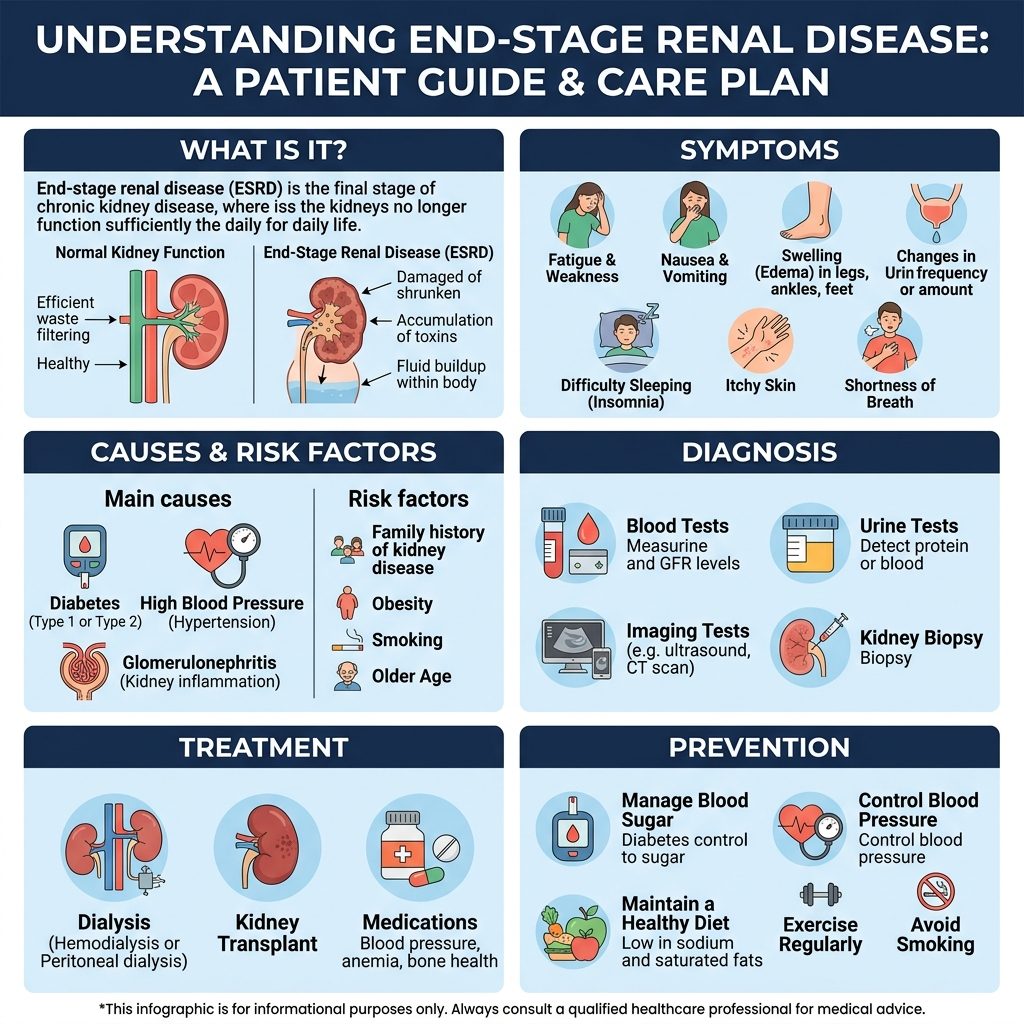
End-stage kidney disease, often called ESKD or kidney failure, is the most severe form of chronic kidney disease. It occurs when your kidneys, which typically filter waste and excess fluids from your blood, can no longer function adequately to keep your body healthy. This leads to a dangerous buildup of fluids, electrolytes, and harmful waste products. To survive with ESKD, individuals typically require treatments like dialysis or a kidney transplant. Some may choose conservative care, focusing on managing symptoms and enhancing quality of life.
Understanding the Condition
End-Stage Kidney Disease (ESKD)
Understanding the Condition
End-stage kidney disease, often called ESKD or kidney failure, is the most severe form of chronic kidney disease. It occurs when your kidneys, which typically filter waste and excess fluids from your blood, can no longer function adequately to keep your body healthy. This leads to a dangerous buildup of fluids, electrolytes, and harmful waste products. To survive with ESKD, individuals typically require treatments like dialysis or a kidney transplant. Some may choose conservative care, focusing on managing symptoms and enhancing quality of life.
Common Symptoms
Loss of appetite: Reduced desire to eat.
Fatigue and weakness: Persistent tiredness and lack of energy.
Changes in urination: Noticeable differences in urine volume or frequency.
Chest pain: If fluid builds up around the heart.
Shortness of breath: If fluid accumulates in the lungs.
Swelling: Fluid retention, especially in feet and ankles.
Gather your medical history, a list of all medications (prescription and over-the-counter), and notes on your symptoms. Prepare specific questions for your doctor.
Book a doctor visit near me
Treatment Adherence: Consistently follow your prescribed dialysis schedule (if applicable) and take all medications exactly as directed to manage symptoms and prevent complications.
Consultation Guide
In some cases, a small piece of kidney tissue is surgically removed and examined under a microscope to determine the exact cause and extent of kidney damage.
Regular Health Checkups: Attend all scheduled doctor appointments and screenings, especially if you have risk factors for kidney disease, to monitor kidney function.
Diagnostic Procedures
These tests measure waste products like creatinine and urea nitrogen (BUN) and estimate your glomerular filtration rate (GFR) to assess kidney function. They also check electrolyte levels like potassium.
What to Expect
A healthcare professional will draw a small sample of blood, usually from a vein in your arm. You might feel a brief pinch or sting. The process is quick and generally well-tolerated.
A urinalysis can detect abnormalities like protein or blood in your urine, which can indicate kidney damage. Specific tests may also measure albumin.
What to Expect
You will be asked to provide a urine sample in a sterile cup. This is a simple, non-invasive procedure done privately in a restroom.
Imaging Tests (e.g., Ultrasound, CT Scan)
These tests create pictures of your kidneys and urinary tract to show their size, shape, and identify structural issues like cysts, stones, or blockages.
What to Expect
For an ultrasound, a gel is applied to your skin, and a wand is moved over the area. It's usually painless. For a CT scan, you'll lie on a table that slides into a large scanner. You might receive an injection of a contrast dye, causing a warm sensation, to enhance images.
What to Expect
You will receive a local anesthetic to numb the area. Guided by imaging, a doctor will insert a thin needle to extract a tiny tissue sample. You might feel pressure or a brief, sharp pain. Afterward, you'll need to lie flat for several hours to reduce the risk of bleeding.
Treatment Options
High blood pressure: Difficult to control with standard treatments.
Difficulty sleeping: Trouble falling or staying asleep.
Decreased mental sharpness: Problems with focus or clarity of thought.
Muscle twitches and cramps: Involuntary muscle movements or painful contractions.
Persistent itching: Ongoing skin itchiness.
Metallic taste: An unusual, often metallic, taste in the mouth.
Consultation Guide
Which Specialist to Meet
Start with your primary care doctor; they'll likely refer you to a nephrologist (kidney specialist). A transplant surgeon may be involved if transplant is an option.
Preparations Before Your Visit
Medications
Blood Pressure and Blood Sugar Control: Medications to keep blood pressure within a healthy range and, for individuals with diabetes, to maintain stable blood sugar levels. (Duration: Ongoing, lifelong.)
Fluid and Anemia Management: Diuretics to help your body remove excess fluid and medications to stimulate red blood cell production for anemia. (Duration: Ongoing, as prescribed.)
Bone and Mineral Balance: Medications to control phosphorus levels and vitamin D supplements to maintain bone health. (Duration: Ongoing, as prescribed.)
Therapies
Hemodialysis: A procedure where your blood is pumped through an artificial kidney machine outside your body to filter out waste and excess fluid. This requires a small surgical procedure to create an access point. (Duration: Typically 3-5 hours per session, 3 times a week, lifelong unless a transplant occurs.)
Peritoneal Dialysis: A procedure that uses the lining of your abdomen (peritoneum) as a natural filter. A cleansing fluid is introduced into your abdominal cavity, allowed to dwell, and then drained. This can often be done at home. (Duration: Daily exchanges (manual or using an automated machine overnight), lifelong unless a transplant occurs.)
Surgical Procedures
Kidney Transplant: A surgical procedure to place a healthy kidney from a deceased or living donor into your body. The new kidney takes over the filtering functions; your own kidneys are usually left in place. (Duration: A single surgery, followed by lifelong medication to prevent organ rejection. Recovery typically takes several weeks to months.)
Manage Existing Conditions: Strictly control blood pressure, blood sugar (if diabetic), and cholesterol levels through medication and lifestyle.
Avoid Kidney Toxins: Do not smoke or use tobacco products. Be cautious with medications that can damage kidneys, especially over-the-counter pain relievers, and always follow your doctor's advice.
Prevention & Long-Term Wellbeing
Lifestyle and Supportive Care
Diet and Fluid Management: Working with a dietitian to tailor your diet, controlling protein, sodium, potassium, and phosphorus intake. Careful monitoring of fluid consumption. (Duration: Ongoing, lifelong.)
Physical Activity and Weight Management: Engaging in regular, moderate exercise (as advised by your doctor) and maintaining a healthy body weight. (Duration: Ongoing, lifelong.)
Prevention
Healthy Lifestyle Choices: Achieve and sustain a healthy weight, engage in regular physical activity, and follow a balanced, low-sodium diet.
Ongoing Dietary Management: Continue to work closely with a dietitian to adjust your diet as your needs change, carefully tracking fluid intake to prevent overload.
Monitor for Complications: Be vigilant for signs of potential complications, such as heart issues, bone weakness, or infection, and report them promptly to your healthcare team.
Seek Support: Utilize family, friends, support groups, or mental health professionals to cope with the emotional challenges of living with a chronic condition.
Regular Follow-ups: Maintain continuous appointments with your nephrologist and other specialists to ensure ongoing monitoring and adjustment of your care plan.
Tags & Topics
Notice an error or need an update?
Help us keep medical information accurate. Report incorrect info or suggest an edit.


