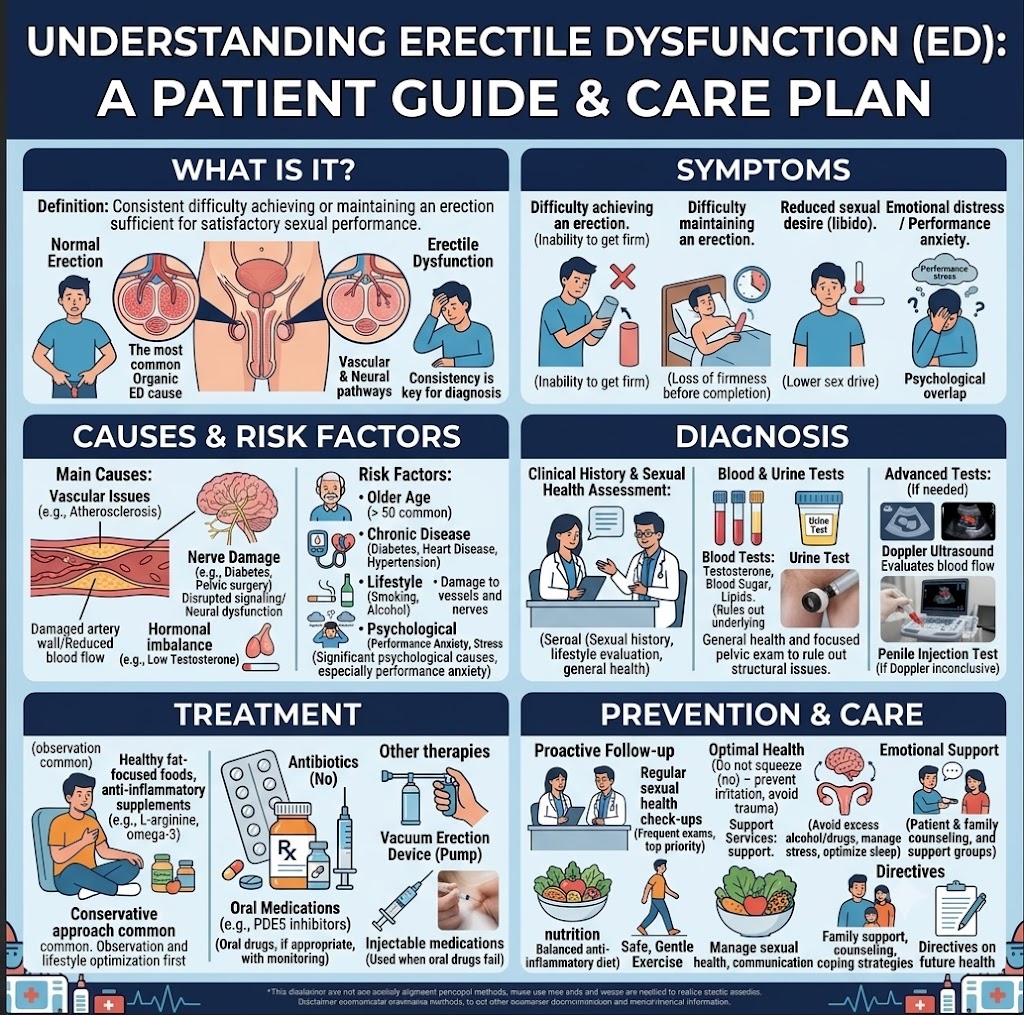
Erectile dysfunction, often called ED or impotence, is the inability to get and keep an erection firm enough for sexual activity. While occasional difficulty is common, ongoing ED can cause stress, impact self-confidence, and strain relationships. It can also be a significant warning sign of underlying health conditions that require treatment, such as heart disease or diabetes. Addressing ED early by consulting a healthcare professional is crucial, as treating the root cause or using direct treatments can often resolve the issue.
Understanding the Condition
Erectile Dysfunction (ED): A Comprehensive Guide
Understanding the Condition
Common Symptoms
Difficulty Getting an Erection: Consistently having trouble initiating an erection.
Difficulty Keeping an Erection: Inability to maintain an erection firm enough throughout sexual activity.
Reduced Sexual Desire: A noticeable decrease in the desire or interest in sex.
Consultation Guide
Which Specialist to Meet
Start by consulting your primary care doctor (family doctor or internist). They can assess your overall health and determine if other specialists, such as a urologist (a doctor specializing in male reproductive and urinary health), an endocrinologist (for hormone issues), a cardiologist (for heart health), or a mental health professional (like a sex therapist or counselor), are needed.
Preparations Before Your Visit
Before your visit, be prepared to discuss your symptoms honestly, even if it feels awkward. Think about when your symptoms started, how often they occur, and any other health concerns you have. Make a list of all medications you currently take (prescription, over-the-counter, supplements), your lifestyle habits (smoking, alcohol use, diet, exercise), and any stressors or emotional issues you're experiencing. This information is vital for an accurate diagnosis.
Book a doctor visit near me
Consultation Guide
Erectile dysfunction, often called ED or impotence, is the inability to get and keep an erection firm enough for sexual activity. While occasional difficulty is common, ongoing ED can cause stress, impact self-confidence, and strain relationships. It can also be a significant warning sign of underlying health conditions that require treatment, such as heart disease or diabetes. Addressing ED early by consulting a healthcare professional is crucial, as treating the root cause or using direct treatments can often resolve the issue.
A general health check to look for physical signs of health problems that could cause ED. This includes examining your penis and testicles and checking for nerve function.
You will lie on an examination table. A gel will be applied to your penis, and a small handheld device called a transducer will be moved over the area. This device sends and receives sound waves, creating real-time images on a screen. Sometimes, medication may be injected into the penis beforehand to induce an erection and better assess blood flow, which may cause a slight pinch. The procedure is generally painless.
Injected Medications: Medications that are self-injected directly into the side of the penis with a fine needle. They cause blood vessels to relax, increasing blood flow and producing an erection. (Duration: Erection typically occurs within 5-20 minutes and lasts about 30-60 minutes.)
Diagnostic Procedures
What to Expect
These tests measure various substances in your blood to identify underlying conditions. This includes checking blood sugar levels for diabetes, cholesterol levels for heart disease, and hormone levels (like testosterone) for imbalances.
What to Expect
A healthcare professional will draw a small sample of blood, usually from a vein in your arm. You might feel a brief pinch or sting. This is a quick procedure, and you can typically resume your normal activities immediately afterward.
Urinalysis (Urine Test)
A laboratory test that examines your urine for signs of conditions such as urinary tract infections, kidney disease, or diabetes, which can all affect ED.
What to Expect
You will be asked to provide a urine sample in a sterile cup. You'll receive instructions for a 'midstream' clean catch, which involves cleaning the genital area, beginning to urinate into the toilet, then collecting a sample mid-stream in the cup, and finishing urination into the toilet.
This imaging test uses sound waves to create pictures of the blood vessels in the penis, allowing doctors to assess blood flow. It can reveal if insufficient blood flow to the penis or issues with blood drainage are contributing to ED.
What to Expect
Treatment Options
Medications
Oral Medications to Improve Blood Flow: These commonly prescribed medications work by relaxing muscles in the penis and increasing blood flow during sexual stimulation, helping to achieve and sustain an erection. (Duration: Taken as needed, typically 30-60 minutes before sexual activity. Effects can last from a few hours up to 36 hours, depending on the specific medication.)
Urethral Suppositories: A tiny medication pellet is inserted into the urethra. The medication is absorbed, relaxing blood vessels and aiding erection. (Duration: Erection usually occurs within 10 minutes and lasts 30-60 minutes.)
Vacuum Erection Device (Penis Pump): A hollow plastic tube is placed over the penis, and a hand or battery-powered pump creates a vacuum, drawing blood into the penis. A tension ring is then placed at the base of the penis to maintain the erection. (Duration: The erection can be maintained for up to 30 minutes with the ring.)
Therapies
Counseling and Sex Therapy: For ED linked to psychological factors like stress, anxiety, depression, or relationship issues, a therapist can provide strategies and support to address these concerns and improve sexual function. (Duration: Varies, typically several weeks to months, based on individual needs.)
Surgical Procedures
Penile Implants: Surgically placed devices inside the penis that allow men to get an erection. These are typically considered when other treatments have failed. Options include inflatable implants (controlled by a pump) or semirigid rods. (Duration: A permanent solution for achieving erections.)
Open Communication: Maintain open and honest communication with your partner about your condition and its treatment. This can reduce stress, improve intimacy, and enhance overall relationship satisfaction.
Prevention & Long-Term Wellbeing
Your doctor will discuss your medical history and lifestyle. They will then perform a physical examination, which may include checking your blood pressure, heart rate, and a focused examination of your genitals and nerve reflexes.
Home Remedies / Lifestyle Changes
Healthy Lifestyle Choices: Embrace regular physical activity, maintain a balanced diet rich in fruits and vegetables, achieve and maintain a healthy weight, quit smoking, and limit alcohol consumption. Managing stress and ensuring adequate sleep are also crucial. (Duration: Ongoing, lifelong commitment)
Prevention and Long-Term Management
Prioritize Healthy Lifestyle: Regular exercise, a balanced diet, maintaining a healthy weight, and avoiding tobacco and excessive alcohol are fundamental for both preventing ED and managing existing conditions that contribute to it.
Manage Chronic Health Conditions: Work closely with your healthcare professional to effectively manage conditions like diabetes, heart disease, high blood pressure, and high cholesterol. Controlling these can significantly improve or prevent ED.
Regular Medical Check-ups: Consistent visits to your doctor for routine check-ups and screenings are crucial for early detection and management of health issues that could lead to ED.
Address Mental Health: Seek support for stress, anxiety, depression, or other mental health concerns. Psychological well-being is strongly linked to sexual health, and addressing these issues can directly improve ED.
Tags & Topics
Notice an error or need an update?
Help us keep medical information accurate. Report incorrect info or suggest an edit.


