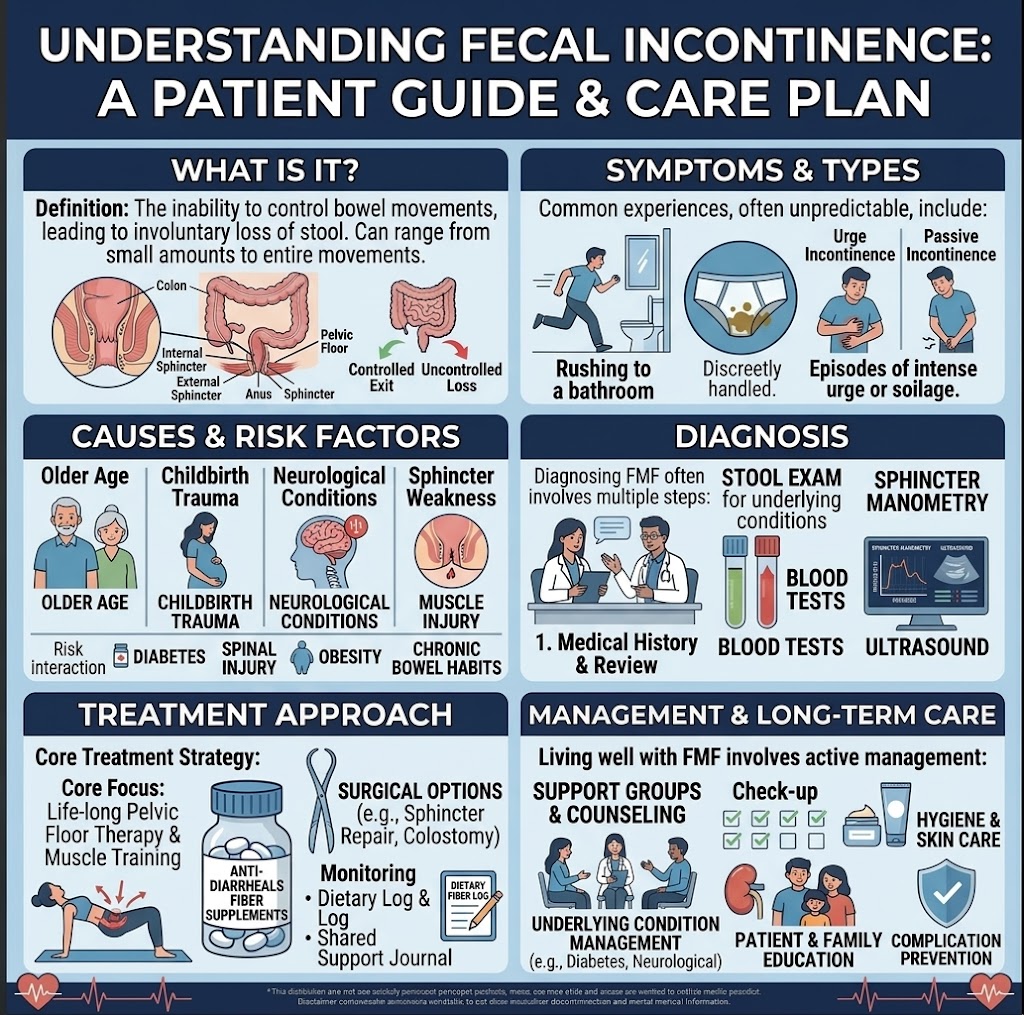
Fecal incontinence, also known as bowel incontinence or accidental bowel leakage, is the unintentional passing of solid or liquid stool. This can happen if you have a sudden, strong need to pass stool but cannot reach a toilet in time, or if stool leaks without you even realizing you need to go. Common causes include diarrhea, constipation, and damage to the muscles or nerves that control bowel movements. This condition can significantly impact your work, social life, and daily activities, often leading to embarrassment and emotional stress. While it can be difficult to discuss, effective treatments are available to improve symptoms and overall quality of life.
Understanding the Condition
Fecal Incontinence: Understanding and Managing Accidental Bowel Leakage
Understanding the Condition
Fecal incontinence, also known as bowel incontinence or accidental bowel leakage, is the unintentional passing of solid or liquid stool. This can happen if you have a sudden, strong need to pass stool but cannot reach a toilet in time, or if stool leaks without you even realizing you need to go. Common causes include diarrhea, constipation, and damage to the muscles or nerves that control bowel movements. This condition can significantly impact your work, social life, and daily activities, often leading to embarrassment and emotional stress. While it can be difficult to discuss, effective treatments are available to improve symptoms and overall quality of life.
Common Symptoms
Loss of Bowel Control: The primary symptom is the inability to control when you pass stool. This can range from occasional leakage during a short illness like diarrhea to a persistent, ongoing problem.
Urge Incontinence: This type involves a sudden, intense urge to have a bowel movement that is so strong you cannot hold it long enough to get to a toilet.
Passive Incontinence: With passive incontinence, you pass stool without being aware of the need to go. You may not feel that your rectum is full or that stool is leaking.
Leakage with Gas: Some individuals experience leakage of stool when they pass gas.
The doctor will ask about your medical history and symptoms. They will perform a series of simple tests, such as checking your reflexes with a small hammer, testing your strength, assessing your balance and coordination, and testing your sensation. It is non-invasive and generally involves no discomfort, though some parts might feel unusual. The duration can vary.
Weight Management: If you are overweight, losing weight can reduce pressure on your pelvic floor and may improve symptoms. (Duration: Ongoing)
Open Communication: Don't hesitate to discuss your symptoms openly with your healthcare professional and trusted loved ones. This reduces emotional burden and helps you get the right support.
Support Groups: Connecting with others who experience fecal incontinence can provide emotional support, practical advice, and a sense of community.
Stress Management: Employ techniques like mindfulness, meditation, or counseling to cope with the emotional distress and anxiety that can accompany incontinence.
Consultation Guide
When to Seek Medical Advice: Consult a healthcare professional if you or your child experiences fecal incontinence, especially if it occurs often, causes emotional distress, affects your daily activities, or makes you avoid spending time with family and friends.
Consultation Guide
Which Specialist to Meet
You should start by consulting your primary care doctor. They may refer you to a specialist such as a gastroenterologist (a doctor specializing in digestive system disorders), a colorectal surgeon, a urogynecologist (a specialist in female pelvic floor disorders), or a neurologist (if nerve damage is suspected). A physical therapist specializing in pelvic floor rehabilitation can also be an important part of your care team.
Preparations Before Your Visit
You will lie on your side or back with your knees bent. The doctor will gently insert a gloved, lubricated finger into your rectum. This part of the exam is usually quick and may cause a feeling of pressure or the urge to have a bowel movement, but it should not be painful.
A thin, flexible tube with a small balloon at the tip is gently inserted into your rectum. The balloon may be inflated to test sensation, and you will be asked to squeeze and relax your anal muscles. The test usually takes about 30 minutes and typically causes pressure rather than pain.
Anal Ultrasound (Endoanal Ultrasound)
A small, lubricated probe, roughly the size of a finger, is gently inserted into your rectum. This probe emits sound waves to create images. The procedure is brief, usually 10-15 minutes, and may cause a feeling of pressure but is generally not painful.
Control Diarrhea: Identify and avoid foods or drinks that trigger diarrhea, such as caffeine, alcohol, certain dairy products, and fatty foods. Address any underlying conditions that cause chronic diarrhea.
Avoid Straining: Do not strain excessively during bowel movements, as this can weaken anal sphincter muscles and damage nerves over time.
Maintain a Healthy Weight: Keeping a healthy body weight reduces unnecessary pressure on your pelvic floor muscles.
Pelvic Floor Health: Regularly perform pelvic floor (Kegel) exercises, especially after childbirth, to strengthen the muscles that support bowel control.
Diagnostic Procedures
Your doctor will examine your abdomen and rectum. This typically includes a digital rectal exam to check the strength of your anal muscles and assess for any abnormalities.
What to Expect
Samples of your stool are analyzed in a lab to check for infections, inflammation, or other digestive issues that might contribute to diarrhea or incontinence.
What to Expect
You will receive specific instructions and containers to collect small stool samples at home. These are then returned to the clinic or lab for analysis.
This test measures the strength of the muscles in your anus and rectum and checks the nerve reflexes that control bowel movements. It helps assess how well your rectum stores stool and its sensitivity.
What to Expect
This imaging test uses sound waves to create detailed pictures of your anal sphincter muscles. It helps identify tears, thinning, or other damage to these crucial muscles.
What to Expect
Pudendal Nerve Terminal Motor Latency Test (PNTMLT)
This test measures how quickly electrical signals travel along the pudendal nerves, which are vital for controlling the anal sphincter muscles. Slowed signals can indicate nerve damage.
What to Expect
A special electrode, often attached to a gloved finger, is used to gently stimulate the nerves and record their responses. You might feel a mild electrical pulse or a twitching sensation, but it's generally a quick test with minimal discomfort.
Defecography / MRI Defecography
These are imaging tests (X-ray or MRI) that show how your rectum and pelvic floor muscles work during a bowel movement. They can identify structural issues like a prolapse (when an organ slips out of place) or a rectocele (when the rectum bulges into the vagina).
What to Expect
You will be asked to sit on a special commode within an X-ray or MRI machine. Before the test, a thick, liquid contrast material will be gently inserted into your rectum to make it visible on the images. You'll then be asked to push as if having a bowel movement while images are captured. It can feel a bit awkward but is not typically painful.
Flexible Sigmoidoscopy
This procedure uses a thin, flexible tube with a camera and light to examine the lower part of your large intestine, specifically the rectum and the last section of the colon (sigmoid colon). It helps identify abnormal tissues, polyps (small growths), or inflammation.
What to Expect
You'll need to follow specific bowel preparation instructions (such as enemas or laxatives) before the procedure to ensure your colon is clean. During the exam, you'll lie on your side, and the doctor will gently insert the lubricated tube into your anus, guiding it through your rectum and lower colon. Air may be gently inflated to improve the view. You might feel some pressure, cramping, or the urge to have a bowel movement. The procedure typically takes 10-20 minutes.
Neurological Examination
This comprehensive exam assesses the function of your brain, spinal cord, nerves, and muscles. It checks reflexes, muscle strength, sensation, coordination, and mental status to identify any underlying nervous system issues contributing to incontinence.
What to Expect
Treatment Options
Before your visit, keep a 'stool diary' for a few days to a week. Note down when you have bowel movements, their consistency, any instances of leakage, and potential triggers like certain foods. Prepare a list of all your current medications, supplements, and vitamins. Be ready to discuss your full medical history, past surgeries, childbirth history (if applicable), and your daily habits. It's also helpful to write down any questions or concerns you have for your doctor.
Book a doctor visit near me
Medications
Anti-diarrhea Medications: These medications help to slow down bowel movements and reduce the frequency and looseness of stools. (Duration: As needed or ongoing, under doctor's guidance)
Laxatives/Stool Softeners: For constipation, these help ensure stools are soft and easy to pass, preventing leakage around a blockage. (Duration: As needed or ongoing, under doctor's guidance)
Bulking Agents: These agents add bulk to very loose or watery stools, helping them become more formed and easier to control. (Duration: Ongoing)
Therapies
Biofeedback: Using special sensors, this therapy helps you learn to identify and strengthen your anal muscles, improving your ability to control bowel movements. (Duration: Several sessions over weeks, followed by home practice)
Sacral Nerve Stimulation (SNS): A small device is surgically implanted to send mild electrical impulses to the nerves that control bowel function, helping to restore normal bowel control. (Duration: Initial trial period (weeks), then permanent implant (years))
Posterior Tibial Nerve Stimulation (PTNS): A small needle electrode near your ankle delivers mild electrical impulses to stimulate the tibial nerve, which influences pelvic nerves and bowel control. (Duration: Weekly sessions for 12 weeks, followed by maintenance treatments)
Injectable Bulking Agents: A substance is injected into the anal canal walls to thicken them, helping the anus close more tightly and improving control. (Duration: Effects last several months to a year, may require repeat injections)
Radiofrequency Treatment: This procedure uses heat energy to tighten and strengthen the muscles of the anal canal. (Duration: Single procedure, effects can last for several years)
Surgical Procedures
Sphincteroplasty: This surgery repairs damaged or torn anal sphincter muscles, often after an injury during childbirth. (Duration: Single procedure, recovery weeks to months)
Artificial Bowel Sphincter: An inflatable cuff is surgically placed around the anus. It's inflated to maintain continence and deflated when you need to have a bowel movement. (Duration: Permanent implant)
Colostomy/Ileostomy: In severe, unresponsive cases, a surgical opening (stoma) is created in the abdomen to divert stool into an external bag, bypassing the anus. (Duration: Can be temporary or permanent)
Regular Follow-ups: Adhere to your treatment plan and attend all scheduled follow-up appointments with your doctor to monitor your condition and adjust treatments as needed.
Prevention & Long-Term Wellbeing
Lifestyle & Home Remedies
Dietary Changes: Gradually increase fiber intake to bulk up loose stools or soften hard stools. Drink plenty of water. Limit or avoid foods and drinks that can irritate your bowels, such as caffeine, alcohol, artificial sweeteners, very fatty, or spicy foods. (Duration: Ongoing)
Bowel Training: Establish a regular time for bowel movements, often after a meal, to encourage your body to develop a predictable pattern. (Duration: Weeks to months to establish a routine)
Pelvic Floor Exercises (Kegels): Strengthen the muscles around your anus and pelvic floor that help control bowel movements. Your doctor or a physical therapist can teach you the correct technique. (Duration: Ongoing, daily practice)
Skin Care: Gently clean the skin around your anus after each bowel movement. Use barrier creams or ointments to protect the skin from irritation and prevent sores. (Duration: Ongoing, as needed)
Manage Constipation: Stay physically active, eat a diet rich in high-fiber foods (fruits, vegetables, whole grains), and drink plenty of fluids to keep stools soft and regular.
Tags & Topics
Notice an error or need an update?
Help us keep medical information accurate. Report incorrect info or suggest an edit.


