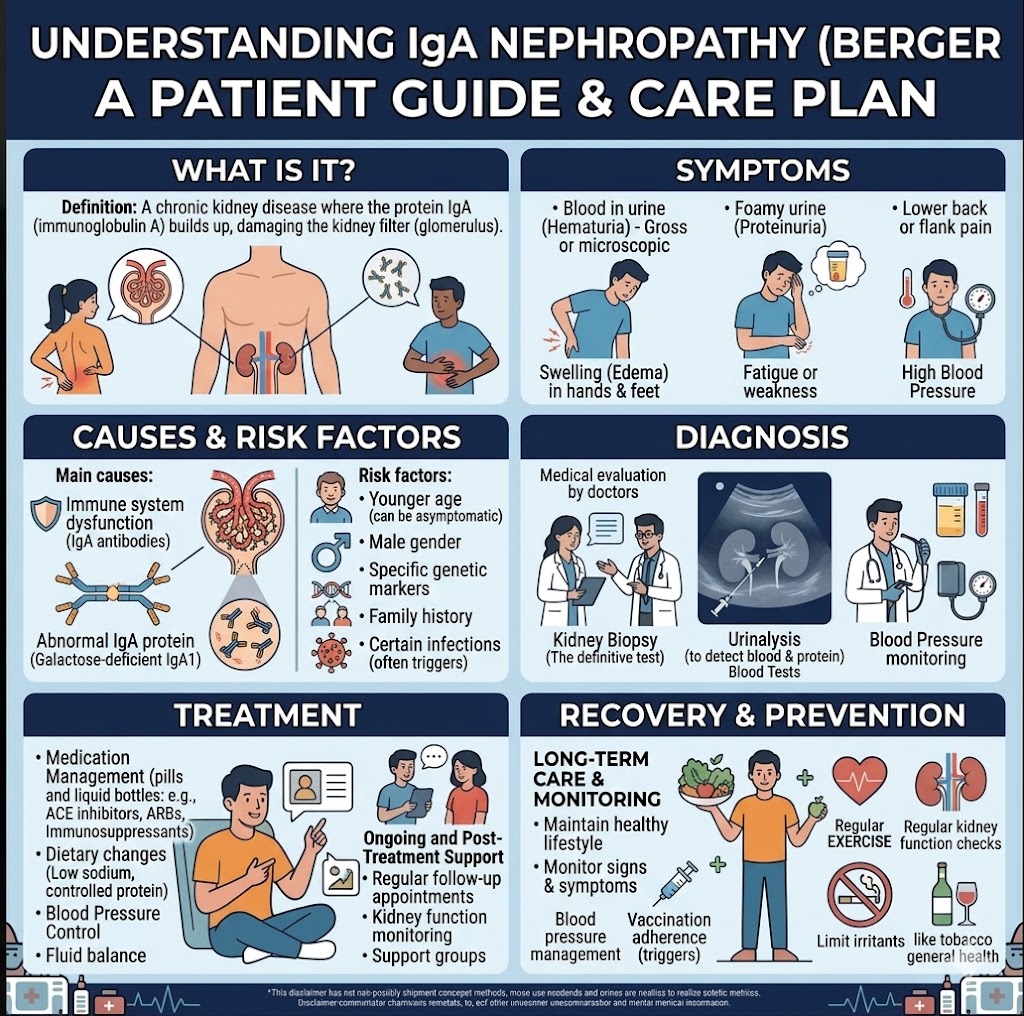
IgA nephropathy, also known as Berger's disease, is a kidney condition that occurs when a specific germ-fighting protein, called Immunoglobulin A (IgA), builds up in the kidneys. This accumulation triggers inflammation and can damage the tiny filters inside the kidneys (glomeruli), which are responsible for cleaning waste from the blood. Over time, this damage can make it harder for the kidneys to perform their vital filtering function. The disease often progresses slowly over many years, but its course varies greatly among individuals. Some may experience mild issues, while others might face serious complications, including significant loss of kidney function or even kidney failure. While there is no known cure, various treatments can help slow the disease's progression, manage symptoms, and prevent severe complications.
Understanding the Condition
IgA Nephropathy (Berger's Disease)
Understanding the Condition
IgA nephropathy, also known as Berger's disease, is a kidney condition that occurs when a specific germ-fighting protein, called Immunoglobulin A (IgA), builds up in the kidneys. This accumulation triggers inflammation and can damage the tiny filters inside the kidneys (glomeruli), which are responsible for cleaning waste from the blood. Over time, this damage can make it harder for the kidneys to perform their vital filtering function. The disease often progresses slowly over many years, but its course varies greatly among individuals. Some may experience mild issues, while others might face serious complications, including significant loss of kidney function or even kidney failure. While there is no known cure, various treatments can help slow the disease's progression, manage symptoms, and prevent severe complications.
Common Symptoms
No Early Symptoms: Often, IgA nephropathy doesn't cause noticeable symptoms in its early stages, sometimes for 10 years or more. It might only be discovered during routine medical tests that reveal microscopic amounts of blood or protein in the urine.
Cola- or Tea-Colored Urine: This happens when blood leaks into the urine, making it appear darker. It's often noticed after a cold, sore throat, or respiratory infection.
Visible Blood in Urine: Sometimes, enough blood leaks into the urine to be clearly visible.
Foamy Urine: This can be a sign of too much protein leaking into the urine, a condition known as proteinuria.
Back Pain: Discomfort or pain may occur on one or both sides of the back, just below the ribs, where the kidneys are located.
Weakness and Tiredness: These can be general symptoms of kidney problems, especially as kidney function begins to decline.
Symptoms of Kidney Failure: If kidney function significantly worsens, more severe symptoms like nausea, loss of appetite, changes in urination, and confusion may occur.
Consultation Guide
Which Specialist to Meet
Before your visit, make a detailed list of all your symptoms, even mild ones, and when they started. Bring a comprehensive list of all medications, vitamins, and supplements you currently take, including dosages. Be ready to discuss your family medical history and prepare a list of specific questions you have for the doctor. If you've had any recent blood or urine tests, bring those results with you.
Book a doctor visit near me
Dietary Changes: Limiting salt intake, reducing protein (if advised by a doctor or dietitian), and maintaining a balanced diet can significantly support kidney health and manage symptoms. (Duration: Ongoing, for life.)
Regular Exercise: Engaging in regular physical activity helps manage blood pressure, reduce inflammation, and improve overall health, which indirectly benefits kidney function. (Duration: Ongoing, for life.)
Procedures and Surgical Interventions
Kidney Replacement Therapy (Dialysis): If the kidneys fail completely and can no longer filter waste, dialysis will filter waste and excess fluid from the blood, essentially performing the work of the kidneys. (Duration: Ongoing, typically several times a week, if permanent.)
Symptom Awareness and Prompt Reporting: Be vigilant for any changes in urine color, swelling in the body, or new general fatigue, and report any new or worsening symptoms to your doctor immediately.
Consultation Guide
Swelling (Edema): Fluid buildup can cause swelling in the hands, feet, ankles, or around the eyes.
High Blood Pressure: Damage to the kidneys can lead to elevated blood pressure.
You will be asked to provide a urine sample, typically collected in a sterile cup. There are usually no special preparations needed for this test. The sample will then be analyzed in a laboratory for various substances. Abnormal results often lead to further testing to pinpoint the exact cause of the problem.
Diagnostic Procedures
Urinalysis (Urine Test)
This is a simple test of your urine to check its appearance, concentration, and content. It can detect early signs of kidney disease, such as the presence of protein or red blood cells that are not normally found in healthy urine.
What to Expect
A kidney biopsy involves taking a very small piece of kidney tissue, usually with a thin needle, for examination under a microscope. This procedure is crucial for doctors to definitively diagnose IgA nephropathy, assess its severity, understand the extent of kidney damage, and monitor how well treatments are working. It is also used if a transplanted kidney is not functioning properly.
What to Expect
The procedure is typically performed in a hospital or outpatient setting. You will usually lie on your stomach, and the skin over your kidney will be numbed with a local anesthetic. A doctor will use an imaging device, such as ultrasound, to precisely guide a thin needle through your skin into your kidney to collect a tissue sample. You might feel some pressure or a brief, sharp pain as the needle is inserted. After the biopsy, you'll need to rest in bed for several hours and will be carefully monitored for any bleeding or other complications before being discharged.
Treatment Options
Medications
Blood Pressure-Lowering Medications: These medications help control high blood pressure, which can worsen kidney damage, and also reduce protein leakage in the urine. They are often a cornerstone of treatment. (Duration: Ongoing, usually for life.)
Protein-Reducing Medications: Specific medications can help decrease the amount of protein leaking from the kidneys into the urine, which helps protect kidney function. (Duration: Ongoing, as prescribed by your doctor.)
Immune System Modulators: For some individuals, medications that calm or suppress the immune system's response are used to reduce inflammation in the kidneys and slow disease progression. (Duration: As prescribed by your specialist, potentially long-term.)
Cholesterol-Lowering Medications: If cholesterol levels are high, medications may be prescribed to manage them, as elevated cholesterol can be a complication of kidney disease and increase the risk of heart problems. (Duration: Ongoing, as needed.)
Kidney Transplant: A surgical procedure to replace a failing kidney with a healthy one from a donor. This can offer a definitive solution for kidney failure. (Duration: One-time surgery, followed by lifelong medication to prevent rejection of the new kidney.)
Regular Medical Check-ups: Consistent monitoring by your doctor or kidney specialist is crucial to track kidney function, blood pressure, protein levels, and adjust treatment as needed to slow disease progression.
Strict Blood Pressure Control: Keeping blood pressure within a healthy range is paramount to protect your kidneys from further damage. This often involves a combination of medication and significant lifestyle changes.
Cholesterol Management: Maintaining healthy cholesterol levels, through diet or medication, helps reduce the risk of heart disease, which can be linked to kidney problems and their complications.
Adherence to Prescribed Treatments: Consistently taking all prescribed medications and diligently following medical advice is essential to slow disease progression and achieve remission, if possible.
Management of Underlying Conditions: If you have related health conditions like liver diseases, celiac disease, or chronic infections, managing them effectively can help reduce their impact on IgA nephropathy and kidney function.
Prevention & Long-Term Wellbeing
You should start by consulting your primary care doctor, who can then refer you to a **nephrologist** (a doctor specializing in kidney diseases). Other specialists, such as a registered dietitian, may also be involved in managing the condition, especially for dietary recommendations.
Preparations Before Your Visit
Lifestyle and Home Remedies
Prevention and Long-Term Monitoring
Healthy Lifestyle Choices: Adopting a balanced, kidney-friendly diet, engaging in regular physical activity, avoiding smoking, and limiting alcohol intake are all important for overall kidney health and preventing complications.
Tags & Topics
Notice an error or need an update?
Help us keep medical information accurate. Report incorrect info or suggest an edit.


