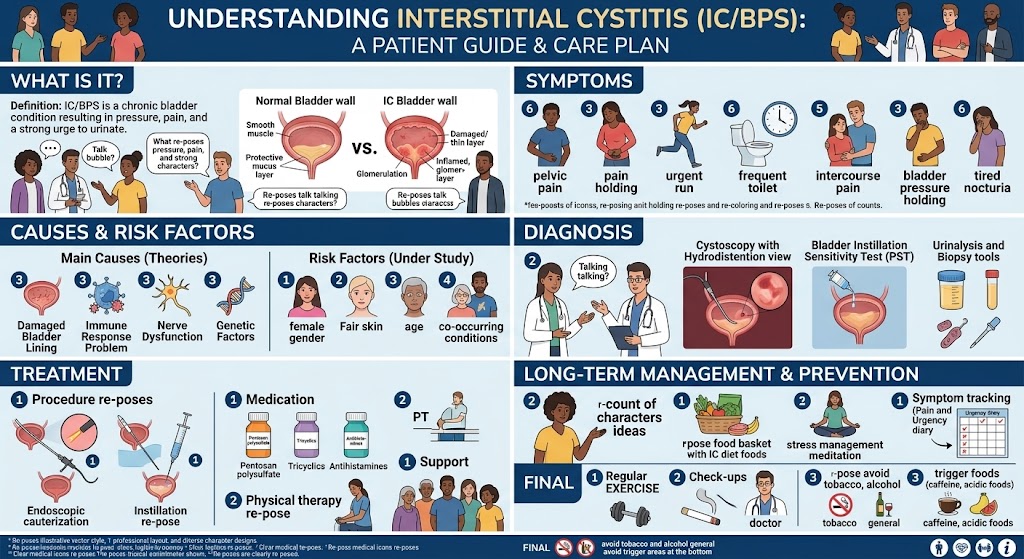
Interstitial cystitis (IC), also known as painful bladder syndrome, is a chronic condition causing discomfort in the bladder and sometimes the pelvic area. Pain ranges from mild pressure to severe agony. Normally, your bladder stores urine and signals your brain when full. With IC, these signals are mixed, leading to frequent, urgent needs to urinate, even with small volumes. The bladder walls can become irritated and inflamed. More common in women, IC significantly impacts daily life. While there's no cure, various treatments help manage symptoms.
Understanding the Condition
Interstitial Cystitis: Understanding Chronic Bladder Pain
Understanding the Condition
Interstitial cystitis (IC), also known as painful bladder syndrome, is a chronic condition causing discomfort in the bladder and sometimes the pelvic area. Pain ranges from mild pressure to severe agony. Normally, your bladder stores urine and signals your brain when full. With IC, these signals are mixed, leading to frequent, urgent needs to urinate, even with small volumes. The bladder walls can become irritated and inflamed. More common in women, IC significantly impacts daily life. While there's no cure, various treatments help manage symptoms.
Common Symptoms
Pelvic Pain: Discomfort in the lower abdomen, groin, lower back, or the tube that carries urine out of the body (urethra).
Pain with Sexual Intercourse: Experiencing pain during or after sex.
Persistent Urgent Need to Urinate: A constant, strong feeling that you need to empty your bladder right away.
Frequent Urination: Needing to urinate many times day and night, often passing only small amounts each time.
Varying Symptoms: Severity differs from person to person and changes over time, with periods of improvement or worsening (flares).
Triggered Flares: Symptoms may temporarily worsen due to menstruation, prolonged sitting, stress, intense exercise, or sexual activity.
Consultation Guide
Which Specialist to Meet
You should first consult your primary care physician, who may then refer you to a urologist (a doctor specializing in the urinary system), a gynecologist (for women, especially if pelvic pain is prominent), or a pain management specialist. Pelvic floor physical therapy may also be recommended.
Preparations Before Your Visit
Before your visit, keep a symptom diary for several days, noting pain levels, urination frequency, and any triggers. Be ready to discuss your full medical history and ask questions.
Book a doctor visit near me
This is a simple urine test to detect and manage conditions like urinary tract infections (UTIs) or kidney issues by checking its appearance, concentration, and content. While IC symptoms mimic UTIs, urinalysis typically shows no infection in IC cases.
A pelvic exam checks the health of the female reproductive organs (vulva, vagina, cervix, uterus, ovaries) for unusual changes or specific symptoms like pelvic pain.
A procedure using a thin, flexible tube with a camera (cystoscope) to directly view the inside lining of your bladder and urethra. It helps diagnose the causes of symptoms like blood in urine or persistent bladder pain.
Stress Management: Use techniques like meditation, deep breathing, or yoga to reduce overall stress, as it can worsen IC symptoms. (Duration: Ongoing strategy, requiring continuous effort.)
Heat or Cold Therapy: Applying a heating pad or cold pack to the lower abdomen can provide temporary relief from bladder discomfort. (Duration: As needed for symptom relief.)
Oral Medications to Reduce Pain and Urgency: Various oral medicines can help lessen bladder pain, decrease spasms, and reduce the urgent need to urinate. (Duration: Taken as prescribed, often on an ongoing basis to manage symptoms.)
Antihistamines: These can help reduce urgency and frequency in some individuals, particularly if allergies are a contributing factor. (Duration: As needed or daily, depending on symptom severity.)
Low-Dose Antidepressants: Certain types of antidepressants, in lower doses than used for depression, can help reduce pain and promote better sleep by affecting nerve signals. (Duration: Often taken for several months under medical supervision.)
Therapies and Procedures
Pelvic Floor Physical Therapy: A specialized therapist helps release tight pelvic floor muscles, which can contribute to IC pain and symptoms. (Duration: Several weeks to months of regular sessions, plus home exercises.)
Acupuncture: Fine needles are inserted into specific points on the body to promote natural pain relief and improve energy flow, as believed in traditional medicine, or stimulate nerves and muscles. (Duration: Typically multiple sessions over several weeks or months.)
Bladder Distention: Under anesthesia, the bladder is filled with fluid to gently stretch its walls, which may temporarily improve symptoms for some people. (Duration: A single procedure, with potential symptom relief lasting weeks to months.)
Surgical Procedures (Rarely Used)
Trigger Identification & Avoidance: Keep a detailed diary to pinpoint and avoid specific foods, drinks, or activities (e.g., acidic foods, caffeine, prolonged sitting, certain exercises) that worsen your symptoms.
Stress Reduction: Practice mindfulness, meditation, deep breathing, or yoga to manage stress, a known IC symptom aggravator. Ensure you get adequate, restorative sleep.
Bladder Habits & Hydration: Work with a healthcare provider on bladder training to gradually extend time between urinating. Maintain adequate hydration, as it can prevent urine from becoming too concentrated and irritating the bladder.
Pelvic Floor Care: Consult a pelvic floor physical therapist who can teach exercises and relaxation techniques to address tight or painful pelvic muscles that often accompany IC.
Regular Medical Follow-ups: Maintain consistent appointments with your healthcare provider to monitor symptoms, adjust treatments, and manage any other health conditions that might impact IC.
Support Networks: Connecting with others who have IC through support groups can provide emotional support, shared experiences, and practical advice for coping with the condition.
Diagnostic Procedures
What to Expect
You will be asked to provide a midstream urine sample in a sterile cup after cleaning the genital area. This process is quick and painless.
Pelvic Exam (for women)
What to Expect
You will lie on an exam table with your feet in stirrups. The doctor visually inspects external genitals, then uses a speculum to view the vagina and cervix. Gloved fingers are then inserted into the vagina and pressed on the abdomen to feel pelvic organs. You can expect pressure, but it should not be painful.
What to Expect
After cleaning the area and applying numbing gel to your urethra, the cystoscope is gently inserted into the urethra and bladder. The doctor examines the bladder lining. The procedure usually takes 5-10 minutes. You may feel pressure or an urge to urinate.
Bladder Augmentation: In rare, severe cases, a piece of intestine may be used to increase the size of the bladder, providing more storage capacity. (Duration: A one-time surgery for long-term impact.)
Treatment Options
Medications
Oral Bladder Coating Agents: These medications aim to repair and protect the inner lining of the bladder, which can be damaged in IC. (Duration: Long-term use, often for several months to years.)
Bladder Instillations: A liquid medication is delivered directly into the bladder through a small catheter to soothe or heal the bladder lining. (Duration: Typically weekly for 6-8 weeks, followed by maintenance treatments as needed.)
Nerve Stimulation: Mild electrical impulses are used to modulate the nerves that control bladder function, which can reduce urgency, frequency, and pain. (Duration: Can be a trial period followed by long-term use if effective.)
Urinary Diversion: Also very rare, this surgery reroutes the flow of urine away from the bladder if it is severely damaged or painfully dysfunctional. (Duration: A one-time surgery, permanently altering the urinary system.)
Prevention & Long-Term Wellbeing
Lifestyle Adjustments and Home Remedies
Dietary Changes: Identify and avoid food and drink triggers (e.g., acidic foods, caffeine, alcohol, artificial sweeteners) by keeping a detailed food diary. (Duration: Ongoing strategy, requiring continuous effort.)
Bladder Training: Gradually increase the time between urinating to help retrain the bladder and reduce urgency, often with professional guidance. (Duration: Ongoing strategy, requiring continuous effort.)
Prevention and Long-Term Wellbeing
Tags & Topics
Notice an error or need an update?
Help us keep medical information accurate. Report incorrect info or suggest an edit.


