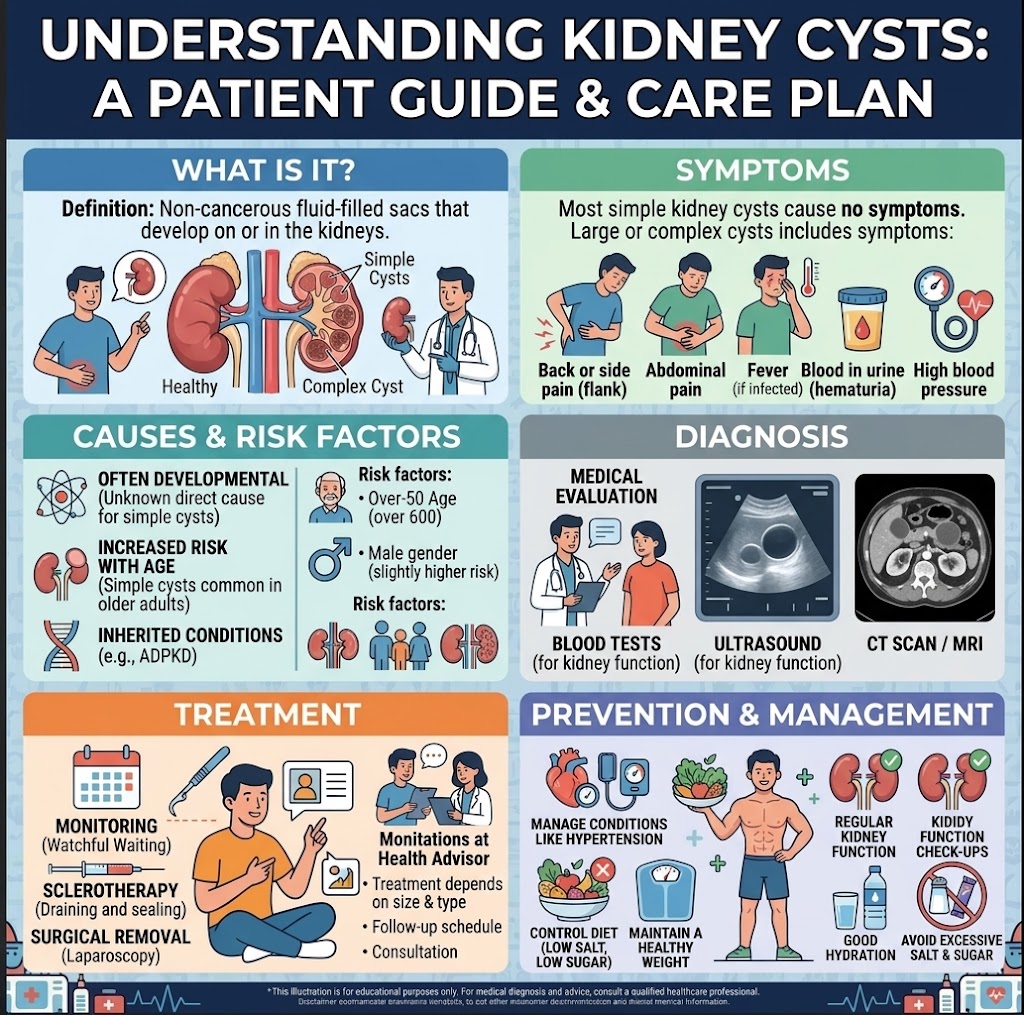
Kidney cysts are common, fluid-filled sacs that develop on or within the kidneys. Most often, these are 'simple kidney cysts,' which are not cancerous and rarely lead to health problems. It's important to know that simple kidney cysts are different from other types, such as those seen in polycystic kidney disease (a genetic condition affecting kidney function) or 'complex cysts,' which require closer monitoring due to a small possibility of being cancerous. The exact cause of simple kidney cysts is unknown. They are frequently discovered by chance during imaging tests for other reasons. Treatment is typically not necessary unless they grow large enough to cause symptoms or complications.
Understanding the Condition
Simple Kidney Cysts: Understanding the Condition
Understanding the Condition
Kidney cysts are common, fluid-filled sacs that develop on or within the kidneys. Most often, these are 'simple kidney cysts,' which are not cancerous and rarely lead to health problems. It's important to know that simple kidney cysts are different from other types, such as those seen in polycystic kidney disease (a genetic condition affecting kidney function) or 'complex cysts,' which require closer monitoring due to a small possibility of being cancerous. The exact cause of simple kidney cysts is unknown. They are frequently discovered by chance during imaging tests for other reasons. Treatment is typically not necessary unless they grow large enough to cause symptoms or complications.
Common Symptoms
No Symptoms (Asymptomatic): Simple kidney cysts typically do not cause any noticeable symptoms, especially when small.
Before your appointment, be prepared to discuss any symptoms you're experiencing, your complete medical history, and a list of all medications, vitamins, and supplements you currently take. It's also helpful to write down any questions you have for your doctor.
Book a doctor visit near me
Pain Management: For discomfort caused by large or burst cysts, over-the-counter pain relievers or prescription medication may be recommended to alleviate symptoms. (Duration: As needed for symptom relief, typically short-term.)
Antibiotics: If a kidney cyst becomes infected, a course of antibiotics will be prescribed to clear the bacterial infection. (Duration: Typically 7 to 14 days, depending on the severity and type of infection.)
Cyst Aspiration and Sclerotherapy: This procedure involves inserting a thin needle through the skin into the cyst, guided by ultrasound or CT imaging, to drain the fluid. Afterwards, a special solution (sclerosant) may be injected into the empty cyst to prevent it from refilling. (Duration: A single outpatient procedure; sometimes a repeat procedure is needed if the cyst refills.)
Laparoscopic Cyst Deroofing: If a cyst is large, persistently symptomatic, or causing complications such as blocked urine flow, surgery may be considered. This minimally invasive procedure involves making small incisions, inserting a tiny camera and surgical tools, and removing a portion of the cyst wall (deroofing) to prevent fluid accumulation. (Duration: Hospital stay is usually 1-2 days, with full recovery taking a few weeks.)
Report New or Worsening Symptoms: Be vigilant for any new or worsening symptoms, such as significant back pain, fever, or blood in your urine, and report them to your doctor promptly.
Consultation Guide
Dull Pain: If a simple kidney cyst grows large enough, it may cause a dull ache or pain in the back or side.
Upper Stomach Pain: A large cyst can sometimes lead to discomfort or pain in the upper stomach area.
Consultation Guide
Which Specialist to Meet
Diagnostic Procedures
Simple kidney cysts are frequently discovered incidentally during various imaging tests performed for other health concerns. These tests help healthcare providers visualize the kidneys and identify the presence and characteristics of cysts.
What to Expect
The specific experience varies by imaging type. For a CT urogram, as detailed below, you'll lie on a table and a contrast dye may be injected. For an ultrasound, a gel is applied to your skin, and a handheld device is moved over the area. MRI involves lying in a large scanner that uses magnetic fields and radio waves.
Computed Tomography (CT) Urogram
A CT urogram is a specialized imaging test that uses X-rays to create detailed cross-sectional pictures of your entire urinary tract, including the kidneys, the tubes connecting them to the bladder (ureters), and the bladder itself. It helps your doctor assess the size, shape, and function of these organs and detect any abnormalities like kidney cysts or other conditions affecting the urinary system.
What to Expect
You will lie on a movable table that slides into a large, donut-shaped machine. A healthcare professional will inject a special X-ray dye, called contrast material, into a vein in your arm or hand. This dye travels through your bloodstream, highlighting your kidneys, ureters, and bladder on the X-ray images, making them easier to see. You may feel a warm sensation or a metallic taste in your mouth as the contrast is injected. Throughout the procedure, you will need to lie still, and you may be asked to hold your breath briefly for certain scans. The entire process typically takes about 15-30 minutes. While generally safe, there is a slight chance of an allergic reaction to the contrast material, which is usually mild and manageable.
Watchful Waiting: Most simple kidney cysts do not require active treatment. They are monitored over time with periodic imaging tests (like ultrasound or CT scans) to check for any changes in size or characteristics. (Duration: Ongoing, with imaging every 6-12 months initially, then less frequently if stable.)
Adhere to Follow-up Appointments: If you have identified kidney cysts, follow your healthcare provider's recommendations for regular follow-up appointments and repeat imaging tests to monitor the cyst's size and characteristics.
Treatment Options
Begin by consulting your primary care physician, who can provide an initial assessment. If further evaluation or treatment is needed, they may refer you to a urologist (a doctor specializing in the urinary system) or a nephrologist (a kidney specialist).
Preparations Before Your Visit
Medications
Limit Certain Over-the-Counter Medications: Long-term or excessive use of certain over-the-counter pain relievers can potentially harm the kidneys. Always use medications as directed by your healthcare provider.
Long-Term Monitoring for Cysts
Prevention & Long-Term Wellbeing
General Kidney Health
Stay Hydrated: Drinking plenty of water throughout the day helps support overall kidney function and health.
Maintain a Balanced Diet: Consume a diet rich in fruits, vegetables, and whole grains, while limiting processed foods, excessive salt, and unhealthy fats to promote kidney wellness.
Engage in Regular Physical Activity: Maintaining a healthy weight through regular exercise can reduce the risk of conditions that negatively impact kidney health.
Manage Blood Pressure: Work with your doctor to control high blood pressure, as uncontrolled hypertension can strain the kidneys over time.
Avoid Smoking: Smoking can damage blood vessels, including those in the kidneys, and worsen overall kidney function.
Tags & Topics
Notice an error or need an update?
Help us keep medical information accurate. Report incorrect info or suggest an edit.


