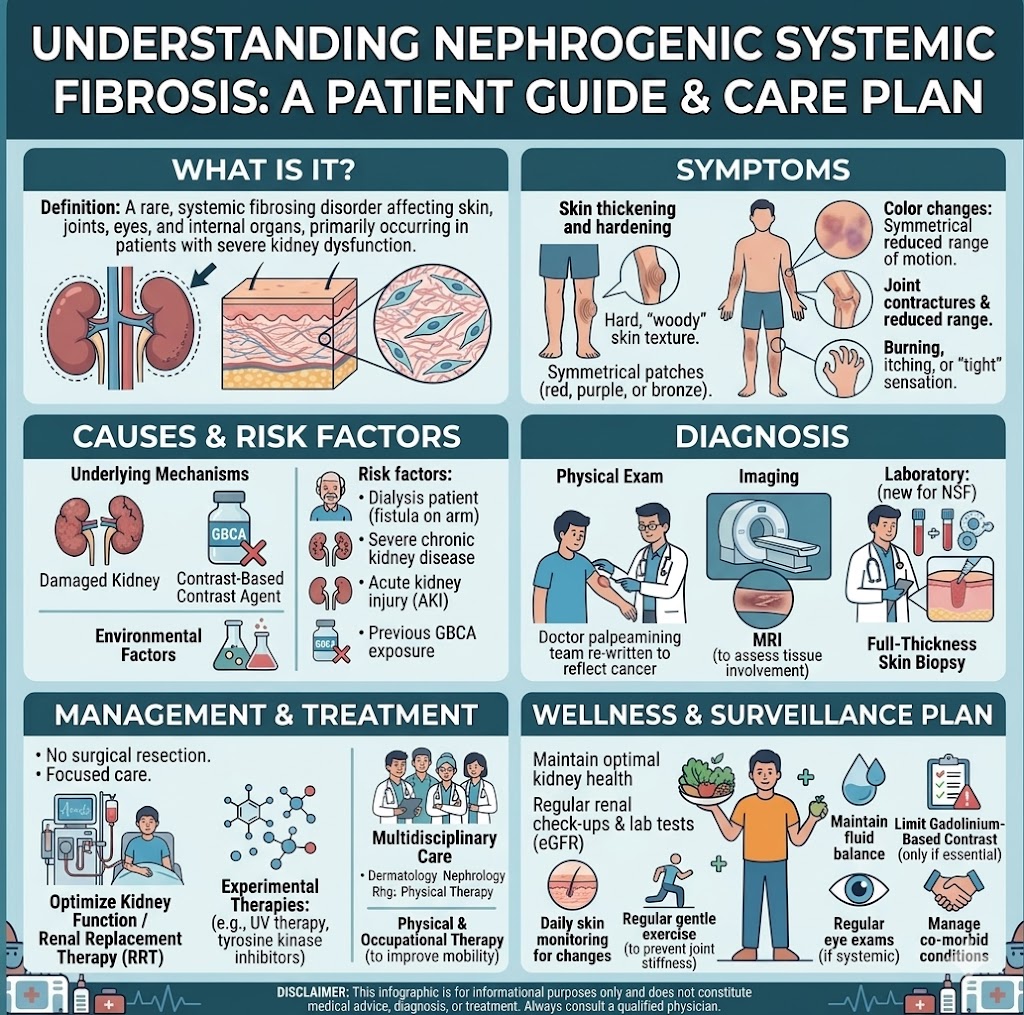
Nephrogenic Systemic Fibrosis (NSF) is a rare but serious condition primarily affecting individuals with advanced kidney failure, whether they are on dialysis or not. It causes thickening and hardening of the skin, often making it resemble other skin diseases like scleroderma. NSF can also affect deeper tissues and internal organs, such as the heart and lungs, and can lead to severe joint stiffness due to muscle and tendon shortening.Historically, exposure to certain older types of gadolinium-based contrast agents used in MRI scans was identified as a trigger for NSF in people with kidney disease. Awareness of this link has significantly reduced new cases of the disease. Newer, safer types of these contrast agents are not associated with an increased risk of NSF.
Understanding the Condition
Nephrogenic Systemic Fibrosis: Understanding a Rare Kidney-Related Skin and Organ Condition
Understanding the Condition
Common Symptoms
Skin Changes: Swelling, tightening, thickening, and hardening of the skin, typically on the arms and legs, sometimes on the body. The face and head are almost never affected. Skin may appear reddened, darkened, or have a 'woody' texture and an 'orange-peel' look. Burning, itching, or sharp pains can occur in affected skin areas. Rarely, blisters or open sores can develop.
Movement Limitations: Thickened skin can restrict movement, leading to reduced flexibility in joints. Muscles can tighten (contractures) in the arms, hands, legs, and feet, severely limiting joint motion.
Internal Organ Issues: Weakness in muscles and pain in bones, particularly in the hips or ribs. Reduced function in vital organs like the heart, lungs, diaphragm, digestive tract, or liver can occur. Yellow patches may appear on the white part of the eyes (sclera).
Consultation Guide
Which Specialist to Meet
You should consult with a nephrologist (a doctor specializing in kidney diseases), a dermatologist (a skin specialist), and potentially a rheumatologist (a specialist in diseases affecting joints, muscles, and connective tissues) if joint stiffness or pain is a primary concern. A radiologist may also be involved to discuss past imaging and contrast agent use.
Preparations Before Your Visit
Before your visit, gather your complete medical history, including any kidney conditions, past imaging studies (especially MRIs), and a list of all medications and supplements you are currently taking. Make a detailed list of your symptoms, noting when they started and how they have progressed. Prepare a list of questions you want to ask your doctor.
Book a doctor visit near me
Symptom Management and Supportive Care
Skin Care: Regular use of moisturizers and emollients to help soften the skin and reduce dryness and discomfort. (Duration: Ongoing, as needed)
Pain Management: Pain relievers (over-the-counter or prescribed) to manage burning, itching, or sharp pains in affected areas. (Duration: As symptoms persist)
Physical and Occupational Therapy
Rehabilitation Exercises: Specialized exercises and stretches to improve joint flexibility, reduce stiffness, and prevent severe shortening of muscles and tendons (contractures). Occupational therapy can help adapt daily activities. (Duration: Long-term, often several sessions per week, with home exercise programs)
Kidney Disease Management
Regular Medical Check-ups: Maintain regular follow-up appointments with your nephrologist and other specialists to monitor your kidney function, track the progression of NSF symptoms, and adjust treatment plans as needed.
Vigilant Symptom Monitoring: Be attentive to any changes in your skin, joint mobility, or overall health. Report new or worsening symptoms promptly to your healthcare provider.
Consultation Guide
Nephrogenic Systemic Fibrosis (NSF) is a rare but serious condition primarily affecting individuals with advanced kidney failure, whether they are on dialysis or not. It causes thickening and hardening of the skin, often making it resemble other skin diseases like scleroderma. NSF can also affect deeper tissues and internal organs, such as the heart and lungs, and can lead to severe joint stiffness due to muscle and tendon shortening.Historically, exposure to certain older types of gadolinium-based contrast agents used in MRI scans was identified as a trigger for NSF in people with kidney disease. Awareness of this link has significantly reduced new cases of the disease. Newer, safer types of these contrast agents are not associated with an increased risk of NSF.
Diagnostic Procedures
This procedure removes a small skin sample for microscopic examination, vital for diagnosing NSF. The skin is numbed. A shave biopsy scrapes the surface; usually no stitches are needed. A punch biopsy removes a deeper core; stitches may be needed. An excisional biopsy cuts out a larger area; stitches are typically required. The sample goes to a lab, and wound care instructions are provided.
What to Expect
The doctor will clean the skin and inject a local anesthetic to numb the area, minimizing discomfort. Depending on the biopsy type, a small instrument will remove a skin sample. You'll receive instructions for caring for the biopsy site afterwards.
Blood tests assess kidney function and overall health by measuring levels of substances like creatinine and urea. These results help calculate your estimated Glomerular Filtration Rate (eGFR), a key measure of kidney function.
What to Expect
A healthcare professional will draw a small blood sample, usually from a vein in your arm. You might feel a brief pinch or sting. The process is quick, typically lasting only a few minutes.
Imaging Studies (MRI)
MRI scans (using newer, safer contrast or no contrast) may assess internal organ involvement like the heart or lungs. This helps understand the extent of NSF beyond the skin.
What to Expect
You will lie on a movable table that slides into a large, tunnel-like machine. You'll need to stay very still during the scan, which can take 30 to 60 minutes or longer. The machine makes loud noises, so ear protection is provided. If a contrast agent is used, it's injected into a vein, causing a cool sensation.
Kidney Function Assessment
Your eGFR is calculated from blood test results (creatinine, age, sex) to estimate kidney filtering ability and determine kidney disease stage. This provides crucial information about your kidney health.
What to Expect
This is primarily a calculation based on your blood test results, so there is no separate procedure beyond the initial blood draw.
Treatment Options
Dialysis (Hemodialysis or Peritoneal Dialysis): For end-stage kidney failure, dialysis (hemodialysis or peritoneal) filters wastes, salts, and fluid from blood, replacing kidney function. (Duration: Long-term, typically several hours multiple times a week for hemodialysis, or daily for peritoneal dialysis, until a kidney transplant is possible or chosen as a permanent treatment)
Kidney Transplant: A surgical procedure to place a healthy kidney from a deceased or living donor into a person with kidney failure, improving quality of life and potentially eliminating the need for dialysis. (Duration: A single surgical procedure, followed by lifelong medication to prevent organ rejection)
Emerging or Targeted Therapies
Targeted Treatments: While no universally approved specific treatment for NSF currently exists, ongoing research explores various medications that aim to reduce fibrosis or modify the immune response. These may be considered in specific cases under close medical supervision. (Duration: Varies depending on the therapy and individual response)
Adherence to Kidney Disease Management: Diligently follow all recommendations for managing your kidney disease, including diet, fluid restrictions, and medication regimens, as advised by your nephrologist.
Maintain Mobility: Engage in prescribed physical therapy and continue exercises at home to maintain as much joint flexibility and muscle strength as possible.
Seek Emotional Support: Living with a chronic condition like NSF can be challenging. Consider joining support groups or seeking counseling to cope with the emotional and psychological impact.
Prevention & Long-Term Wellbeing
Prevention
Avoidance of Older Contrast Agents: The most critical preventive measure is to avoid older types of gadolinium-based contrast agents during MRI or other imaging studies if you have any form of kidney disease (acute kidney injury or chronic kidney disease).
Use of Safer Contrast Agents: Ensure that if a gadolinium-based contrast agent is necessary for an imaging study, only newer, safer types (known as Group 2 agents) are used, especially if you have impaired kidney function. Always inform your medical team about your kidney health before any imaging procedure.
Long-Term Monitoring
Lifestyle and Support
Tags & Topics
Notice an error or need an update?
Help us keep medical information accurate. Report incorrect info or suggest an edit.


