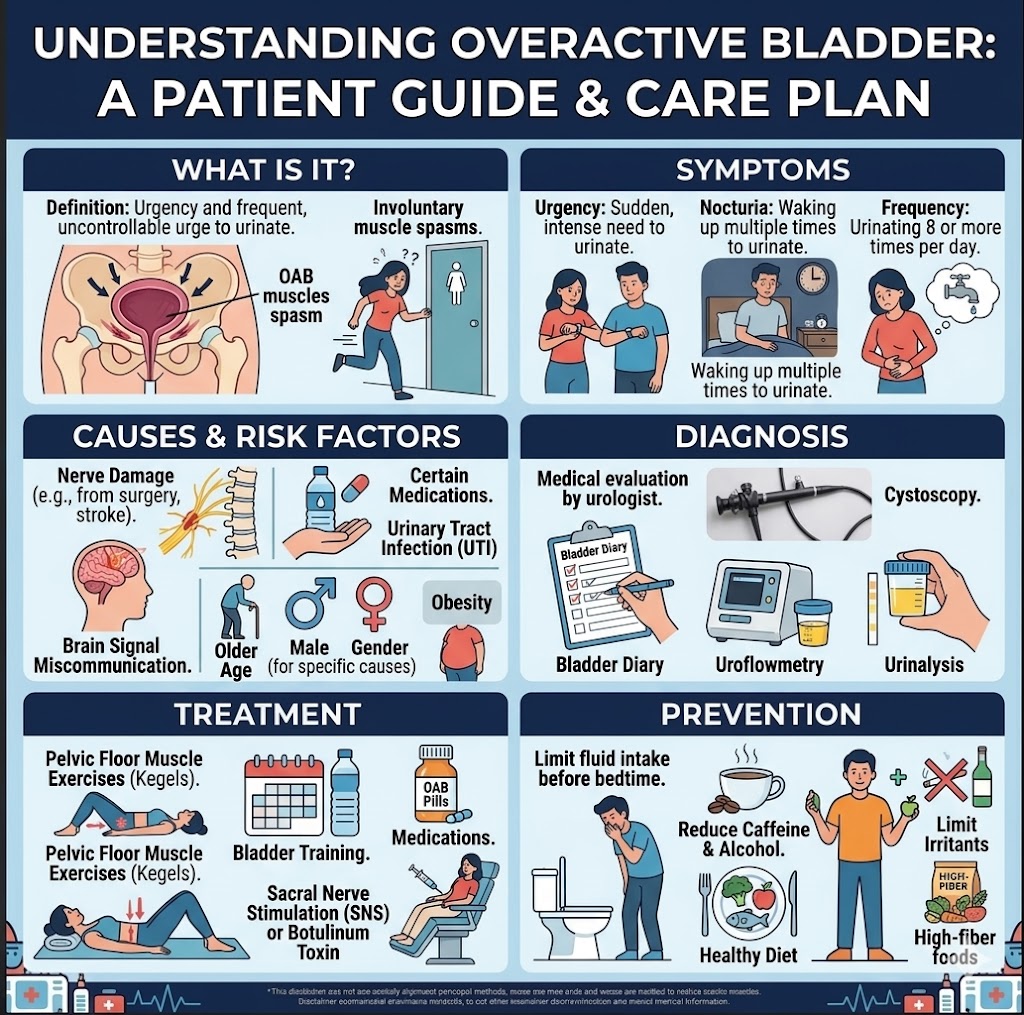
Overactive bladder (OAB) is a common condition characterized by a sudden, strong urge to urinate that is often difficult to control. This urge can lead to frequent trips to the bathroom throughout the day and night, and sometimes even accidental urine leakage, known as urgency incontinence. OAB happens when bladder muscles contract involuntarily, even when the bladder isn't full. While OAB can affect anyone and becomes more common with age, it is not a normal part of aging. It can significantly impact daily life and emotional well-being, but the good news is that various effective treatments are available. Factors like nerve conditions, bladder abnormalities, hormonal changes (e.g., during menopause), or urinary tract infections can sometimes contribute to OAB symptoms.
Understanding the Condition
Understanding Overactive Bladder (OAB)
Understanding the Condition
Overactive bladder (OAB) is a common condition characterized by a sudden, strong urge to urinate that is often difficult to control. This urge can lead to frequent trips to the bathroom throughout the day and night, and sometimes even accidental urine leakage, known as urgency incontinence. OAB happens when bladder muscles contract involuntarily, even when the bladder isn't full. While OAB can affect anyone and becomes more common with age, it is not a normal part of aging. It can significantly impact daily life and emotional well-being, but the good news is that various effective treatments are available. Factors like nerve conditions, bladder abnormalities, hormonal changes (e.g., during menopause), or urinary tract infections can sometimes contribute to OAB symptoms.
Common Symptoms
Sudden Urge to Urinate: Feeling an intense, immediate need to urinate that is difficult to postpone or control.
Urgency Incontinence: Involuntary loss of urine that happens right after a sudden, strong urge to go to the bathroom.
Frequent Urination: Needing to urinate many times during the day, typically eight or more times in a 24-hour period.
Nocturia: Waking up more than twice during the night specifically to urinate.
Consultation Guide
Which Specialist to Meet
Start by consulting your primary care doctor. They may refer you to a urologist (a specialist in urinary tract health) or, for women, a urogynecologist (a specialist in female pelvic floor disorders).
Preparations Before Your Visit
Before your appointment, keep a diary for a few days noting how often you urinate, any urges or leaks, and what you drink. List all your symptoms, current medications (including over-the-counter drugs and supplements), and prepare any questions you have for the doctor. This information helps your doctor understand your condition better.
Book a doctor visit near me
A test of your urine to check for signs of infection, blood, protein, sugar, or other substances that might indicate kidney disease, diabetes, or a urinary tract infection (which can mimic OAB symptoms).
An assessment to check the function of your nervous system, including your brain, spinal cord, nerves, and muscles. This helps identify any neurological conditions that might be contributing to your overactive bladder symptoms.
Your doctor will ask about your medical history and perform various simple, non-invasive tests. These may include checking your reflexes, muscle strength, balance, coordination, sensation, and mental status. The exam can take a few minutes to an hour depending on your symptoms.
Acupuncture: Involves inserting very thin needles into specific points on the body. It is believed to stimulate nerves and muscles, or balance the body's energy, which may help relieve OAB symptoms. (Duration: Multiple sessions are often needed, sometimes weekly for several weeks.)
Bladder Injections: Direct injections of a specific medicine into the bladder wall. This medicine temporarily blocks certain nerve signals, causing the bladder muscle to relax and reducing involuntary contractions and urgency. (Duration: Effects typically last several months (e.g., 3-9 months), requiring repeat injections for continued benefit.)
Nerve Stimulation: Involves sending mild electrical impulses to the nerves that control the bladder. This can help regulate bladder function and reduce OAB symptoms. It can be done through external devices or surgically implanted ones. (Duration: Initial testing phase, followed by ongoing treatment with periodic adjustments, if effective.)
Maintain a Healthy Weight: Achieving and maintaining a healthy body weight can reduce pressure on the bladder and improve symptoms.
Manage Chronic Conditions: Effectively manage health issues like diabetes, which can impact bladder function if not well-controlled.
Quit Smoking: Smoking can irritate the bladder and worsen OAB symptoms.
Regular Medical Check-ups: Maintain regular follow-up appointments with your healthcare provider to discuss symptom changes and treatment effectiveness.
Open Communication with Doctor: Do not hesitate to discuss any new or worsening symptoms, including issues with bowel control, as these can sometimes be related to OAB.
Diagnostic Procedures
What to Expect
You will be given a sterile cup and asked to provide a clean-catch urine sample. This involves cleaning the genital area, beginning to urinate into the toilet, then collecting the midstream urine in the cup. The sample is then sent to a laboratory for analysis.
Neurological Examination
What to Expect
Treatment Options
Behavioral Changes (Home Remedies)
Pelvic Floor Exercises (Kegels): Regular exercises to strengthen the muscles that support your bladder, helping to improve control over urination. (Duration: Ongoing, often daily.)
Bladder Training: A technique to gradually increase the time between bathroom visits by resisting the urge to urinate, aiming to help your bladder hold more urine. (Duration: Several weeks to months, with gradual progression.)
Medications
Oral Medications: Prescription tablets designed to relax the bladder muscle, which can help reduce the frequency of bladder contractions and lessen urgent urges. (Duration: Ongoing, as prescribed by your doctor, often for long-term management.)
Therapies
Biofeedback: A mind-body technique where electronic sensors provide real-time information about your body's functions (like muscle activity). This helps you learn to control specific muscles or responses to improve bladder control. (Duration: Typically involves several sessions over weeks or months with a trained therapist.)
Bladder Removal Surgery (Cystectomy): A major surgical procedure to remove part or all of the urinary bladder. This is typically considered a last resort for very severe OAB that has not responded to any other treatments, or for specific conditions such as bladder cancer. If the entire bladder is removed, a new way to store and eliminate urine (urinary diversion) must be created. (Duration: This is a permanent procedure with a significant recovery period, often several weeks to months in hospital and at home.)
Prevention & Long-Term Wellbeing
Dietary Adjustments: Limiting or avoiding foods and drinks that can irritate the bladder, such as caffeine, alcohol, artificial sweeteners, and acidic foods. (Duration: Ongoing, as needed.)
Fluid Management: Drinking appropriate amounts of fluids throughout the day and avoiding excessive intake, especially before bedtime. (Duration: Ongoing.)
Prevention
Regular Physical Activity: Engage in daily exercise to support overall health and potentially improve bladder control.
Tags & Topics
Notice an error or need an update?
Help us keep medical information accurate. Report incorrect info or suggest an edit.


