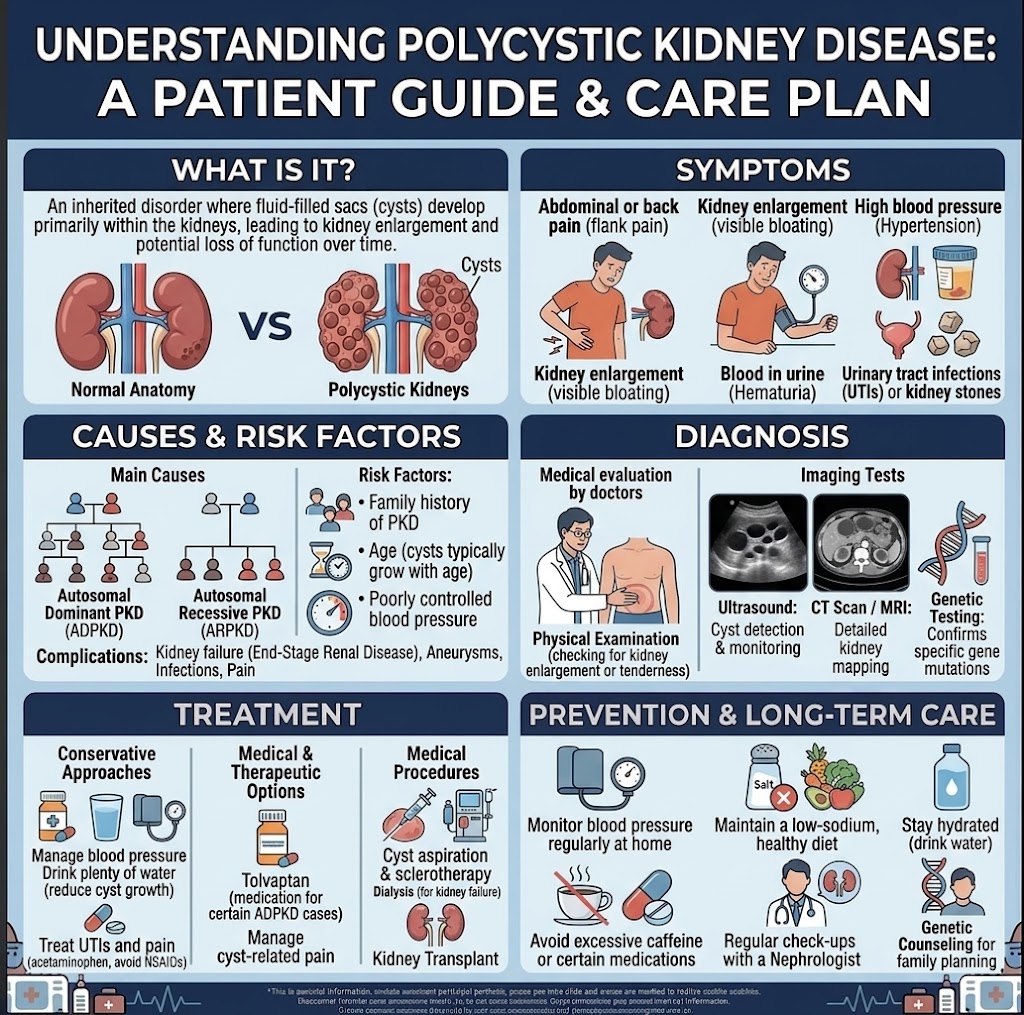
Polycystic Kidney Disease (PKD) is an inherited condition where fluid-filled sacs, called cysts, grow mainly in the kidneys. Over time, these cysts can cause the kidneys to enlarge and gradually lose their ability to filter blood and remove waste. While cysts are not cancerous, numerous or very large cysts can severely damage the kidneys. PKD can also lead to cysts in other organs, such as the liver and pancreas, and cause serious complications like high blood pressure and kidney failure. The severity of PKD varies, but managing the condition through lifestyle changes and treatments can help reduce kidney damage and prevent some complications.
Understanding the Condition
Polycystic Kidney Disease (PKD)
Understanding the Condition
Common Symptoms
High Blood Pressure: An increase in blood pressure is a common symptom.
Pain: Discomfort or pain in the belly, side, or back.
Blood in the Urine: Visible blood in the urine (hematuria).
Feeling of Fullness: A sense of fullness in the belly, sometimes accompanied by a noticeable increase in belly size due to enlarged kidneys.
Kidney Stones: Formation of hard deposits in the kidneys.
Kidney Failure: In advanced stages, the kidneys may lose their ability to function.
Infections: Recurrent urinary tract or kidney infections.
Consultation Guide
Which Specialist to Meet
You should consult with a primary care doctor for initial assessment, who can then refer you to a nephrologist (a doctor specializing in kidney diseases). A genetic counselor may also be beneficial to understand inheritance patterns and risks.
Preparations Before Your Visit
Before your visit, gather your family's medical history, especially any kidney conditions. List all current medications and supplements. Prepare a list of questions or concerns you have. Be ready to discuss any symptoms you've experienced.
Book a doctor visit near me
Consultation Guide
Polycystic Kidney Disease (PKD) is an inherited condition where fluid-filled sacs, called cysts, grow mainly in the kidneys. Over time, these cysts can cause the kidneys to enlarge and gradually lose their ability to filter blood and remove waste. While cysts are not cancerous, numerous or very large cysts can severely damage the kidneys. PKD can also lead to cysts in other organs, such as the liver and pancreas, and cause serious complications like high blood pressure and kidney failure. The severity of PKD varies, but managing the condition through lifestyle changes and treatments can help reduce kidney damage and prevent some complications.
Minimally Invasive Cyst Surgery: In specific cases where large cysts cause severe pain or other complications, surgeons may use minimally invasive techniques (like laparoscopy) to remove or drain them. (Duration: Single surgical procedure)
Diagnostic Procedures
Ultrasound (Sonography)
This safe procedure uses sound waves to create real-time images of your internal organs, including the kidneys. It helps doctors visualize the size and number of cysts in the kidneys and other organs. It's often the first test used to diagnose PKD.
What to Expect
You will lie on an examination table. A technician will apply a clear gel to your skin over the area being examined (e.g., your abdomen). They will then press a small handheld device, called a transducer, against your skin and move it around. You might feel a little pressure, but it's usually painless. The sound waves bounce off your organs, and a computer converts these echoes into images displayed on a screen. The procedure typically takes 30-60 minutes, and you can usually resume normal activities immediately afterward.
CT Scan (Computed Tomography Scan)
A CT scan uses specialized X-ray equipment and computer processing to create detailed cross-sectional images ("slices") of your body. It provides more detailed views than a standard X-ray, allowing doctors to precisely assess the size, location, and extent of cysts in the kidneys and other areas, and to identify any complications like bleeding or stones.
What to Expect
You will lie on a motorized table that slides into a large, donut-shaped machine. You may be asked to hold your breath for short periods to ensure clear images. Depending on the area being scanned, you might receive a contrast dye, either orally or through an intravenous (IV) line, to enhance image clarity. If contrast is used, you might feel a warm flush or a metallic taste. The machine may make buzzing or clicking noises. The scan itself is generally quick, lasting from a few minutes to half an hour. You'll need to remain still during the scan.
Screening for Brain Aneurysms: Individuals with PKD, especially those with a family history of aneurysms, may require periodic imaging tests to screen for balloon-like bulges in brain blood vessels that could rupture.
Managing Pregnancy Risks: Women with PKD who are pregnant should be closely monitored for complications like very high blood pressure (preeclampsia), particularly if they had high blood pressure or reduced kidney function before pregnancy.
Pain Management Strategies: Working with your doctor to find effective ways to manage chronic or intermittent pain associated with cysts or infections.
Preventing and Treating Infections: Promptly addressing urinary tract or kidney infections to prevent more serious complications.
Treatment Options
Medications
Blood Pressure Management Medications: Specific medicines prescribed by your doctor are vital for keeping blood pressure within a healthy range, which helps slow kidney damage. (Duration: Lifelong)
Pain Relief: Over-the-counter or prescription pain relievers may be used to manage discomfort from cysts or related complications. (Duration: As needed, under medical guidance)
Antibiotics: Used to treat urinary tract or kidney infections that can arise from PKD. (Duration: Typically a course of 7-14 days, depending on the infection)
Advanced Procedures and Surgeries
Dialysis: When kidneys fail, dialysis uses a machine to filter waste products and excess fluid from the blood, essentially doing the job of the kidneys. (Duration: Ongoing, typically several hours a few times a week, until a kidney transplant or as a long-term solution)
Kidney Transplant: A surgical procedure to replace a failing kidney with a healthy kidney from a deceased or living donor. This is often the preferred treatment for end-stage kidney failure. (Duration: Single surgery, followed by lifelong anti-rejection medication and monitoring)
Strict Blood Pressure Control: Actively managing and maintaining healthy blood pressure through medication and lifestyle is the most crucial step in preserving kidney function and preventing further damage.
Regular Medical Monitoring: Consistent follow-up with your healthcare team allows for early detection and management of complications, including liver cysts, heart valve issues, and colon problems.
Prevention & Long-Term Wellbeing
Lifestyle and Home Remedies
Dietary Changes: Following a low-salt diet rich in fruits, vegetables, and whole grains can help manage blood pressure and kidney health. (Duration: Ongoing)
Physical Activity: Engaging in at least 30 minutes of moderate physical activity most days of the week helps maintain a healthy weight and supports overall cardiovascular health. (Duration: Ongoing)
Weight Management: Achieving and maintaining a healthy weight can reduce strain on the kidneys and help control blood pressure. (Duration: Ongoing)
Avoidance of Harmful Habits: Limiting alcohol intake and completely avoiding smoking are crucial for kidney and overall health. (Duration: Ongoing)
Prevention and Long-Term Management
Genetic Counseling: If you have PKD and are planning a family, a genetic counselor can help assess the risk of passing the condition to your children and discuss options.
Tags & Topics
Notice an error or need an update?
Help us keep medical information accurate. Report incorrect info or suggest an edit.


