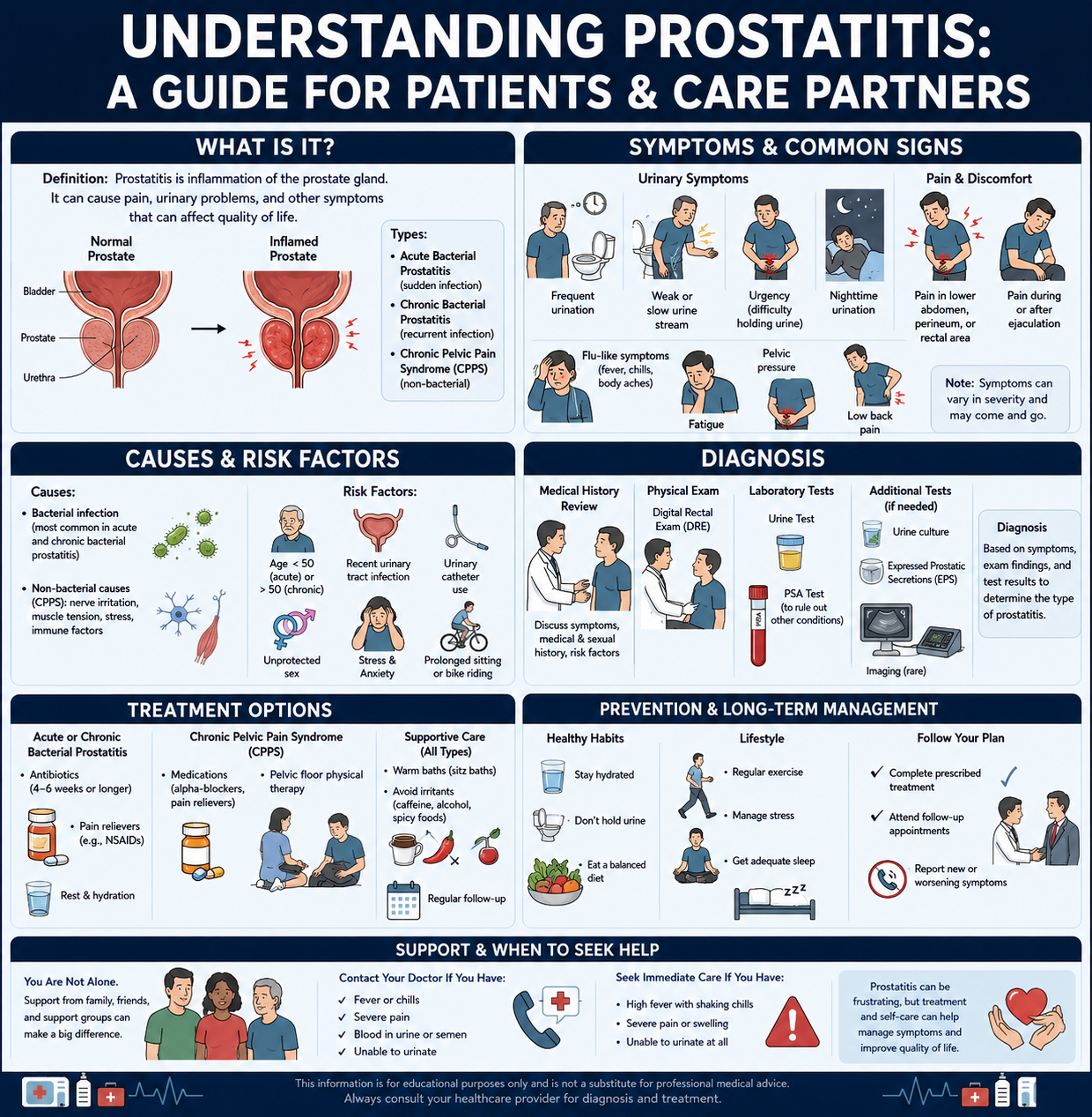
The prostate is a walnut-sized gland located just below the bladder in people assigned male at birth. It surrounds the top part of the urethra, the tube that carries urine out of the body. The prostate gland works with other sex glands to produce fluid (semen) that transports sperm during ejaculation. Prostatitis is a common condition characterized by swelling and irritation (inflammation) of the prostate. It can cause significant discomfort, making urination painful or difficult, and leading to pain in the groin, pelvic area, or genitals. While some cases are caused by bacterial infections, many are not.There are four main types of prostatitis:* **Acute Bacterial Prostatitis:** A sudden, severe bacterial infection of the prostate.* **Chronic Bacterial Prostatitis:** A persistent or recurring bacterial infection, often with milder symptoms.* **Chronic Prostatitis/Chronic Pelvic Pain Syndrome (CPPS):** Pelvic pain and urinary issues that last or return, but without signs of infection.* **Asymptomatic Inflammatory Prostatitis:** Inflammation detected during other medical exams, but without noticeable urinary symptoms.
Understanding the Condition
Prostatitis: Understanding Symptoms, Diagnosis, and Care
Understanding the Condition
The prostate is a walnut-sized gland located just below the bladder in people assigned male at birth. It surrounds the top part of the urethra, the tube that carries urine out of the body. The prostate gland works with other sex glands to produce fluid (semen) that transports sperm during ejaculation. Prostatitis is a common condition characterized by swelling and irritation (inflammation) of the prostate. It can cause significant discomfort, making urination painful or difficult, and leading to pain in the groin, pelvic area, or genitals. While some cases are caused by bacterial infections, many are not.There are four main types of prostatitis:* **Acute Bacterial Prostatitis:** A sudden, severe bacterial infection of the prostate.* **Chronic Bacterial Prostatitis:** A persistent or recurring bacterial infection, often with milder symptoms.* **Chronic Prostatitis/Chronic Pelvic Pain Syndrome (CPPS):** Pelvic pain and urinary issues that last or return, but without signs of infection.* **Asymptomatic Inflammatory Prostatitis:** Inflammation detected during other medical exams, but without noticeable urinary symptoms.
Common Symptoms
Painful Urination (Dysuria): A burning or stinging sensation when passing urine.
Urination Difficulties: Trouble starting the urine stream, a weak or interrupted stream, or dribbling.
Frequent Urination: Needing to urinate more often than usual, especially at night (nocturia).
Urgent Need to Urinate: A sudden, strong sensation to pass urine.
Cloudy Urine: Urine that appears hazy or less clear than usual.
Blood in Urine: Visible blood in the urine.
Pain in Abdomen, Groin, or Lower Back: Aching or discomfort in these areas.
Perineal Pain: Pain in the area between the scrotum and the rectum.
Flu-like Symptoms: With acute bacterial prostatitis, symptoms may include fever, chills, and muscle aches.
Consultation Guide
Which Specialist to Meet
You should first consult your primary care doctor. If the condition is complex or persistent, you may be referred to a urologist, a doctor specializing in urinary and reproductive health.
Preparations Before Your Visit
Before your visit, make a list of all your symptoms, including when they started and how severe they are. Note any relevant medical history, recent illnesses, or past urinary tract infections. Prepare questions for your doctor about diagnosis, treatment options, and expected recovery.
Book a doctor visit near me
An imaging test that uses X-rays to create detailed cross-sectional pictures of organs and structures inside your body, such as the urinary system and surrounding areas. It can help identify blockages or other issues contributing to symptoms.
Antibiotics: Used to treat bacterial prostatitis by killing the infection-causing bacteria. It's crucial to complete the entire course as prescribed, even if symptoms improve. (Duration: Typically 4-6 weeks for acute infections, but may extend for several months (e.g., 6-12 weeks or longer) for chronic bacterial prostatitis or recurring infections.)
Pain Relievers: Over-the-counter or prescription medications to manage pain and discomfort associated with prostatitis. (Duration: Used as needed for symptom relief.)
Alpha Blockers: Medications that help relax muscle fibers in the prostate and bladder neck, making urination easier and reducing urinary symptoms. (Duration: Prescribed for varying durations, often long-term for chronic conditions, based on symptom relief and doctor's guidance.)
Biofeedback: A mind-body technique where you learn to control involuntary bodily functions (like muscle tension or heart rate) using real-time feedback from sensors. It can help manage chronic pelvic pain. (Duration: Involves several sessions over weeks or months, with ongoing practice at home.)
Acupuncture: A traditional Chinese medicine technique involving the insertion of very thin needles into specific points on the body to relieve pain and promote healing by balancing energy flow. (Duration: Typically involves multiple sessions (e.g., 6-12) over several weeks, with potential for maintenance sessions.)
Warm Baths: Soaking in warm water can help relax pelvic muscles and ease pain. (Duration: As needed for symptom relief.)
Avoid Irritants: Reducing or avoiding alcohol, caffeine, and spicy foods that can irritate the bladder. (Duration: Ongoing, based on individual response.)
Hydration: Drinking plenty of water to help flush the urinary system. (Duration: Daily practice.)
Adherence to Treatment: Complete all prescribed medication courses, even if symptoms improve, to fully eradicate infections and prevent recurrence.
Regular Follow-ups: Attend scheduled doctor appointments to monitor symptoms, assess treatment effectiveness, and address any new concerns.
Stress Management: Implement techniques like meditation, mindfulness, or counseling, especially for chronic prostatitis/chronic pelvic pain syndrome, as stress can worsen symptoms.
Dietary Awareness: Pay attention to how certain foods and drinks (e.g., acidic foods, caffeine, alcohol) affect your symptoms and adjust your diet accordingly.
Consultation Guide
A doctor will perform a digital rectal exam (DRE) to massage the prostate gland gently. This massage encourages fluid to be released from the urethra, which is then collected for laboratory testing. It may cause temporary discomfort.
A procedure allowing a healthcare professional to visually examine the lining of your bladder and urethra. For individuals assigned male at birth, it can also check the prostate area. It uses a thin, flexible or rigid tube with a light and lens (cystoscope).
Continue Sexual Activity (if comfortable): Sexual activity generally does not worsen prostatitis. However, if ejaculation causes pain, discuss this with your doctor.
Diagnostic Procedures
Genital Pain: Discomfort or pain in the penis or testicles.
Painful Ejaculation: Discomfort or pain during sexual climax.
A common test used to check your urine for signs of infection, kidney disease, diabetes, or other conditions by examining its appearance, concentration, and content.
What to Expect
You will be asked to provide a urine sample, typically a "clean-catch" midstream sample, in a sterile cup. The sample is then sent to a lab for analysis. This is a quick and non-invasive procedure.
Prostate Fluid Analysis
This test involves collecting a sample of fluid from the prostate gland to identify specific bacteria causing an infection and determine which antibiotics would be most effective.
What to Expect
What to Expect
What to Expect
You will lie on a table that slides into a large, donut-shaped machine. You may need to hold your breath for short periods. Sometimes, a contrast dye is injected into a vein to make certain structures clearer. The scan itself is painless, though some people may feel a warming sensation from the dye or slight discomfort from lying still.
STI Awareness: If your prostatitis is linked to a sexually transmitted infection (STI), ensure your partner is also tested and treated to prevent reinfection. Avoid sexual contact if you have genital sores or unusual discharge until cleared by a healthcare professional.
Treatment Options
You might have this procedure in an exam room. A numbing gel is applied to the urethra, or you may receive medication to help you relax. The cystoscope is gently inserted into the urethra and advanced into the bladder. You might feel some pressure or discomfort during the insertion and while the scope is inside. In some cases, it may be done under general anesthesia in a hospital setting, meaning you will be asleep.
CT Scan (Computed Tomography Scan)
Medications
Prompt Treatment of Infections: Seek immediate medical attention for urinary tract infections or reproductive system infections to prevent their spread to the prostate.
Safe Catheter Use: If a urinary catheter is necessary, ensure proper sterile insertion and care to minimize infection risk.
Hygiene Practices: Maintain good personal hygiene to reduce the chance of bacterial spread.
Long-Term Monitoring & Management
Prevention & Long-Term Wellbeing
Home Remedies & Lifestyle Adjustments
Prevention
Tags & Topics
Notice an error or need an update?
Help us keep medical information accurate. Report incorrect info or suggest an edit.


