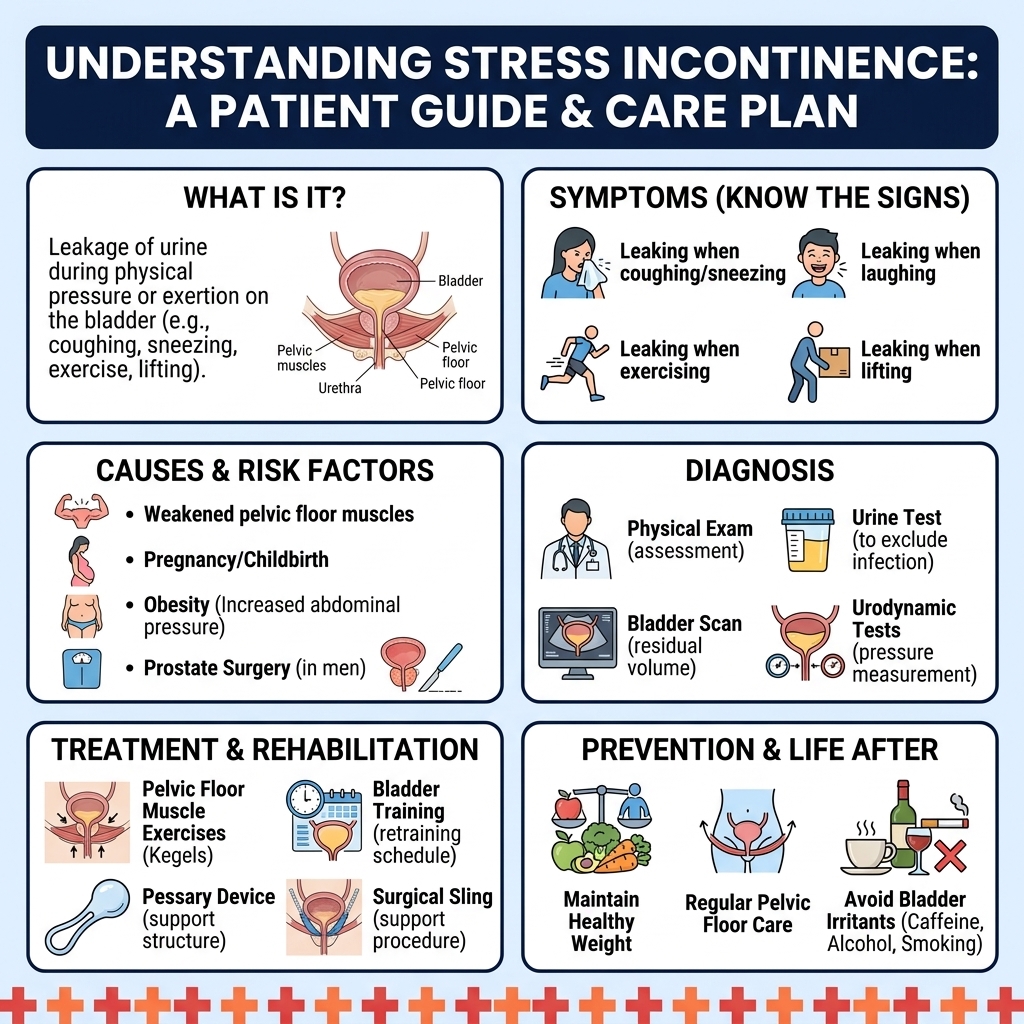
Urinary incontinence refers to the involuntary loss of bladder control. Stress incontinence specifically occurs when physical activities or movements put pressure on the bladder, leading to urine leakage. Common triggers include coughing, laughing, sneezing, running, or lifting heavy objects. It’s important to note that this condition is not linked to emotional or mental stress. Stress incontinence differs from urgency incontinence or overactive bladder (OAB), which involve sudden bladder muscle spasms causing an urgent need to urinate. Stress incontinence is significantly more prevalent in women than in men. Living with stress incontinence can be challenging, potentially causing embarrassment and limiting participation in work, social events, and physical activities. However, effective treatments are available to manage symptoms and significantly enhance your quality of life.
Understanding the Condition
Understanding Stress Incontinence
Understanding the Condition
Urinary incontinence refers to the involuntary loss of bladder control. Stress incontinence specifically occurs when physical activities or movements put pressure on the bladder, leading to urine leakage. Common triggers include coughing, laughing, sneezing, running, or lifting heavy objects. It’s important to note that this condition is not linked to emotional or mental stress. Stress incontinence differs from urgency incontinence or overactive bladder (OAB), which involve sudden bladder muscle spasms causing an urgent need to urinate. Stress incontinence is significantly more prevalent in women than in men. Living with stress incontinence can be challenging, potentially causing embarrassment and limiting participation in work, social events, and physical activities. However, effective treatments are available to manage symptoms and significantly enhance your quality of life.
Common Symptoms
Involuntary Urine Leakage: You may experience urine leakage during activities that increase pressure on your abdomen and bladder, such as coughing, sneezing, laughing, bending over, or lifting heavy items. This leakage might not occur every time you perform these actions, but any activity that strains your bladder can make it more likely. A full bladder also increases the chances of leakage. If your symptoms are bothersome or interfere with your daily life, work, hobbies, or social activities, it is advisable to speak with a healthcare professional.
Consultation Guide
Which Specialist to Meet
You should consult a healthcare professional, such as a family doctor, a urologist (a doctor specializing in urinary tract issues), or a gynecologist (for women, a doctor specializing in female reproductive and urinary health). A pelvic floor physical therapist may also be part of your care team.
Preparations Before Your Visit
During a physical exam, your doctor will review your medical history and symptoms. They may ask you to cough or strain with a full bladder to observe any leakage. A pelvic exam involves lying on an exam table while the doctor examines your vaginal area and checks muscle strength. A rectal exam involves the doctor inserting a gloved, lubricated finger into the rectum to assess muscle tone.
The exam may involve your doctor asking questions about your medical history and assessing your mental status, balance, coordination, reflexes, muscle strength, and sensation. It can take from a few minutes to over an hour, depending on your symptoms and the initial findings. You may be asked to walk, stand, touch your finger to your nose, or have your reflexes checked with a small hammer.
Fluid and Diet Adjustments: Managing your fluid intake, especially avoiding excessive fluids before bedtime or activities known to trigger leakage, can help. Limiting bladder irritants like caffeine, alcohol, and acidic foods may also reduce symptoms. (Duration: Ongoing)
Pelvic Floor Muscle Exercises (Kegels): These exercises strengthen the muscles that support your bladder and urethra, improving their ability to hold urine. A physical therapist can teach you the correct technique. (Duration: Typically 3-6 months for noticeable improvement, with ongoing maintenance exercises.)
Vaginal Pessary: For women, a small, removable device inserted into the vagina can help support the bladder neck and urethra, reducing leakage. These come in various shapes and sizes. (Duration: Can be worn as needed during activity, or daily/weekly as advised by your doctor.)
Minimally Invasive Procedures
Urethral Bulking Agents: Injections of a gel-like substance into the tissue around the urethra can help thicken the area, improving the urethra's ability to stay closed. (Duration: Effects typically last several months to a few years; repeat injections may be necessary.)
Regular Medical Follow-ups: Ongoing communication with your healthcare provider is important to monitor your symptoms, adjust treatment plans as needed, and ensure long-term management and improved quality of life.
Consultation Guide
Manage Chronic Cough: Chronic coughing puts repeated strain on your pelvic floor. Addressing underlying conditions that cause persistent coughing, such as asthma or allergies, can help prevent or improve stress incontinence.
Skin Care and Hygiene: Prolonged contact with urine can lead to skin irritation, rashes, or breakdown. Use absorbent pads or garments designed for incontinence, change them frequently, and keep the skin clean and dry. Moisture barrier creams can also be helpful.
Emotional Support: Coping with stress incontinence can lead to feelings of embarrassment, shame, or isolation. Talking to a healthcare professional, joining support groups, or seeking counseling can provide valuable emotional support and coping strategies.
Diagnostic Procedures
A physical exam helps your doctor assess your overall health and specifically evaluate the strength of your pelvic floor muscles. For women, this typically includes a pelvic exam to check the pelvic organs and muscle tone. For men, a rectal exam may be performed.
What to Expect
A urinalysis is a test of your urine used to detect various conditions, including urinary tract infections (UTIs), kidney disease, or diabetes. It examines the appearance, concentration, and content of your urine.
What to Expect
You will be asked to provide a urine sample, often a 'clean catch' specimen to prevent contamination. This involves cleaning the genital area, beginning to urinate into the toilet, then collecting a midstream sample in a sterile cup. The sample will be sent to a lab for analysis, where it will be checked for signs of infection, blood, protein, or sugar.
Neurological Examination
A neurological exam, also known as a neuro exam, evaluates how well different parts of your nervous system are functioning. This system includes your brain, spinal cord, nerves, and muscles. This exam helps identify nervous system conditions that might be contributing to bladder control issues.
What to Expect
Treatment Options
Before your visit, consider keeping a bladder diary for a few days, noting when you leak, what activities trigger it, and how much you drink. Be prepared to discuss your medical history, any other health conditions, and all medications you are currently taking. Write down any questions you have for your doctor.
Book a doctor visit near me
Prevention & Long-Term Wellbeing
Home Remedies & Lifestyle Changes
Weight Management: Achieving and maintaining a healthy body weight can significantly reduce pressure on your bladder and pelvic floor muscles, thereby decreasing urine leakage. (Duration: Ongoing)
Sling Procedures: This common surgical approach involves creating a 'sling' of synthetic mesh or your own body tissue to support the urethra and bladder neck, holding them in place. (Duration: Generally considered a long-term or permanent solution; recovery takes several weeks to months.)
Artificial Urinary Sphincter (for men): For men, an inflatable cuff is surgically placed around the urethra. This device can be manually controlled to open and close the urethra, allowing for voluntary urination. (Duration: Generally considered a long-term or permanent solution; recovery takes several weeks to months.)
Maintain a Healthy Weight: Excess body weight increases pressure on your abdomen and pelvic organs, which can worsen stress incontinence. Maintaining a healthy weight through diet and exercise is crucial for prevention and management.
Strengthen Pelvic Floor Muscles: Regularly performing pelvic floor exercises (Kegels) helps strengthen the muscles that support your bladder and urethra, which can prevent or reduce leakage.
Tags & Topics
Notice an error or need an update?
Help us keep medical information accurate. Report incorrect info or suggest an edit.


