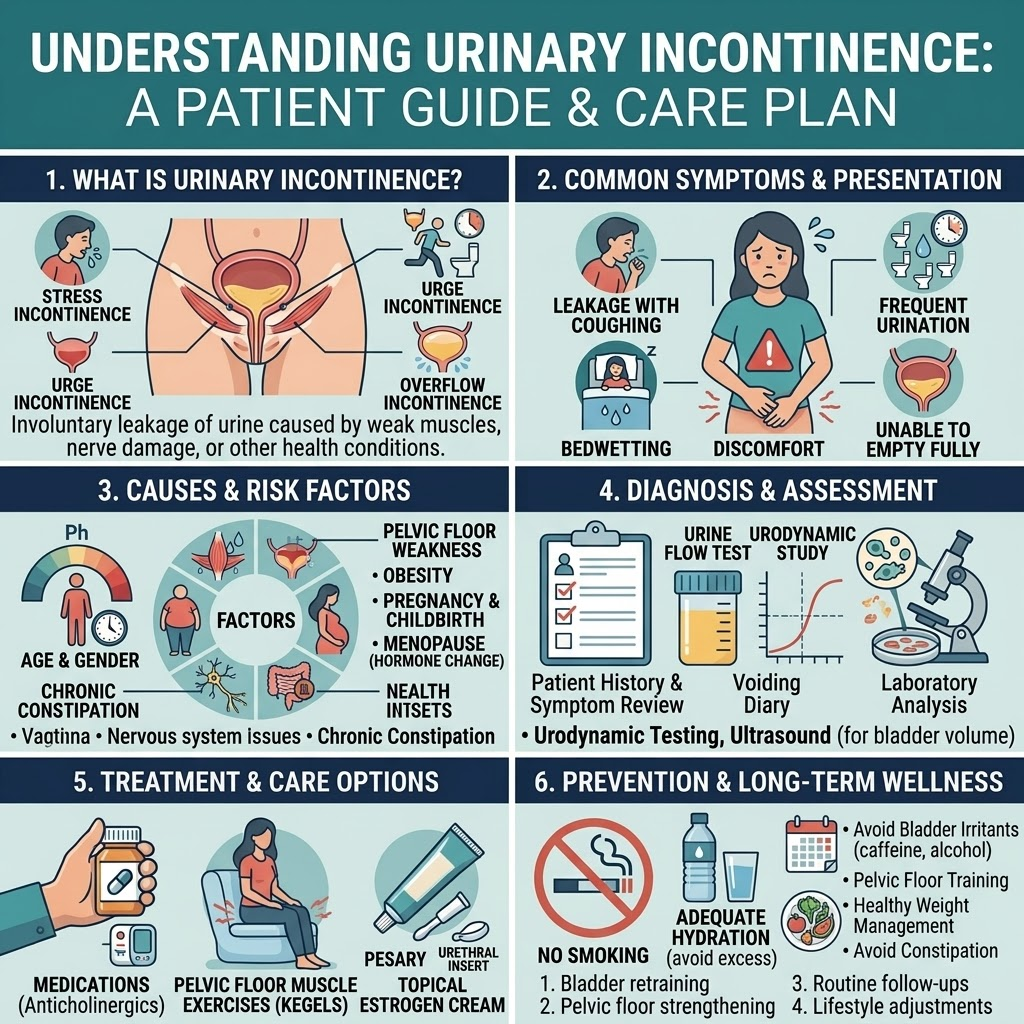
Urinary incontinence is the involuntary leakage of urine, commonly known as a loss of bladder control. This widespread issue can range from minor leaks during a cough or sneeze to sudden, strong urges making it hard to reach a toilet. While more frequent with age, it's not an inevitable part of getting older. If it impacts daily life, effective treatments, including lifestyle changes and medical care, are readily available.
Understanding the Condition
Urinary Incontinence: Understanding and Managing Bladder Control Issues
Understanding the Condition
Common Symptoms
Stress Incontinence: Urine leaks when pressure is put on the bladder (e.g., coughing, sneezing, laughing, exercising, lifting heavy objects).
Fluid Management: Adjust fluid intake, especially before bed, to manage symptoms. (Duration: Ongoing.)
Eat a Fiber-Rich Diet: Adequate fiber intake prevents constipation, reducing bladder pressure and incontinence symptoms.
Quit Smoking: Quitting smoking reduces cough (bladder pressure) and overall incontinence risk.
Long-Term Monitoring and Management
Ongoing Medical Consultation: Regular doctor follow-ups monitor symptoms, adjust treatments, and address new concerns.
Manage Underlying Conditions: Controlling conditions like diabetes or neurological disorders impacts bladder control.
Prevent Complications: Promptly address skin irritation, rashes, or recurrent UTIs, common incontinence complications.
Maintain Social and Physical Activity: Don't let incontinence restrict activities; explore strategies to maintain quality of life.
Consultation Guide
Urge Incontinence: A sudden, intense urge to urinate leads to involuntary loss of urine. This includes frequent urination (day/night) and adult bed-wetting (nocturnal enuresis). Causes may include infections, nerve issues, or diabetes.
Overflow Incontinence: Frequent, constant dribbling of urine because the bladder doesn't empty completely.
Functional Incontinence: A physical or mental impairment prevents reaching the toilet in time (e.g., severe arthritis hindering clothes removal).
Mixed Incontinence: Combination of more than one type, most often stress and urge incontinence.
Consultation Guide
Which Specialist to Meet
Begin with your primary care provider. They may refer you to a urologist (urinary system specialist), urogynecologist (women's pelvic floor specialist), or geriatrician (older adults' health specialist).
Preparations Before Your Visit
Diagnostic Procedures
A urine test screens for infections, kidney issues, or diabetes by analyzing urine appearance, concentration, and content.
What to Expect
You'll provide a 'clean-catch' sample, cleaning the genital area before collecting midstream urine for lab analysis.
A doctor uses a thin, lighted tube (cystoscope) to look inside your bladder and urethra.
What to Expect
After numbing gel, the cystoscope is gently inserted. Done in a clinic or hospital, sometimes with sedation. Typically lasts several minutes.
An imaging test uses sound waves to picture internal organs (bladder, kidneys) and assess their structure.
What to Expect
Gel is applied to skin, a handheld device moved over the area. A full bladder may be needed. Painless, 15-30 minutes.
Treatment Options
Urinary incontinence is the involuntary leakage of urine, commonly known as a loss of bladder control. This widespread issue can range from minor leaks during a cough or sneeze to sudden, strong urges making it hard to reach a toilet. While more frequent with age, it's not an inevitable part of getting older. If it impacts daily life, effective treatments, including lifestyle changes and medical care, are readily available.
Before your visit, prepare a 'bladder diary' (tracking fluid intake, urination times, and leaks for several days). Be ready to discuss your medical history, medications, and lifestyle.
Book a doctor visit near me
Medications
Bladder-Relaxing Medications: Prescription drugs relax an overactive bladder, reducing urges and frequent urination for urge incontinence. (Duration: Taken as prescribed, often long-term.)
Specific Oral Medications: Other medications or hormone therapies may improve urethral function, particularly for stress incontinence. (Duration: Taken as prescribed, often long-term.)
Vaginal Pessaries: Removable vaginal devices (for women) support the urethra and bladder, helping prevent leaks. (Duration: Worn daily or intermittently, fitted by a professional.)
Surgical Procedures (Primarily for Stress Incontinence in Women)
Sling Procedures: Uses a 'sling' (mesh/tissue) to support the urethra, preventing leakage during physical activities. (Duration: One-time procedure intended as a long-term solution.)
Bladder Neck Suspension: Sutures lift and support the urethra and bladder neck, restoring normal positioning. (Duration: One-time procedure intended as a long-term solution.)
Prevention & Long-Term Wellbeing
Lifestyle Changes & Home Remedies
Pelvic Floor Exercises (Kegels): Strengthen bladder/urethra support muscles for control. (Duration: Ongoing; consistent practice for best results.)
Bladder Training: Gradually increase time between bathroom visits to improve bladder capacity. (Duration: Weeks to months.)
Dietary Modifications: Identify and reduce bladder irritants (caffeine, alcohol, acidic/spicy foods). (Duration: Ongoing trial and error.)
Weight Management: Losing excess weight reduces bladder pressure, improving leakage. (Duration: Ongoing.)
Increased Fiber Intake: Increased fiber prevents constipation, which can worsen bladder control. (Duration: Ongoing dietary adjustment.)
Prevention Strategies
Maintain a Healthy Weight: Excess weight increases bladder/pelvic floor pressure, worsening incontinence.
Regular Pelvic Floor Exercises: Consistent Kegel exercises strengthen muscles vital for bladder control.
Avoid Bladder Irritants: Limiting caffeine, alcohol, artificial sweeteners, acidic/spicy foods reduces bladder overactivity.
Fall Prevention for Older Adults: Rushing to the toilet increases fall risk; discuss safe urgency management with your doctor.
Tags & Topics
Notice an error or need an update?
Help us keep medical information accurate. Report incorrect info or suggest an edit.


