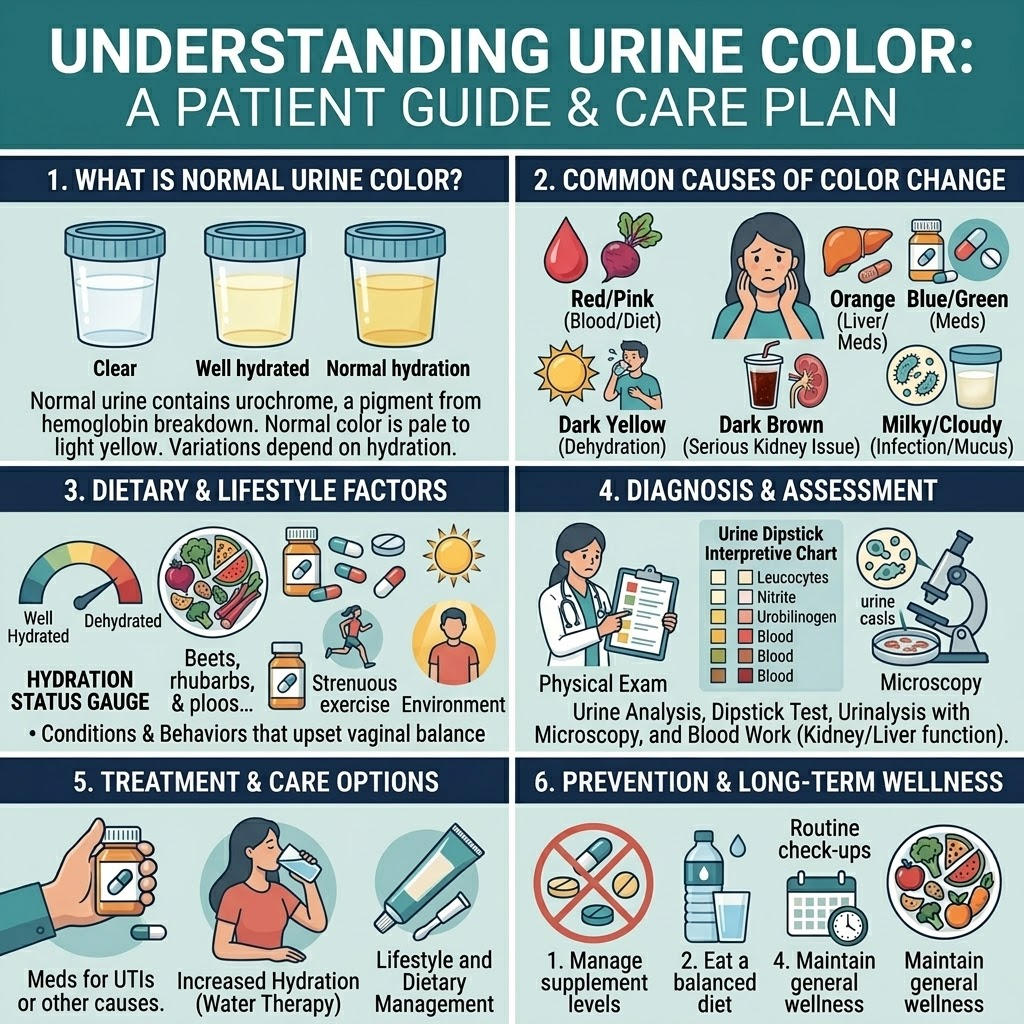
Urine color is a simple yet powerful indicator of health, often ranging from clear to pale yellow in healthy individuals. This normal variation is primarily due to a pigment called urochrome and how much water you drink. However, certain foods, medications, vitamins, and even exercise can temporarily alter urine color. More importantly, unusual urine colors can signal underlying health issues, ranging from dehydration and infections to more serious conditions affecting the kidneys or liver. Recognizing these changes and understanding their potential causes is crucial for knowing when to seek medical advice.
Understanding the Condition
Understanding Urine Color: A Guide for Non-Medical Persons
Understanding the Condition
Common Symptoms
When to Seek Medical Attention: Consult a healthcare provider if you notice: blood in your urine (even if painless, as it can indicate a serious issue like cancer, though it's often due to UTIs or kidney stones); persistent dark or orange urine, especially if you also have pale stools or yellowing of your skin and eyes (which may signal a liver problem); or any unusual urine color that doesn't clear up, isn't linked to food or medication, or is accompanied by pain or other concerning symptoms.
Consultation Guide
Which Specialist to Meet
Before your appointment, make a note of: your symptoms, including when they started and how often they occur; all medications you are currently taking (prescription, over-the-counter, and supplements); any recent dietary changes, including specific foods like beets or blackberries; your fluid intake; and any questions you have for your doctor.
Book a doctor visit near me
Pain Relievers and Muscle Relaxants: Used to manage pain associated with kidney stones or urinary tract irritation. These medications do not treat the underlying cause but provide symptomatic relief. (Duration: As needed for pain, typically short-term during an acute episode.)
Medications for Prostate Enlargement: Certain medications can help relax prostate muscles or shrink the gland to improve urine flow and reduce symptoms like blood in urine caused by an enlarged prostate. (Duration: Long-term, as directed by a physician.)
Procedures and Therapies
Kidney Stone Removal Procedures: For larger kidney stones that don't pass naturally, procedures such as shock wave lithotripsy (using sound waves to break stones) or ureteroscopy (inserting a thin scope to remove or break stones) may be necessary to remove the stone and prevent further bleeding or blockage. (Duration: One-time procedure, with potential follow-up to ensure complete clearance.)
Monitor Urine Color Changes: Regularly observe your urine color. Pay attention to changes that are not easily explained by food or medication, or that persist for more than a day or two. Keep a record of any unusual colors and associated symptoms.
Be Aware of Family History: If kidney disease or kidney stones run in your family, you may be at higher risk. Discuss this with your doctor and follow any recommended screening or preventative measures.
Consultation Guide
Urine color is a simple yet powerful indicator of health, often ranging from clear to pale yellow in healthy individuals. This normal variation is primarily due to a pigment called urochrome and how much water you drink. However, certain foods, medications, vitamins, and even exercise can temporarily alter urine color. More importantly, unusual urine colors can signal underlying health issues, ranging from dehydration and infections to more serious conditions affecting the kidneys or liver. Recognizing these changes and understanding their potential causes is crucial for knowing when to seek medical advice.
Normal Urine Color Variations: The color of healthy urine depends on your hydration level. When you drink plenty of fluids, your urine appears clearer or very pale yellow because the pigments are diluted. When you drink less, the yellow color becomes more concentrated and darker.
Red or Pink Urine: This can be alarming but isn't always serious. Possible causes include: blood (due to urinary tract infections, kidney stones, an enlarged prostate, non-cancerous growths, or in rare cases, certain cancers; intense exercise like long-distance running can also cause temporary bleeding); certain foods (such as beets, blackberries, or rhubarb); and some medications (like a tuberculosis drug, a urinary tract pain reliever, or certain constipation remedies).
Orange Urine: Common causes include dehydration, which concentrates the urine. Some medications (like the urinary tract pain reliever or certain chemotherapy drugs), and certain vitamins (such as A and B-12) can also cause orange urine. In some cases, it can indicate a liver or bile duct problem, especially if accompanied by pale stools or yellowing of the skin and eyes.
Dark Brown Urine: While some medications or even fava beans can cause dark brown urine, it can also be a sign of severe dehydration or a liver problem. If your urine is dark brown, particularly if you also have pale stools and yellow skin or eyes, it's important to seek medical attention promptly.
Cloudy or Milky White Urine: This appearance often suggests a urinary tract infection (UTI), which can cause the urine to look hazy due to the presence of pus or bacteria. Kidney stones can also sometimes make urine appear cloudy.
Initially, you should consult your primary care physician. Depending on the suspected cause, your doctor may refer you to a urologist (specializing in urinary tract issues), a nephrologist (kidney specialist), or a gastroenterologist (digestive system specialist, if liver issues are suspected).
Preparations Before Your Visit
Antibiotics: Prescribed to treat bacterial urinary tract infections, which can cause cloudy or milky white urine, and sometimes blood. The specific type and duration depend on the infection's severity and the bacteria identified. (Duration: Typically 3-14 days, depending on the infection.)
Surgery for Tumors or Cancers: If an unusual urine color is caused by a tumor or cancer (e.g., in the bladder or kidney), surgical removal of the tumor may be required, often alongside other treatments like chemotherapy or radiation therapy. (Duration: One-time surgery, with potential for ongoing post-operative care and monitoring.)
Practice Good Hygiene: Proper personal hygiene, especially in women, can help prevent urinary tract infections, which are a common cause of cloudy or discolored urine.
Regular Health Check-ups: Undergo routine medical examinations, especially as you age or if you have risk factors for kidney or bladder issues. Early detection of conditions like an enlarged prostate or kidney disease can prevent more serious complications.
Long-Term Monitoring and Awareness
Listen to Your Body During Exercise: While intense exercise can sometimes cause temporary blood in urine, persistent or severe bleeding warrants medical evaluation to rule out other causes.
Diagnostic Procedures
Unusual Greenish-Blue Urine: Though less common, some medications, specific medical dyes used in tests, or rare genetic conditions can turn urine green or blue.
A urinalysis is a common, non-invasive test that examines a urine sample to detect and manage a variety of health conditions, including urinary tract infections, kidney disease, and diabetes. It involves checking the urine's appearance, concentration, and chemical content to identify abnormalities. For example, a urinary tract infection might make urine cloudy, while high protein levels could indicate kidney disease. Abnormal urinalysis results often prompt further diagnostic tests to pinpoint the exact problem.
What to Expect
You will be asked to provide a urine sample, typically using a 'clean catch' method. This involves cleaning the genital area before collecting a midstream sample of urine into a sterile cup to prevent contamination. The sample is then sent to a laboratory where it undergoes three types of examination: a visual check for color and clarity; a dipstick test, where a chemically treated strip is dipped into the urine to detect substances like protein, sugar, blood, or signs of infection; and a microscopic examination, where a small amount of urine is viewed under a microscope to look for bacteria, red blood cells, white blood cells, or crystals. The entire process of providing the sample is quick and painless, and results are usually available within a day or two.
Treatment Options
Medications
Liver Support Therapies: If dark or orange urine indicates a liver or bile duct issue, treatment focuses on managing the underlying liver condition. This may include dietary changes, medications to reduce bile acids, or procedures to unblock bile ducts. (Duration: Ongoing, depending on the specific liver condition.)
Surgical Procedures
Manage Underlying Health Conditions: Effectively manage chronic conditions such as diabetes, high blood pressure, or liver disease, as these can impact kidney function and urine appearance. Follow your doctor's recommendations for medication and lifestyle.
Prevention & Long-Term Wellbeing
Home Remedies and Lifestyle Adjustments
Increased Fluid Intake: For dehydration-related dark or orange urine, increasing your water intake helps to dilute the urine and restore its normal color. This also aids in preventing kidney stones and flushing out bacteria in early stages of UTIs. (Duration: Ongoing, or until urine color normalizes (typically within hours to a day).)
Dietary Modifications: If certain foods are causing discoloration, avoiding them can resolve the issue. For general health, maintaining a balanced diet supports overall well-being and organ function. (Duration: As needed, or long-term for preventative health.)
Prevention
Maintain Optimal Hydration: Drink plenty of water throughout the day to keep your urine a light yellow color. This helps flush out toxins, prevent kidney stone formation, and reduce the risk of urinary tract infections.
Balanced Diet and Awareness of Food Triggers: Eat a varied diet. Be mindful of how certain foods (like beets, berries, rhubarb) can temporarily change urine color and adjust your diet if these changes are bothersome or confusing. Ensure adequate intake of fruits and vegetables.
Tags & Topics
Notice an error or need an update?
Help us keep medical information accurate. Report incorrect info or suggest an edit.


