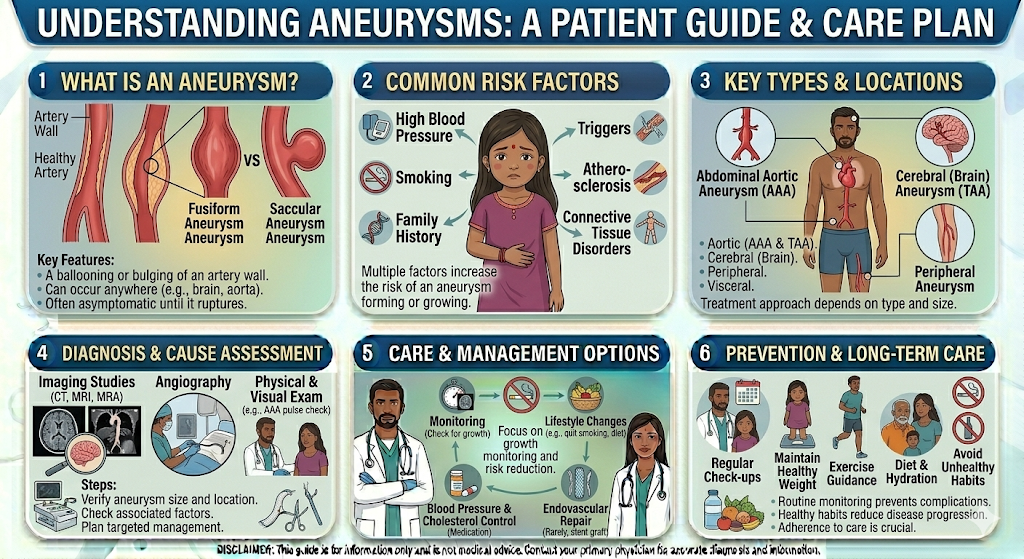
An aneurysm is a dangerous bulge or ballooning that forms in the wall of a blood vessel. When the vessel wall weakens, the pressure from blood flow can cause this area to swell like a balloon. A major concern is that the aneurysm might break open, which is called a rupture, leading to severe bleeding inside the body and often resulting in death. A ruptured aneurysm, especially a brain aneurysm, is a medical emergency that can cause life-threatening internal bleeding.
Understanding the Condition
Aneurysms an Overview
Many aneurysms do not cause any noticeable symptoms, even when they are large, meaning a person may not know they have one.
Aneurysms can occur in various critical locations:
Aortic Aneurysm: In the aorta, the body's main artery that carries blood from the heart. This includes the part that runs through the chest (thoracic) or the belly (abdominal).
Aneurysms can form in several parts of the body, including:
Brain Aneurysm (Cerebral Aneurysm): In the blood vessels that supply the brain.
Peripheral Aneurysm: In other blood vessels, such as those in the neck, groin, or legs.
The risk of rupture is determined by a healthcare professional considering factors such as your current symptoms, medical and family history, and the size, shape, and location of the aneurysm.
If you experience severe symptoms, such as the worst headache of your life (a potential sign of a ruptured brain aneurysm), you must seek emergency medical care immediately.
For evaluation of an unruptured or suspected aneurysm, you should consult with a specialist:
For Brain Aneurysms: A Neurologist or Neurosurgeon.
For Aortic or Peripheral Aneurysms: A Cardiologist or Vascular Specialist.
Preparations Needed Before the Visit
To ensure a comprehensive evaluation, it is helpful to prepare the following before your appointment:
A detailed list of all symptoms you have experienced, including when they started.
Your complete medical history and family history of aneurysms or related conditions.
Consultation Guide
An aneurysm is a dangerous bulge or ballooning that forms in the wall of a blood vessel. When the vessel wall weakens, the pressure from blood flow can cause this area to swell like a balloon. A major concern is that the aneurysm might break open, which is called a rupture, leading to severe bleeding inside the body and often resulting in death. A ruptured aneurysm, especially a brain aneurysm, is a medical emergency that can cause life-threatening internal bleeding.
Description: Genetic testing involves examining your DNA to find changes that may cause certain inherited conditions (like Marfan syndrome) that are linked to an increased risk of aneurysm formation.
Supportive Care/Ventricular Drainage: For complications following a rupture, an External Ventricular Drain (EVD) may be placed temporarily to relieve pressure caused by fluid buildup in the brain (hydrocephalus).
Effective prevention and long-term well-being revolve around diligent management of risk factors and consistent medical monitoring. Even after treatment, these steps are essential to prevent new aneurysms and maintain vascular health.
Lifestyle and Risk Factor Management
Diagnostic Procedures
Diagnostics: Detailed Description of Procedures
Doctors use several imaging and laboratory tests to confirm the presence of an aneurysm, determine its size and location, and plan treatment.
Computed Tomography (CT) Scan
Description: This imaging test uses X-ray technology and computer processing to create detailed, cross-sectional images ("slices") of bones, blood vessels, and soft tissues inside the body. It provides much more detail than a standard X-ray.
What to Expect
Ultrasound (Sonography)
Description: This safe procedure uses low-power sound waves to create live pictures of internal organs and structures. An abdominal ultrasound is often the preferred screening test for an aneurysm in the lower part of the aorta.
What to Expect
Brain Magnetic Resonance Imaging (MRI)
Description: An MRI uses a powerful magnetic field and radio waves to create highly detailed images of the brain, neck, and spine. This test can show areas where the brain is not functioning as it should or confirm the presence of a brain aneurysm.
What to Expect
Lumbar Puncture (Spinal Tap)
Description: This diagnostic test removes a small sample of cerebrospinal fluid (CSF)—the fluid that surrounds the brain and spinal cord—for testing. It is used to diagnose bleeding around the brain, which can occur after an aneurysm rupture.
What to Expect
Description: This test uses sound waves to create pictures of the heart, showing how blood flows through the heart chambers and valves. It helps in diagnosing heart conditions that may be related to aortic aneurysms.
What to Expect
What to Expect
Description: This fast, non-painful test captures images of structures inside the body, including the heart, lungs, blood vessels, and bones of the chest and spine. It is often among the first procedures if a healthcare professional suspects heart or lung disease.
What to Expect
Imaging Surveillance: For unruptured aneurysms managed by observation, or following successful treatment, regular imaging tests (e.g., MRI, CT scans, or ultrasound) may be required to monitor the aneurysm's status or check for recurrence.
Disclaimer: This article provides general health information and is not intended to be a substitute for professional medical advice, diagnosis, or treatment. Always consult your treating physician or another qualified healthcare provider with any questions you may have regarding a medical condition.
To report an error in the article, please send an email to errors@medicalwriter.com.
Treatment Options
A list of all prescription and non-prescription medications, vitamins, and supplements you are currently taking.
A list of questions you wish to ask the doctor.
Book a doctor visit near me
Treatment depends heavily on the aneurysm's location, size, and whether it has ruptured. For unruptured aneurysms with a low risk, observation may be the best approach.
Medication (Duration: Long-term)
Prescribed medicines are used to manage conditions like high blood pressure to lessen the stress on weakened blood vessels.
After an aneurysm rupture, specific medications may be used to manage complications like the narrowing of blood vessels (vasospasm).
Procedures/Therapies (Duration: Varies, from short-term procedure to ongoing management)
Minimally Invasive Endovascular Repair: A long, thin tube (catheter) is inserted and guided to the aneurysm. Materials such as metal coils, glue-like substances, or supportive devices (stents) are then deployed to block blood flow into the bulging area, effectively sealing it. This is used for both brain and aortic aneurysms.
Radiation Therapy (e.g., Stereotactic Radiosurgery): Highly focused, precise beams of high-energy radiation are delivered directly to the aneurysm or associated vascular lesions to damage the cells' ability to grow. The effects occur over months or years.
Aortic Graft Repair (Open-Chest Surgery): The damaged section of the aorta is surgically removed and replaced with a synthetic tube called a graft, which is sewn into place. This procedure carries high risks, especially when performed as an emergency.
Blood Pressure Control: High blood pressure is a primary contributor to weakened blood vessel walls. Regular monitoring and adherence to prescribed antihypertensive medications are critical to reducing stress on the arteries.
Tobacco Cessation: Quitting smoking and avoiding all tobacco products is one of the most significant steps you can take. Tobacco use dramatically increases the risk of aneurysm formation and rupture.
Cholesterol Management: Maintain healthy cholesterol and triglyceride levels through diet, exercise, and medication as necessary.
Medication Adherence: Consistently take all prescribed medications for conditions like high blood pressure or diabetes as directed by your doctor.
Prevention & Long-Term Wellbeing
Home Remedies and Prevention (Duration: Ongoing/Long-term)
Lifestyle changes are crucial for prevention and management. These include quitting smoking and tobacco use, keeping blood pressure and cholesterol levels controlled, maintaining a healthy weight, and eating nutritious foods.
Consuming alcohol in strict moderation, or not at all, and avoiding illicit drug use is also essential to reduce risk.
Surgical Procedures (Duration: Recovery of several weeks to months)
Open Surgical Clipping: For brain aneurysms, this involves a procedure where the skull is opened (craniotomy) to access the brain. A small metal clip is then placed across the neck of the aneurysm to prevent rupture.
Prevention and Long-term Well-being
Healthy Weight and Diet: Maintaining a healthy weight and following a nutritious diet rich in fruits, vegetables, and whole grains supports overall vascular health. Limit intake of saturated fats and sodium.
Moderate Alcohol Consumption: Consume alcohol only in strict moderation, or avoid it entirely, and steer clear of illicit drug use, which can severely elevate blood pressure and risk.
Regular Checkups: Schedule and attend all recommended follow-up appointments with your specialist (Neurologist, Cardiologist, or Vascular Specialist).
Tags & Topics
Notice an error or need an update?
Help us keep medical information accurate. Report incorrect info or suggest an edit.


