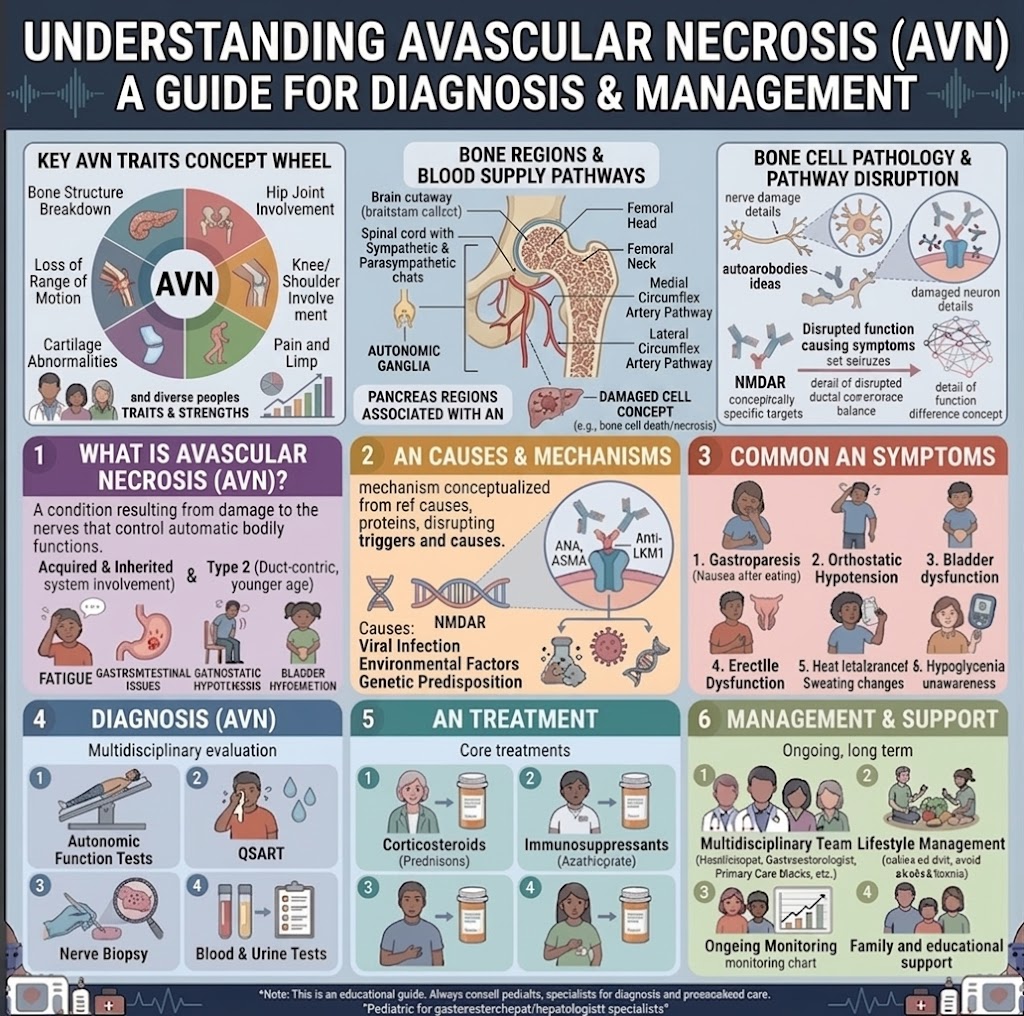
Avascular necrosis, also known as osteonecrosis, is a serious condition where bone tissue dies because it doesn't receive enough blood. This lack of blood flow can cause tiny breaks in the bone, eventually leading to its collapse. The process typically unfolds over several months to years. While anyone can be affected, it is most common in individuals between 30 and 50 years old. Causes include bone injuries, dislocated joints, long-term use of high-dose steroid medications, and excessive alcohol consumption. Sometimes the cause is not fully understood, but genetics, certain medical conditions, and lifestyle factors likely play a role.
Understanding the Condition
Avascular Necrosis (Osteonecrosis): Understanding Bone Tissue Death
Understanding the Condition
Common Symptoms
Early Stages: Many people experience no symptoms in the very early stages of avascular necrosis. The condition can progress silently for some time.
Progressive Pain: As the condition worsens, pain may start to appear. Initially, affected joints might hurt only when you put weight on them. Over time, the pain can become constant, even when you are resting or lying down.
Pain Characteristics: Pain can range from mild to severe and usually develops gradually. The intensity and nature of the pain can vary significantly from person to person.
Location of Pain: The location of pain depends on the affected joint. For avascular necrosis of the hip, pain commonly centers on the groin, thigh, or buttock. Other frequently affected joints include the shoulder, knee, hand, and foot. In some cases, avascular necrosis can occur on both sides of the body, such as in both hips or both knees.
Consultation Guide
Which Specialist to Meet
Before your appointment, make a note of your symptoms, including when they started, their severity, and what makes them better or worse. List any recent injuries, current medications (especially steroids), alcohol intake, and your full medical history. Be prepared to discuss your activity level and daily habits. Gather any previous medical records or imaging results relevant to your joint pain.
Book a doctor visit near me
Rest and Activity Modification: Reducing or eliminating weight-bearing activities on the affected joint can slow damage progression. This might involve using crutches, walkers, or limiting physical activity. (Duration: Ongoing, often for several months or longer depending on symptom relief and healing.)
Pain and Anti-Inflammatory Medications: Non-steroidal anti-inflammatory drugs (NSAIDs) can help manage pain and inflammation. Other pain-relieving medications may also be prescribed. (Duration: As needed for symptom management, typically short-term for acute pain or ongoing under medical supervision.)
Consultation Guide
Avascular necrosis, also known as osteonecrosis, is a serious condition where bone tissue dies because it doesn't receive enough blood. This lack of blood flow can cause tiny breaks in the bone, eventually leading to its collapse. The process typically unfolds over several months to years. While anyone can be affected, it is most common in individuals between 30 and 50 years old. Causes include bone injuries, dislocated joints, long-term use of high-dose steroid medications, and excessive alcohol consumption. Sometimes the cause is not fully understood, but genetics, certain medical conditions, and lifestyle factors likely play a role.
You should first consult your primary care physician for ongoing joint pain. If avascular necrosis is suspected, they may refer you to an orthopedic surgeon, a doctor specializing in bone and joint conditions. Depending on the suspected underlying cause, you might also see a rheumatologist (for autoimmune conditions) or a hematologist (for blood disorders).
Preparations Before Your Visit
Limit Alcohol Consumption: Excessive alcohol intake is a significant risk factor for avascular necrosis. Moderating or eliminating alcohol can help prevent its development, especially in susceptible individuals.
Diagnostic Procedures
An X-ray is a quick and painless imaging test that captures images of the structures inside your body, particularly bones. It helps identify changes in bone structure, although early stages of avascular necrosis may not be visible on X-rays.
What to Expect
You will be positioned by a technician to ensure the correct body part is X-rayed. You may need to hold still or hold your breath briefly. The X-ray machine will send beams through your body, and a detector will capture the image. The procedure typically takes only a few minutes and is non-invasive.
A bone scan uses nuclear imaging to detect and track various bone diseases. It involves injecting a small amount of a radioactive tracer into your bloodstream. This tracer is absorbed more by areas of bone that are undergoing rapid changes, such as those affected by avascular necrosis, infection, or cancer.
What to Expect
First, a small amount of radioactive tracer is injected into a vein, usually in your arm. You will then typically wait for 2-3 hours to allow the tracer to circulate and be absorbed by your bones. During this waiting period, you might be encouraged to drink water to help clear unabsorbed tracer. After the waiting period, you will lie on a table while a special camera moves slowly over your body, detecting the radiation emitted by the tracer in your bones. The scan itself can take 30-60 minutes.
Magnetic Resonance Imaging (MRI)
MRI is often the most sensitive imaging test for detecting avascular necrosis in its early stages, before changes are visible on X-rays. It uses strong magnetic fields and radio waves to create detailed cross-sectional images of bone and soft tissues.
What to Expect
You will lie on a movable table that slides into a large, tube-shaped MRI machine. You will need to remain very still during the scan, which can last from 30 minutes to an hour or more. You may hear loud banging or humming noises, and earplugs or headphones are often provided. In some cases, a contrast dye may be injected into a vein to enhance the images.
Avoid High-Dose Steroid Use (When Possible): If you are prescribed steroid medications, discuss the lowest effective dose and shortest duration with your doctor to minimize risk. Never stop prescribed steroids suddenly without medical guidance.
Manage Underlying Medical Conditions: Properly managing chronic conditions such as lupus, sickle cell anemia, Gaucher's disease, or kidney disease is crucial, as they can increase the risk of avascular necrosis.
Avoid Smoking: Smoking impairs blood flow throughout the body and can contribute to the development or worsening of avascular necrosis. Quitting smoking is beneficial for overall bone and circulatory health.
Treatment Options
Conservative Management (Non-Surgical)
Bone-Strengthening Medications: Certain medications, such as bisphosphonates, may be prescribed to slow down bone damage and encourage bone growth, potentially delaying the need for surgery. (Duration: Typically several months to years, as prescribed by your doctor.)
Cholesterol-Lowering Medications: If high cholesterol is a contributing factor to the fat deposits that block blood vessels, medications to lower cholesterol might be used to improve blood flow. (Duration: Long-term, as part of managing cholesterol levels.)
Blood Thinners: For individuals with clotting disorders, medications to thin the blood may be prescribed to improve blood flow to the affected bone. (Duration: Long-term, as determined by your medical condition.)
Physical Therapy: A physical therapist can guide you through exercises to maintain or improve the range of motion in the affected joint and strengthen surrounding muscles. (Duration: Several weeks to months, or ongoing as part of a long-term management plan.)
Electrical Stimulation: Applying small electrical currents to the affected bone may encourage new bone growth and repair, though its effectiveness is still being studied. (Duration: Typically daily sessions for several months.)
Surgical Procedures
Core Decompression: This procedure involves drilling one or several small holes into the dead bone tissue. It helps to relieve pressure within the bone, reduce pain, and create channels for new blood vessels to grow, potentially preventing bone collapse. (Duration: Surgery typically takes 1-2 hours. Recovery involves limited weight-bearing for 6-12 weeks, with full recovery taking 3-6 months.)
Bone Grafting (Vascularized or Non-vascularized): Healthy bone tissue is taken from another part of your body (e.g., fibula, hip) and transplanted into the area of avascular necrosis. A vascularized graft includes blood vessels from the donor site, which are then connected to blood vessels at the recipient site to provide immediate blood supply. (Duration: Surgery can take several hours. Recovery involves restricted weight-bearing for 6-12 weeks, with full recovery and bone integration taking 6-12 months.)
Osteotomy: A wedge of bone is surgically removed from above or below a weight-bearing joint (like the knee or hip) to reshape the bone. This shifts stress away from the damaged area of avascular necrosis to a healthier part of the joint. (Duration: Surgery typically takes 1-3 hours. Recovery involves restricted weight-bearing for 6-12 weeks, with full recovery taking 6-12 months.)
Joint Replacement Surgery (Arthroplasty): If the bone has collapsed or the joint is severely damaged, damaged portions of the joint are removed and replaced with artificial implants made of metal, ceramic, and plastic. This restores joint function and significantly relieves pain. Common sites include the hip, knee, and elbow. (Duration: Surgery typically takes 1-3 hours. Hospital stay is usually a few days. Recovery involves intensive physical therapy for several months, with full functional recovery taking 6-12 months or longer.)
Monitor for Joint Pain After Injury or Procedures: If you experience persistent or worsening joint pain after a fracture, joint dislocation, or certain medical treatments (like organ transplant), seek medical attention promptly.
Long-Term Management and Monitoring
Regular Medical Follow-ups: Consistent appointments with your specialists (e.g., orthopedic surgeon, rheumatologist) are essential to monitor the condition's progression and adjust treatment plans as needed.
Adherence to Treatment Plan: Follow all prescribed medication regimens, physical therapy programs, and activity restrictions diligently to optimize outcomes and slow disease progression.
Pain Management Strategies: Work with your healthcare team to develop an effective pain management plan, which may include medication, physical therapy, or other supportive therapies.
Periodic Imaging: Regular X-rays, MRIs, or bone scans may be used to track changes in the affected bone and assess the effectiveness of treatments or detect early signs of new avascular necrosis.
Prevention & Long-Term Wellbeing
Prevention
Lifestyle Modifications: Maintain a healthy weight, engage in low-impact exercises as advised by your doctor or physical therapist, and ensure a balanced diet rich in bone-supporting nutrients.
Tags & Topics
Notice an error or need an update?
Help us keep medical information accurate. Report incorrect info or suggest an edit.


