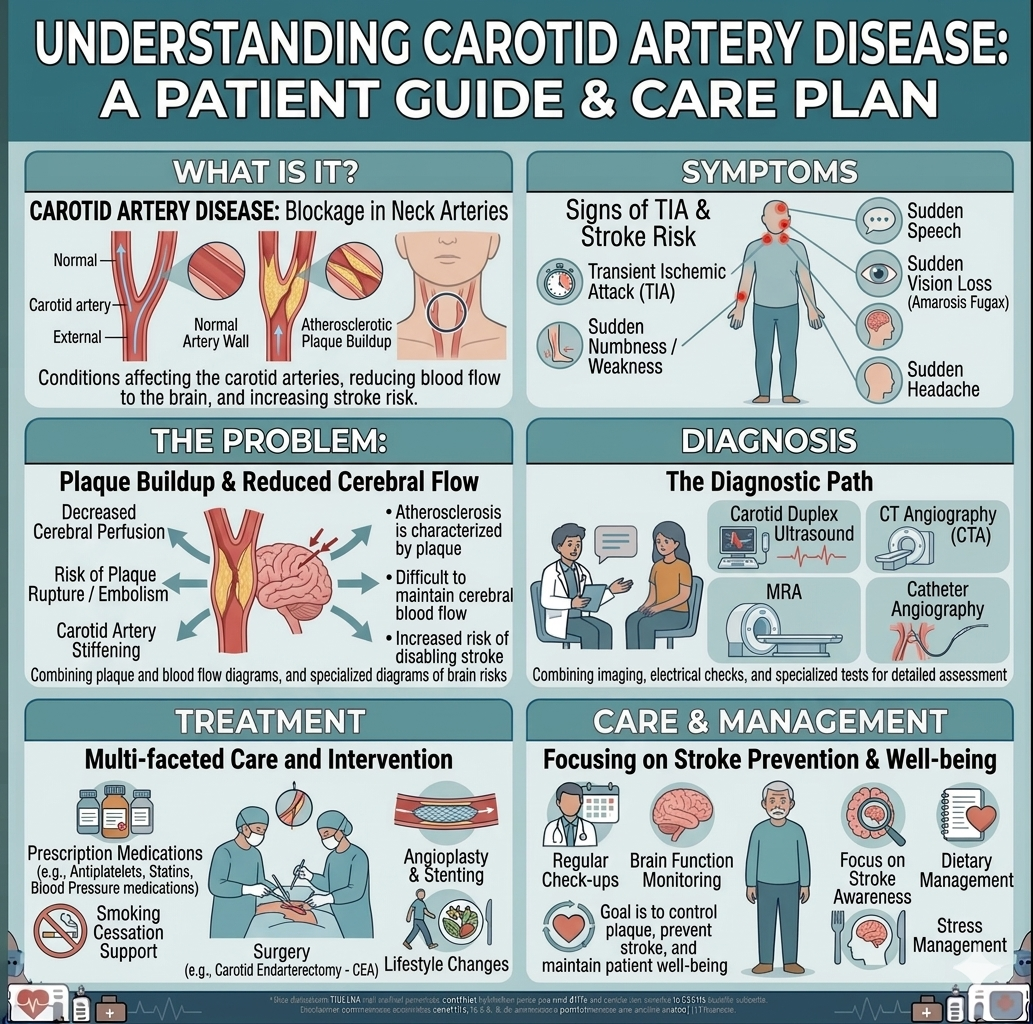
Carotid artery disease happens when the main blood vessels in your neck, called carotid arteries, become narrowed or blocked. These arteries are crucial because they carry blood, oxygen, and nutrients directly to your brain and head. The narrowing occurs due to a buildup of fatty deposits, cholesterol, and other substances, forming what are called "plaques." When these plaques clog the carotid arteries, it significantly increases the risk of a stroke. A stroke is a serious medical emergency where the brain loses its blood supply, causing brain cells to die quickly. This condition often develops slowly and may not show any signs until it becomes severe enough to cause a stroke or a "mini-stroke" (Transient Ischemic Attack or TIA). A TIA is a temporary interruption of blood flow to the brain that doesn't cause lasting damage but serves as a critical warning sign for a future stroke. Treatment typically involves changes in lifestyle, medications, and sometimes surgical procedures.
Understanding the Condition
Common Symptoms
No Early Symptoms: In its early stages, carotid artery disease often has no noticeable symptoms. The first indication of the condition might be a stroke or a mini-stroke (TIA) when blood flow to the brain is significantly affected.
Sudden Numbness or Weakness: Often on one side of the face, arm, or leg. This symptom requires immediate emergency medical attention.
Sudden Trouble Speaking or Understanding: Difficulty finding words, slurred speech, or confusion. This symptom requires immediate emergency medical attention.
Sudden Vision Problems: Blurred vision, loss of vision, or double vision in one or both eyes. This symptom requires immediate emergency medical attention.
Sudden Dizziness or Loss of Balance: Feeling unsteady, disoriented, or having trouble walking. This symptom requires immediate emergency medical attention.
Sudden, Severe Headache: A "thunderclap" headache with no clear cause. This symptom requires immediate emergency medical attention. Even if symptoms are brief, seek emergency care immediately as it could be a TIA, indicating a high stroke risk.
Consultation Guide
Which Specialist to Meet
You might first see your primary care doctor. Depending on your condition, they may refer you to specialists such as a neurologist (brain and nervous system), a vascular surgeon (specializing in blood vessel conditions), or an interventional cardiologist/radiologist (for minimally invasive procedures).
Preparations Before Your Visit
Before your appointment, gather your medical history, including any chronic conditions, past surgeries, and a list of all current medications, supplements, and vitamins. Be prepared to discuss your symptoms in detail, including when they started and how often they occur. Write down any questions you have for your doctor.
Book a doctor visit near me
Be Aware of Stroke Symptoms: Educate yourself and your family about the signs of a stroke (sudden numbness, speech difficulty, vision changes, severe headache) and know to call emergency services immediately.
Consultation Guide
Carotid artery disease happens when the main blood vessels in your neck, called carotid arteries, become narrowed or blocked. These arteries are crucial because they carry blood, oxygen, and nutrients directly to your brain and head. The narrowing occurs due to a buildup of fatty deposits, cholesterol, and other substances, forming what are called "plaques." When these plaques clog the carotid arteries, it significantly increases the risk of a stroke. A stroke is a serious medical emergency where the brain loses its blood supply, causing brain cells to die quickly. This condition often develops slowly and may not show any signs until it becomes severe enough to cause a stroke or a "mini-stroke" (Transient Ischemic Attack or TIA). A TIA is a temporary interruption of blood flow to the brain that doesn't cause lasting damage but serves as a critical warning sign for a future stroke. Treatment typically involves changes in lifestyle, medications, and sometimes surgical procedures.
Maintain a Healthy Weight: Achieving and maintaining a body weight within a healthy range helps manage related risk factors like high blood pressure and diabetes. (Duration: Ongoing, lifelong)
Limit Alcohol Intake: If you drink alcohol, do so in moderation (up to one drink per day for women, up to two for men). (Duration: Ongoing, lifelong)
Maintain a Healthy Weight: Losing excess weight can significantly reduce risk factors associated with carotid artery disease.
Limit Alcohol Consumption: If you consume alcohol, do so in moderation.
Regular Doctor Visits: Schedule routine check-ups to monitor your overall health, risk factors, and the status of your carotid arteries.
Diagnostic Procedures
Ultrasound (Duplex Ultrasound)
This non-invasive test uses sound waves to create images of your carotid arteries and measure blood flow through them. It can detect narrowing or blockages and show how quickly blood is moving.
What to Expect
You will lie on an examination table. A gel will be applied to your neck over the carotid arteries. A small handheld device called a transducer will be moved gently over the gelled area. The transducer sends sound waves into your body, which bounce off blood cells and vessels, creating real-time images on a monitor. The procedure is painless and typically takes 30-60 minutes.
CT Angiography (CTA) of the Carotid Arteries
A CT (Computed Tomography) scan uses a specialized X-ray machine and computer processing to create detailed cross-sectional images of your carotid arteries. For angiography, a special dye (contrast material) is injected into a vein to highlight the blood vessels and reveal any blockages or narrowing more clearly.
What to Expect
You will lie on a motorized table that slides into a large, donut-shaped machine. An IV line will be placed in your arm to inject the contrast dye. You might feel a warm sensation or a metallic taste in your mouth as the dye enters your bloodstream. You will be asked to lie very still and may need to hold your breath for short periods. The machine makes some buzzing or clicking noises. The scan itself is quick, usually taking 15-30 minutes, but preparation time can add to the total duration.
Treatment Options
Carotid Artery Disease: Understanding, Prevention, and Treatment
Understanding the Condition
Medications
Antiplatelet Medications: These medications, often referred to as "blood thinners," help prevent blood clots from forming in narrowed arteries. (Duration: Long-term, as prescribed by your doctor)
Cholesterol-Lowering Medications: Medications that reduce harmful cholesterol levels in the blood, slowing plaque buildup. (Duration: Long-term, as prescribed by your doctor)
Blood Pressure Medications: Medications to control high blood pressure, reducing stress on artery walls. (Duration: Long-term, as prescribed by your doctor)
Blood Sugar Control Medications: For individuals with diabetes, these medications help manage blood sugar levels, which can protect artery health. (Duration: Long-term, as prescribed by your doctor)
Surgical and Minimally Invasive Procedures
Carotid Endarterectomy: A traditional open surgery where a surgeon makes an incision in the neck, opens the carotid artery, and carefully removes the plaque buildup. The artery is then repaired. (Duration: Hospital stay typically 1-3 days. Full recovery usually takes 2-4 weeks.)
Manage Chronic Conditions: Work closely with your doctor to effectively manage conditions like high blood pressure, diabetes, and high cholesterol through medication and lifestyle.
Adhere to Medications: Take all prescribed medications as directed by your doctor to control blood pressure, cholesterol, and blood sugar, and prevent clots.
Prevention & Long-Term Wellbeing
Lifestyle Changes and Home Remedies
Healthy Diet: Eating a balanced diet rich in fruits, vegetables, whole grains, and lean proteins. Limiting saturated and trans fats, cholesterol, and processed foods. (Duration: Ongoing, lifelong)
Regular Exercise: Engaging in at least 30 minutes of moderate-intensity exercise most days of the week, as advised by your doctor. (Duration: Ongoing, lifelong)
Quit Smoking: Stopping all tobacco use significantly reduces artery damage and stroke risk. (Duration: Permanent cessation)
Carotid Angioplasty and Stenting: A minimally invasive procedure where a thin, flexible tube (catheter) is guided through an artery (usually in the groin) to the narrowed carotid artery. A tiny balloon is inflated to widen the artery, and a small metal mesh tube (stent) is then placed to keep it open. A filter is often used during the procedure to catch any loose plaque fragments. (Duration: Hospital stay typically 1-2 days. Recovery involves restricting strenuous activity for about a week or two.)
Prevention
Avoid Tobacco Products: Quitting smoking or avoiding tobacco in any form is one of the most impactful steps to protect your arteries and reduce stroke risk.
Eat a Heart-Healthy Diet: Focus on a diet rich in fruits, vegetables, whole grains, and lean proteins, while limiting saturated and trans fats, cholesterol, and sodium.
Stay Physically Active: Regular exercise strengthens your heart and blood vessels, helps manage weight, blood pressure, and blood sugar.
Tags & Topics
Notice an error or need an update?
Help us keep medical information accurate. Report incorrect info or suggest an edit.


