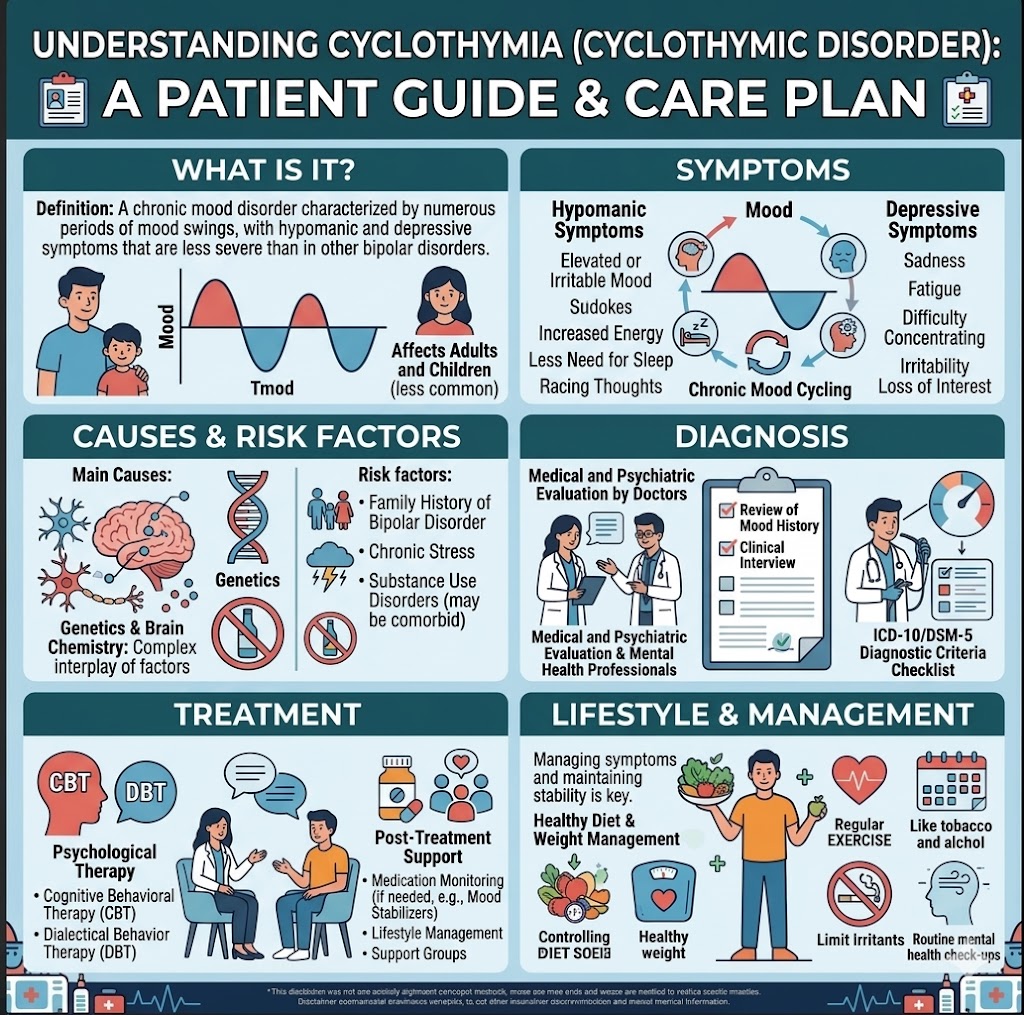
Cyclothymia, also known as cyclothymic disorder, is a relatively uncommon mood condition characterized by noticeable, but less extreme, emotional ups and downs compared to bipolar disorder. Individuals experience periods of elevated mood (hypomania) alternating with periods of mild to moderate depression. These shifts occur from a person's typical emotional baseline, with stable periods in between. While less severe than bipolar I or II, cyclothymia can significantly disrupt daily life and increases the risk of developing more serious mood disorders if left untreated. Effective management typically involves talk therapy, medication, and consistent medical follow-up.
Understanding the Condition
Understanding Cyclothymia: A Guide to Mood Swings
Understanding the Condition
Common Symptoms
Emotional Highs (Hypomanic Symptoms): During these periods, individuals may experience an exaggerated feeling of happiness or well-being, extreme optimism, inflated self-esteem, and increased talkativeness. Poor judgment can lead to risky behaviors or unwise choices. Other symptoms include racing thoughts, irritability, agitation, excessive physical activity, increased drive to achieve goals (sexual, work-related, social), a decreased need for sleep, easy distractibility, and difficulty concentrating.
Emotional Lows (Depressive Symptoms): These periods involve symptoms of mild to moderate depression, which can include feelings of sadness, loss of interest or pleasure in activities, changes in appetite or sleep, fatigue, feelings of worthlessness or guilt, and difficulty thinking or concentrating. While disruptive, these symptoms are typically less severe than those seen in major depression.
Consultation Guide
Which Specialist to Meet
Before your appointment, prepare a list of your symptoms, including when they started, how long they last, and how they affect your daily life. Note down any family history of mood disorders and any medications (prescription, over-the-counter, or supplements) you are currently taking. It's also helpful to write down any major stresses or recent life changes.
Book a doctor visit near me
This involves a comprehensive discussion with a doctor or mental health professional about your symptoms, medical history, family mental health history, and current life situation. The goal is to understand your mood patterns, rule out other medical conditions that might mimic cyclothymia, and assess the impact of your symptoms on your daily functioning.
A CBC is a blood test that measures various components of your blood, including red blood cells, white blood cells, and platelets. It's often used to assess overall health and can help rule out underlying medical conditions (like anemia or infection) that might contribute to or mimic mood symptoms.
Mood Stabilizers: These medications are often used to help stabilize mood, reducing the frequency and intensity of both hypomanic and depressive episodes. They work by balancing certain brain chemicals involved in mood regulation. (Duration: Often prescribed for long-term, ongoing use to prevent symptom recurrence.)
Antidepressants (Used Cautiously): In some cases, specific antidepressants may be prescribed to address depressive symptoms, though they are often used with caution and typically alongside a mood stabilizer to avoid triggering a hypomanic episode. (Duration: Variable, may be short-term for acute depressive episodes or longer-term depending on individual response and condition.)
Close Medical Follow-Up: Regular appointments with your doctor or mental health specialist are crucial to monitor your symptoms, adjust medications if needed, and ensure your treatment plan remains effective. (Duration: Ongoing, usually for the long term, with frequency adjusted based on stability.)
Consistent Treatment Adherence: Regularly attending therapy sessions and taking prescribed medications as directed are fundamental to managing symptoms and maintaining long-term emotional stability.
Monitoring Symptoms: Keeping a mood journal can help you identify patterns, triggers, and the effectiveness of your treatment, enabling you and your doctor to make informed adjustments to your care plan.
Diagnostic Procedures
You should initially consult your primary care doctor, who can then refer you to a mental health specialist such as a psychiatrist or a psychologist. A psychiatrist is a medical doctor specializing in mental health who can diagnose and prescribe medication. A psychologist or licensed therapist can provide talk therapy and behavioral strategies.
Preparations Before Your Visit
Clinical Evaluation and Mental Health Assessment
What to Expect
You will have a detailed conversation with the healthcare provider. They will ask questions about your mood changes, energy levels, sleep patterns, thoughts, and behaviors. They may use standardized questionnaires or screening tools to gather more information. This process is typically a conversation and does not involve physical discomfort.
Complete Blood Count (CBC)
What to Expect
A healthcare professional will draw a small sample of blood, usually from a vein in your arm. This involves a quick pinch as the needle is inserted. The process typically takes only a few minutes, and you may experience slight bruising or tenderness at the puncture site.
A urinalysis is a test of your urine that checks its appearance, concentration, and content. It can help detect and manage a wide range of conditions, such as urinary tract infections, kidney disease, or diabetes, which could affect your overall health and potentially influence mood or energy levels.
What to Expect
You will be asked to provide a urine sample, usually by urinating into a sterile cup. Instructions will be given to ensure a 'clean catch' sample, which typically involves cleaning the genital area before collecting urine mid-stream. This is a non-invasive procedure, and the sample is then sent to a lab for analysis.
Treatment Options
Cyclothymia, also known as cyclothymic disorder, is a relatively uncommon mood condition characterized by noticeable, but less extreme, emotional ups and downs compared to bipolar disorder. Individuals experience periods of elevated mood (hypomania) alternating with periods of mild to moderate depression. These shifts occur from a person's typical emotional baseline, with stable periods in between. While less severe than bipolar I or II, cyclothymia can significantly disrupt daily life and increases the risk of developing more serious mood disorders if left untreated. Effective management typically involves talk therapy, medication, and consistent medical follow-up.
Therapies
Psychotherapy (Talk Therapy): This involves talking with a mental health professional to understand your condition, identify triggers, and develop healthy coping skills. It helps you learn how your thoughts, emotions, and behaviors affect your moods and how to respond to challenging situations effectively. (Duration: Duration varies, often ongoing for several months or longer, with regular sessions.)
Cognitive Behavioral Therapy (CBT): CBT is a structured type of talk therapy that helps you identify and change negative thinking patterns and behaviors that contribute to your mood swings. It provides practical strategies to manage stress and emotional challenges. (Duration: Typically involves fewer sessions than other therapies, often 12-20 sessions over several weeks or months, with 'homework' between sessions.)
Medications
Early Intervention: Seeking treatment at the earliest signs of mood changes can help prevent cyclothymia from worsening and reduce the risk of developing more severe mood disorders like bipolar I or II.
Prevention & Long-Term Wellbeing
Prevention and Long-Term Wellbeing
Lifestyle Management: Maintaining a regular sleep schedule, eating a balanced diet, engaging in regular physical activity, and avoiding alcohol and recreational drugs can significantly support mood stability and overall well-being.
Stress Reduction Techniques: Learning and practicing stress-reducing activities such as mindfulness, meditation, yoga, or deep breathing exercises can help manage daily stressors and prevent them from escalating into mood episodes.
Building a Support System: Connecting with family, friends, or support groups can provide emotional encouragement and practical assistance, helping you navigate the challenges of cyclothymia.
Tags & Topics
Notice an error or need an update?
Help us keep medical information accurate. Report incorrect info or suggest an edit.


