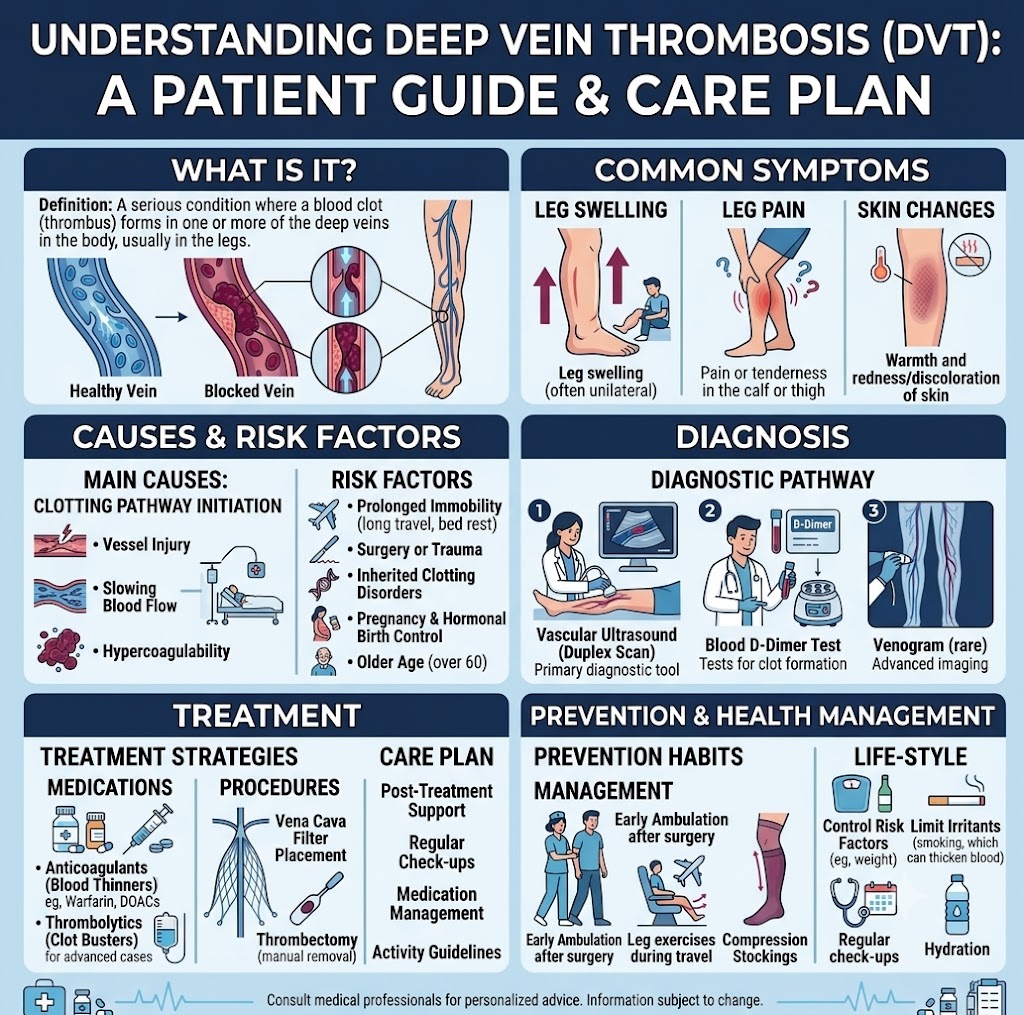
Deep Vein Thrombosis (DVT) is a serious condition where a blood clot forms in one or more deep veins, most commonly in the legs. It can cause pain, swelling, warmth, or tenderness, but sometimes shows no symptoms. The danger lies in the clot breaking free and traveling to the lungs, blocking blood flow – a life-threatening complication called Pulmonary Embolism (PE). DVT and PE together are known as Venous Thromboembolism (VTE). DVT can result from medical conditions affecting blood clotting or prolonged inactivity, such as long-distance travel or bed rest.
Understanding the Condition
Deep Vein Thrombosis (DVT) is a serious condition where a blood clot forms in one or more deep veins, most commonly in the legs. It can cause pain, swelling, warmth, or tenderness, but sometimes shows no symptoms. The danger lies in the clot breaking free and traveling to the lungs, blocking blood flow – a life-threatening complication called Pulmonary Embolism (PE). DVT and PE together are known as Venous Thromboembolism (VTE). DVT can result from medical conditions affecting blood clotting or prolonged inactivity, such as long-distance travel or bed rest.
Common Symptoms
Deep Vein Thrombosis (DVT) Symptoms: Symptoms often appear in one leg. Contact your healthcare provider immediately if you experience:
Leg pain: Often starts in the calf and can feel like cramping or soreness.
Swelling: In the affected leg or along a vein.
Warmth: Of the skin on the affected leg.
Redness or discolored skin: On the leg.
Pulmonary Embolism (PE) Symptoms (Seek Emergency Medical Help): These signs indicate a life-threatening complication where a blood clot has traveled to the lungs. Call emergency services immediately:
Sudden shortness of breath: Or difficulty breathing.
Chest pain: That may worsen with deep breathing or coughing.
Cough: Which may produce bloody mucus.
Rapid heart rate: Or palpitations.
Lightheadedness or fainting: Feeling dizzy or passing out.
Consultation Guide
Which Specialist to Meet
First, consult a general practitioner. They may refer you to a vascular specialist (for blood vessel conditions), a cardiologist (heart specialist), or a hematologist (blood disorder specialist).
Preparations Before Your Visit
Before your visit, list all symptoms, noting onset and influencing factors. Include all current medications, supplements, and remedies. Be prepared to discuss your medical history, including previous conditions, surgeries, and recent activities like long travels or immobility. Also, write down any questions for your doctor.
Book a doctor visit near me
Compression Stockings: These specialized stockings apply gentle leg pressure, improving blood flow, reducing swelling, and preventing blood pooling. They alleviate symptoms and reduce post-thrombotic syndrome risk. (Duration: Worn daily for several months or as recommended, sometimes longer for ongoing management.)
Leg Elevation: Raising your affected leg above heart level, especially when resting, reduces swelling and discomfort by promoting fluid drainage. (Duration: As needed for symptom relief, often during rest periods.)
Recognize and Act on Warning Signs: Remain vigilant for DVT symptoms (leg pain, swelling, warmth) and especially for pulmonary embolism signs (sudden shortness of breath, chest pain, rapid heart rate). Seek immediate medical help if you suspect a PE.
Consultation Guide
Anticoagulant Medications (Blood Thinners): These medications reduce blood's clotting ability, preventing existing clots from growing and new ones from forming. Essential for DVT treatment and preventing complications like pulmonary embolism. Take exactly as prescribed; incorrect dosage risks ineffective treatment or serious bleeding. Manage interactions with certain foods, alcohol, other medications, or supplements carefully. (Duration: Typically 3-6 months minimum, but can be longer based on risk factors and recurrence.)
Supportive Care and Home Remedies
Diagnostic Procedures
Diagnostic Ultrasound (Sonography)
An ultrasound uses high-frequency sound waves to create live images of internal body structures, including blood vessels and blood flow. For DVT, it helps identify blood clots in deep veins. This safe procedure has no known risks, but sound waves don't travel well through air or bone, limiting its effectiveness for areas like lungs or those hidden deep within the body.
What to Expect
You'll lie on an examination table. A healthcare professional applies warm gel to the skin over the examined area (usually your leg) and moves a small, handheld transducer over it. This device sends and records sound waves, creating images on a monitor. You might feel slight pressure, but it's generally painless. The procedure typically takes 30-60 minutes. Wear loose clothing; no other special preparation is usually needed for a leg ultrasound.
Adhere Strictly to Medication Schedules: If prescribed blood-thinning medications, take them exactly as directed. Attend all follow-up appointments and blood tests for safety and effectiveness. Be diligent about understanding potential interactions with food (e.g., Vitamin K-rich foods), alcohol, and other medications/supplements (including OTC and herbal); always inform your doctor about anything new.
Treatment Options
Deep Vein Thrombosis (DVT): Understanding, Treatment, and Prevention
Understanding the Condition
Medications
Clot Removal Procedures (Thrombectomy): In rare, severe DVT cases, a procedure to surgically or mechanically remove a large blood clot from the vein might be considered. Reserved for situations where medication is insufficient or contraindicated. (Duration: A single procedure, followed by recovery and ongoing medical management, usually including anticoagulant therapy.)
Vena Cava Filter Insertion: For individuals unable to safely take anticoagulant medications, or if clots recur despite medication, a small filter can be temporarily or permanently placed in a large abdominal vein (inferior vena cava). This filter catches clots before they reach the lungs, preventing a pulmonary embolism. (Duration: May remain for a specified period or permanently, requiring regular monitoring.)
Prevention & Long-Term Wellbeing
Prevention and Long-Term Wellbeing
Stay Active and Move Regularly: Avoid long periods of sitting or standing. During extended travel or desk work, get up and walk every 1-2 hours. Perform seated leg exercises (ankle flexing, heel/toe raises) to encourage blood flow.
Maintain a Healthy Weight: Overweight or obesity increases DVT risk. Adopt a balanced diet and regular physical activity to manage weight.
Stay Hydrated: Drink plenty of water daily. Dehydration can thicken blood, potentially increasing clot risk.
Avoid Smoking: Smoking damages blood vessels and makes blood more likely to clot, significantly increasing DVT risk.
Manage Underlying Health Conditions: Work closely with your healthcare provider to manage conditions heightening clot risk, such as certain cancers, autoimmune disorders, or heart disease.
Tags & Topics
Notice an error or need an update?
Help us keep medical information accurate. Report incorrect info or suggest an edit.


