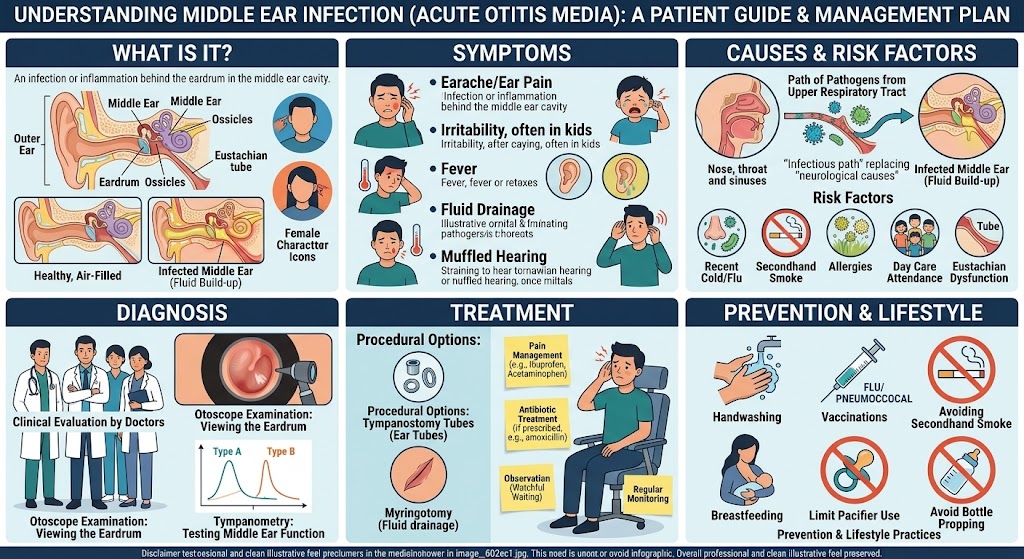
A middle ear infection, medically known as acute otitis media, is an infection of the air-filled space located directly behind your eardrum. While anyone can get an ear infection, children are much more susceptible than adults. These infections are typically caused by bacteria or viruses, often developing after a cold, the flu, or allergies. Such illnesses can cause swelling and stuffiness in the nasal passages, throat, and Eustachian tubes. The Eustachian tubes are narrow passages that connect the middle ear to the back of the throat, helping to drain fluid and equalize air pressure. When these tubes become swollen and blocked during an illness, fluid and mucus can build up in the middle ear. This fluid can then become infected, leading to the rapid onset of ear infection symptoms. Many ear infections resolve on their own, so initial treatment might focus on pain management and careful observation. However, in some cases, healthcare professionals may prescribe antibiotics. Recurring ear infections can lead to serious complications, including hearing problems.
Understanding the Condition
Middle Ear Infections: A Guide for Non-Medical Readers
Understanding the Condition
A middle ear infection, medically known as acute otitis media, is an infection of the air-filled space located directly behind your eardrum. While anyone can get an ear infection, children are much more susceptible than adults. These infections are typically caused by bacteria or viruses, often developing after a cold, the flu, or allergies. Such illnesses can cause swelling and stuffiness in the nasal passages, throat, and Eustachian tubes. The Eustachian tubes are narrow passages that connect the middle ear to the back of the throat, helping to drain fluid and equalize air pressure. When these tubes become swollen and blocked during an illness, fluid and mucus can build up in the middle ear. This fluid can then become infected, leading to the rapid onset of ear infection symptoms. Many ear infections resolve on their own, so initial treatment might focus on pain management and careful observation. However, in some cases, healthcare professionals may prescribe antibiotics. Recurring ear infections can lead to serious complications, including hearing problems.
Common Symptoms
Ear Tugging or Pulling (Children): Often a sign of discomfort in infants and toddlers who cannot verbally express pain.
Increased Crying or Irritability (Children): Particularly noticeable when lying down or during feeding, due to pressure changes.
Trouble Sleeping (Children): Pain can worsen when lying flat, making it difficult for children to rest.
Fever (Children): Elevated body temperature, a common sign of infection.
Fluid Draining from Ear (Children & Adults): Pus, blood, or other discharge leaking from the ear canal.
Balance Problems (Children): Difficulty with coordination, appearing unsteady, or seeming clumsy.
Hearing Difficulty (Children & Adults): Muffled sounds, reduced ability to hear clearly, or not responding to quiet sounds.
Ear Pain (Adults): Ranging from mild to severe discomfort in one or both ears.
Consultation Guide
Which Specialist to Meet
For initial concerns, you should consult your primary care doctor. For infants and children, a pediatrician is the appropriate specialist. If ear infections are severe, recurring, or lead to complications, you may be referred to an Ear, Nose, and Throat (ENT) specialist, also known as an otolaryngologist.
Preparations Before Your Visit
Before your appointment, gather information to share with your doctor. This includes a detailed list of symptoms (when they started, how severe they are, and if anything makes them better or worse), any recent illnesses like colds or allergies, information about previous ear infections or treatments, and all current medications your child (or you) might be taking. Be prepared to ask any questions you have about the condition and treatment options.
Book a doctor visit near me
Pain Management: Over-the-counter pain relievers can help reduce pain and fever. A warm, damp cloth or compress held gently against the affected ear can also provide comfort. (Duration: As needed for symptoms, typically for a few days.)
Watchful Waiting: For mild ear infections, especially in children aged 6 months to 2 years with non-severe symptoms or in older children and adults, your doctor might recommend observing the infection for 24 to 72 hours before prescribing antibiotics. Many infections clear up on their own. (Duration: 24-72 hours of observation.)
Antibiotics: If the infection is bacterial, severe, or does not improve with watchful waiting, your doctor may prescribe a course of antibiotics. It is crucial to complete the entire course of medication as directed, even if symptoms improve, to ensure the infection is fully treated and prevent recurrence. (Duration: Typically 5 to 10 days, depending on the specific antibiotic, age, and severity of the infection.)
Ear Tubes (Tympanostomy Tubes): For children who experience frequent, recurring ear infections or persistent fluid buildup in the ear after an infection clears, tiny, hollow tubes may be surgically placed into the eardrum. These tubes create a small airway, allowing air into the middle ear and preventing fluid from accumulating. They help equalize pressure and reduce infection risk. (Duration: Most tubes are designed to fall out on their own within 4 to 18 months. The small hole in the eardrum usually heals naturally. Some tubes are designed for longer placement and may require removal by a surgeon, potentially with a follow-up procedure to close the eardrum hole if it doesn't heal on its own.)
Diagnostic Procedures
Otoscopy (Ear Examination)
The doctor uses a lighted instrument called an otoscope to look inside the ear. They will examine the eardrum for signs of infection, such as redness, bulging, fluid behind it, or a tear.
What to Expect
This is a quick and generally painless procedure. The doctor will gently pull on the ear and insert the otoscope into the ear canal to get a clear view of the eardrum. You might feel a slight pressure.
This is often done along with a standard otoscopy. The doctor uses an otoscope with a small rubber bulb to puff a small amount of air against the eardrum. This allows them to observe how the eardrum moves. An eardrum that doesn't move well can indicate fluid buildup behind it.
What to Expect
You will feel a small puff of air in your ear, which might create a slight pressure sensation. It is usually not painful and lasts only a few seconds.
This test measures how the eardrum moves and how well sound is conducted through the middle ear. A small device is placed in the ear canal to change the air pressure and record the eardrum's response. It can detect fluid behind the eardrum or problems with the Eustachian tube.
What to Expect
A soft, rubber-tipped probe will be placed snugly in your ear canal. You will hear a soft humming sound, and you might feel changes in pressure, similar to descending in an airplane. The test takes only a few minutes and is generally painless.
Treatment Options
Home Remedies & Supportive Care
Medications
Prevention & Long-Term Wellbeing
Prevention
Good Hygiene: Regular handwashing for both children and adults helps prevent the spread of colds, flu, and other respiratory infections that can lead to ear infections.
Flu Vaccination: Getting an annual flu shot can reduce the risk of influenza, a common precursor to ear infections.
Avoid Secondhand Smoke: Exposure to tobacco smoke increases the risk and severity of ear infections, especially in children. Ensure children are not exposed to smoke.
Breastfeeding Infants: Breastfeeding for at least six months can provide protective antibodies that may reduce the incidence of ear infections in infants.
Manage Allergies: For individuals prone to allergies, managing allergic reactions can help reduce inflammation and blockage of the Eustachian tubes, thereby lowering the risk of ear infections.
Long-Term Monitoring
Follow-Up Care: After an ear infection, especially if antibiotics were prescribed or fluid buildup was noted, a follow-up visit with your doctor is often recommended to ensure the infection has fully cleared and any fluid behind the eardrum has resolved.
Hearing Screening: For children with frequent or persistent ear infections, regular hearing checks are important to identify any temporary or permanent hearing loss that could impact speech and language development.
Tags & Topics
Notice an error or need an update?
Help us keep medical information accurate. Report incorrect info or suggest an edit.


