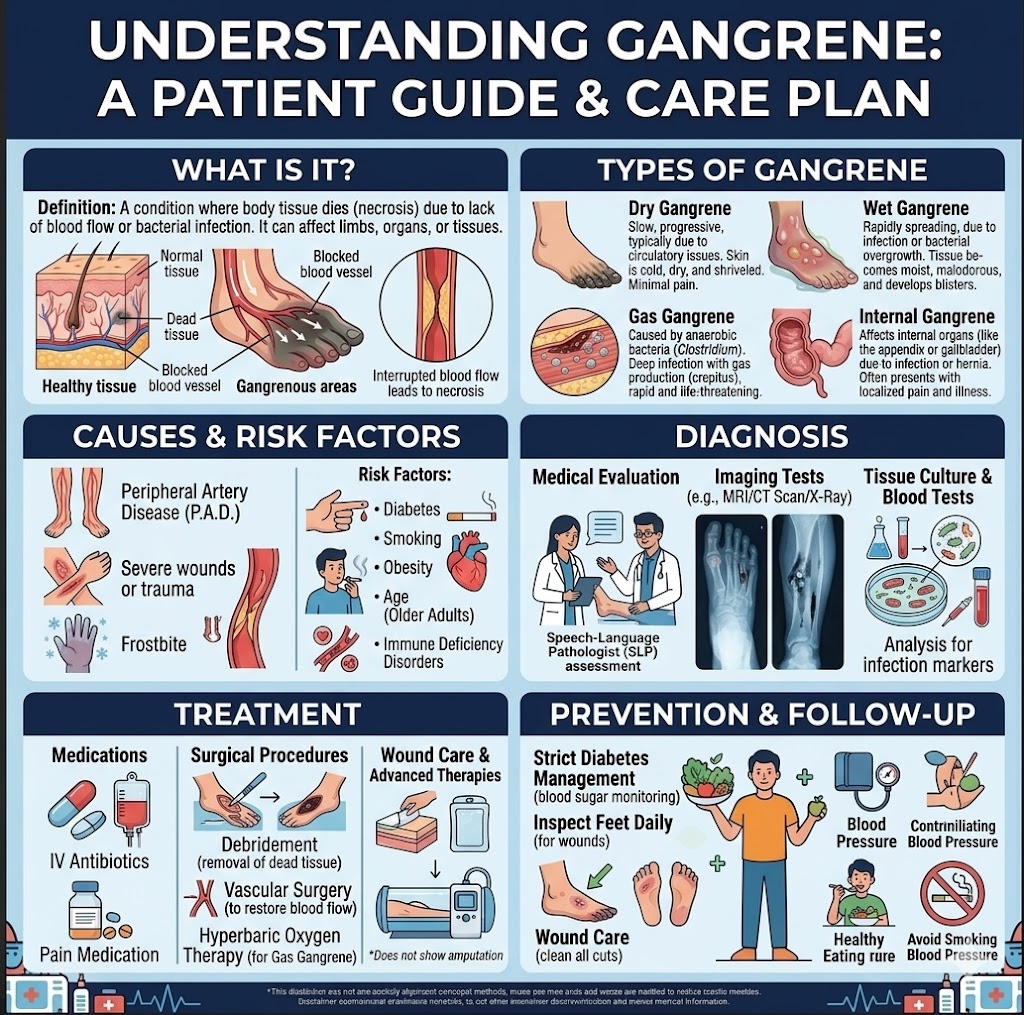
Gangrene is a serious medical condition where body tissue dies due to a severe lack of blood supply or a serious bacterial infection. It commonly affects the extremities like arms, legs, fingers, and toes, but can also occur in muscles and internal organs such as the gallbladder. Conditions that damage blood vessels and impair blood flow, such as diabetes or hardened arteries (atherosclerosis), significantly increase the risk. Early identification and treatment are crucial for recovery, often involving medications, specialized therapies, or surgery to remove dead tissue and restore circulation.
Understanding the Condition
Gangrene: Understanding Tissue Death
Understanding the Condition
Common Symptoms
Skin Discoloration: Skin may turn from reddish-purple to dark blue or black.
Skin Changes: Affected skin can appear shiny, swollen with blisters, or become thin, dry, and shriveled.
Pain or Numbness: Sudden severe pain, or conversely, a complete loss of sensation (numbness).
Foul-Smelling Discharge: Blisters or sores may leak discolored, bad-smelling fluid.
Cold Touch: The area feels noticeably colder than healthy tissue.
Mild Fever & Malaise: Low-grade fever and a general feeling of being unwell, especially with deeper tissue involvement.
Persistent Unexplained Pain: Ongoing pain in a body area without visible external changes.
Low Blood Pressure & Dizziness: Sudden drop in blood pressure leading to lightheadedness. (Sign of infection spread)
Rapid Heart Rate & Breathing: Faster heart rate and shortness of breath. (Sign of infection spread)
Confusion: Disorientation or changes in alertness. (Sign of infection spread)
Temperature Changes: Fever or unusually low body temperature. (Sign of infection spread)
Consultation Guide
Which Specialist to Meet
To address gangrene, you should seek immediate medical attention from a primary care provider who can refer you to specialists. These may include a vascular surgeon (for blood flow issues), an infectious disease specialist (for severe infections), a general surgeon (for tissue removal), or a critical care specialist if the condition is life-threatening.
Preparations Before Your Visit
Before your visit, compile a detailed list of your symptoms, including when they started and how they’ve progressed. Gather your medical history, including any chronic conditions like diabetes or heart disease, and a list of all current medications and supplements. Prepare any questions you have for the doctor. This information helps your healthcare provider make an accurate diagnosis and develop an effective treatment plan.
Book a doctor visit near me
The doctor will visually inspect and gently touch the affected body part, check pulses, and discuss your symptoms and medical history. This is usually quick and painless.
Consultation Guide
You lie on a table sliding into a donut-shaped scanner. You must remain very still, possibly holding your breath briefly. The procedure is painless, lasting 10-30 minutes. Injected contrast material may cause a warm sensation or metallic taste.
Amputation: In severe cases where gangrene has caused irreversible damage, surgical removal of the affected limb or body part may be necessary to prevent the infection from spreading to the rest of the body. (Duration: Single procedure, followed by extensive rehabilitation over months.)
Diagnostic Procedures
Your doctor examines the affected area for color changes, swelling, blisters, discharge, and temperature differences. Overall health and vital signs are assessed.
What to Expect
Blood samples check for infection signs (e.g., elevated white blood cell count), inflammation, and general health markers like blood sugar.
What to Expect
A healthcare professional draws blood, typically from an arm vein. You might feel a brief pinch. The procedure takes a few minutes for lab analysis.
Uses radiation to create images of dense body structures like bones, helping identify bone involvement or trapped gas in tissues (gas gangrene).
What to Expect
You'll lie or stand still as a technician positions the X-ray machine. It's quick, painless, taking less than 15 minutes. Contrast dye may sometimes be used orally or injected.
CT Scan (Computed Tomography Scan)
Combines multiple X-ray images for detailed cross-sectional pictures (slices) of bones, blood vessels, and soft tissues. It reveals the extent of damage, clots, or deep infections better than standard X-rays.
What to Expect
Treatment Options
Gangrene is a serious medical condition where body tissue dies due to a severe lack of blood supply or a serious bacterial infection. It commonly affects the extremities like arms, legs, fingers, and toes, but can also occur in muscles and internal organs such as the gallbladder. Conditions that damage blood vessels and impair blood flow, such as diabetes or hardened arteries (atherosclerosis), significantly increase the risk. Early identification and treatment are crucial for recovery, often involving medications, specialized therapies, or surgery to remove dead tissue and restore circulation.
Medications
Antibiotics: Strong antibiotics, given intravenously or orally, are used to kill the bacteria causing the infection. The specific type depends on the bacteria identified. (Duration: Days to several weeks, depending on the severity and type of infection.)
Therapies
Hyperbaric Oxygen Therapy: This therapy involves breathing pure oxygen in a pressurized chamber. The increased oxygen levels in the blood help fight infection, promote healing of damaged tissues, and prevent the growth of certain bacteria. (Duration: Daily sessions typically lasting 1-2 hours for several weeks, or as directed by your doctor.)
Surgical Procedures
Debridement: Surgical removal of dead, damaged, or infected tissue to stop the spread of gangrene and encourage healthy tissue growth. (Duration: Performed as a single procedure, but may require multiple sessions if tissue removal is extensive.)
Revascularization (Blood Flow Restoration): Procedures like bypass surgery or angioplasty are used to repair or open blocked blood vessels, restoring blood flow to the affected area. This is vital to prevent further tissue death. (Duration: Single procedure, but recovery and monitoring may extend for weeks to months.)
Wound Care Adherence: Diligently follow all post-surgery wound care instructions to prevent new infections and promote healing.
Rehabilitation: For amputations, physical and occupational therapy aid in adapting to prosthetics and regaining independence.
Prevention & Long-Term Wellbeing
Prevention
Manage Chronic Conditions: Strictly control diabetes and peripheral artery disease to improve circulation.
Quit Smoking: Smoking damages blood vessels; quitting is crucial for preventing gangrene and improving health.
Care for Wounds: Clean all cuts and scrapes. Monitor for infection (redness, swelling, pus) and seek prompt medical attention.
Choose Proper Footwear: Wear well-fitting shoes and socks to avoid restricting blood flow, especially with reduced foot sensation.
Maintain Healthy Lifestyle: Regular activity and balanced diet support good circulation and overall health.
Long-Term Monitoring and Support
Regular Medical Check-ups: Follow-up appointments are vital for monitoring recovery, managing conditions, and early detection of recurrence.
Nutritional Support: Maintain a nutritious diet to support healing and boost the immune system.
Tags & Topics
Notice an error or need an update?
Help us keep medical information accurate. Report incorrect info or suggest an edit.


