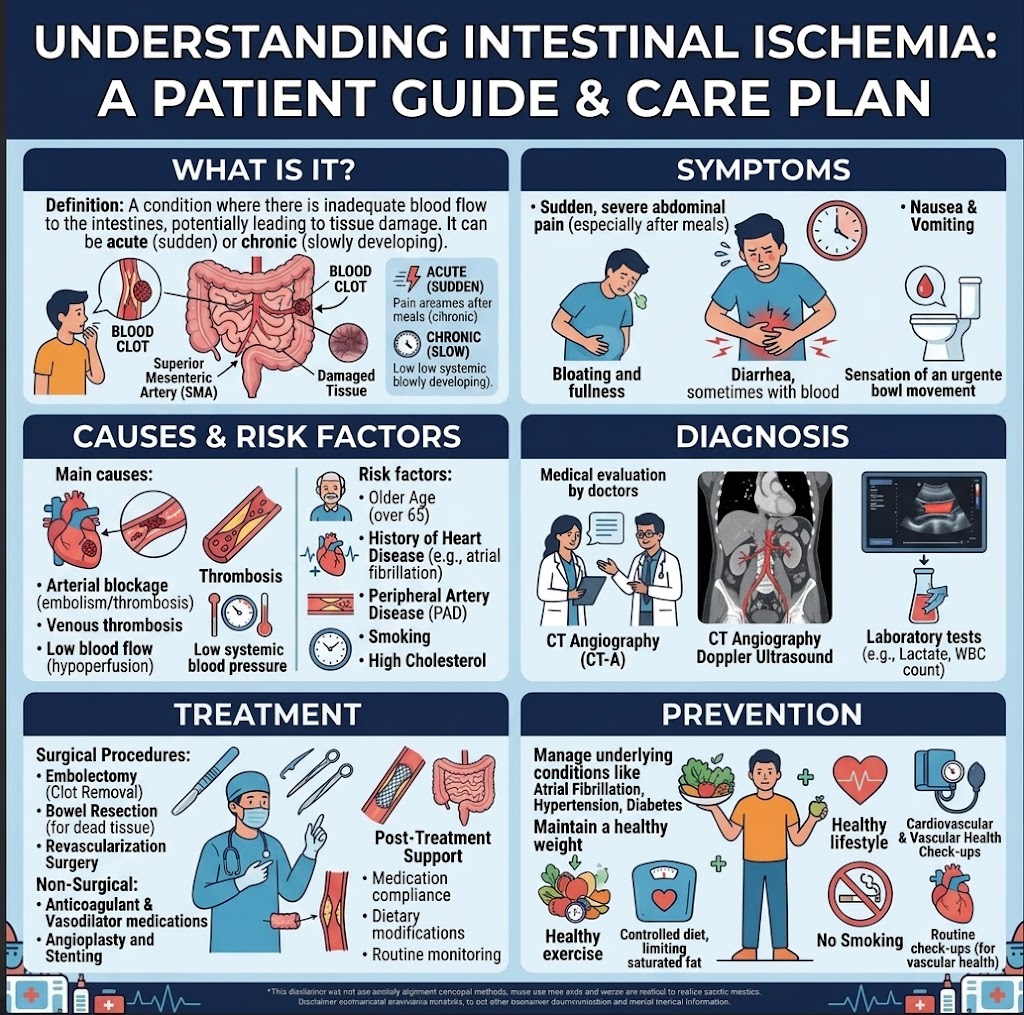
Intestinal ischemia refers to a serious condition where blood flow to your intestines slows down or stops. This can happen if a blood vessel, usually an artery, becomes fully or partly blocked, often by a blood clot or fatty deposits. Low blood pressure can also reduce blood flow. This lack of blood means your digestive system doesn't get enough oxygen, which can cause pain and prevent your intestines from working properly. In severe cases, it can lead to permanent damage, or even be life-threatening. Early medical attention significantly improves the chances of recovery.
Understanding the Condition
Common Symptoms
Acute Intestinal Ischemia (Sudden Onset): Symptoms that appear quickly often include sudden, severe belly pain, an urgent need to pass stool, and frequently passing stool with force. You might also experience belly tenderness or bloating, bloody stools, nausea, and vomiting. In older adults, mental confusion can also be a sign.
Chronic Intestinal Ischemia (Gradual Onset): Symptoms of chronic intestinal ischemia were not detailed in the provided content. If you experience persistent or recurring abdominal discomfort, especially after eating, it is crucial to consult a healthcare professional.
Consultation Guide
Which Specialist to Meet
Before your visit, gather your medical history, including any existing conditions, current medications (prescription and over-the-counter), and any recent symptoms you've experienced. It can be helpful to write down your questions and symptoms, including when they started and what makes them better or worse. You might also consider bringing a family member or friend to help remember information. Be prepared to discuss your diet and lifestyle habits.
Book a doctor visit near me
Vessel-Relaxing Medications (Vasodilators): These drugs help relax and widen blood vessels, which can improve blood flow to the intestines. (Duration: As prescribed by your doctor, often for a specific period to manage acute symptoms or chronically.)
Watch for Recurrence Symptoms: Be vigilant for any return of symptoms, such as abdominal pain, changes in bowel habits, or unexplained weight loss, and report them to your doctor immediately.
Consultation Guide
Intestinal ischemia refers to a serious condition where blood flow to your intestines slows down or stops. This can happen if a blood vessel, usually an artery, becomes fully or partly blocked, often by a blood clot or fatty deposits. Low blood pressure can also reduce blood flow. This lack of blood means your digestive system doesn't get enough oxygen, which can cause pain and prevent your intestines from working properly. In severe cases, it can lead to permanent damage, or even be life-threatening. Early medical attention significantly improves the chances of recovery.
Blood Thinners (Anticoagulants): These medications help prevent blood clots from forming or growing larger, and can sometimes help dissolve existing clots. They are crucial for improving blood flow. (Duration: Often long-term, depending on the underlying cause and risk factors.)
Manage Chronic Health Conditions: Effectively control conditions like high blood pressure, diabetes, high cholesterol, and heart disease through medication, diet, and regular medical check-ups. These conditions are major risk factors.
Regular Medical Follow-ups: Maintain regular appointments with your healthcare team to monitor your condition, assess the effectiveness of treatments, and manage any ongoing risk factors or complications.
Diagnostic Procedures
Intestinal Ischemia: Understanding Restricted Blood Flow to Your Bowel
Understanding the Condition
If you suspect intestinal ischemia, your first step should be to see your primary care provider. They can then refer you to specialists such as a gastroenterologist (a doctor specializing in the digestive system) or a vascular surgeon (a doctor specializing in blood vessel conditions).
Preparations Before Your Visit
A colonoscopy is a procedure used to examine the entire large intestine (colon) and rectum for changes such as swollen tissues, irritation, polyps, or other abnormalities. A thin, flexible tube with a camera at its tip is used to view the inside of your colon.
What to Expect
A CT scan uses specialized X-ray equipment and computer processing to create detailed cross-sectional images, or 'slices,' of bones, blood vessels, and soft tissues inside your body. It provides more detailed views than standard X-rays and is used to diagnose injuries, diseases, and plan treatments.
What to Expect
You will lie on a motorized table that slides into a large, donut-shaped machine. Depending on the area being scanned, you might receive a contrast dye, either by drinking it or through an intravenous (IV) injection, to highlight certain structures. You will need to remain still and may be asked to hold your breath for short periods. The scan itself is usually quick and painless.
An upper endoscopy, also called an upper gastrointestinal endoscopy, is a procedure to visually examine the upper part of your digestive system. This includes your esophagus, stomach, and the beginning of your small intestine (duodenum). It uses a long, flexible tube with a tiny camera (endoscope) inserted down your throat.
What to Expect
You will be asked to fast for several hours before the procedure. You'll receive sedation to help you relax, and your throat may be numbed with a spray. The endoscope will be gently guided down your throat. The doctor will examine the lining of your upper digestive tract on a video screen. Tissue samples can be taken, or minor procedures performed if necessary. Afterward, you'll recover from sedation and may experience a mild sore throat.
Clot Removal (Thrombectomy/Embolectomy): Procedures to physically remove blood clots that are blocking blood flow to the intestines. (Duration: Single procedure to address acute blockage.)
Removal of Damaged Intestine (Resection): If parts of the intestine have been severely damaged or died due to lack of blood flow, surgery may be necessary to remove the affected sections to prevent serious complications like perforation and infection. (Duration: Single major surgery, followed by a significant recovery period (weeks to months).)
Quit Smoking: Smoking significantly increases the risk of atherosclerosis (fatty deposits in arteries) and other vascular diseases, which contribute to intestinal ischemia. Quitting is a critical step.
Avoid Illicit Drug Use: Cocaine and methamphetamine use are strongly linked to intestinal ischemia and should be strictly avoided.
Review Medications with Your Doctor: Discuss any medications you are taking, including birth control pills, migraine medicines, or certain allergy medicines, as some can increase your risk of intestinal ischemia. Your doctor may suggest alternatives or additional monitoring.
Long-Term Monitoring and Support
Treatment Options
Medications
Pain Management: Medications to alleviate abdominal pain and discomfort, improving quality of life while underlying issues are addressed. (Duration: As needed, under medical supervision.)
Procedures to Restore Blood Flow
Angioplasty and Stenting: A minimally invasive procedure where a balloon-tipped catheter is inserted into the narrowed blood vessel and inflated to widen it. A small mesh tube (stent) may then be placed to keep the vessel open. (Duration: Single procedure, with potential for follow-up interventions or monitoring.)
Bypass Surgery: Surgeons create a new pathway for blood to flow around a blocked or severely narrowed artery, often using a graft from another blood vessel. (Duration: Single major surgery, followed by a significant recovery period (weeks to months).)
Adhere to Prescribed Treatments: Consistently take any prescribed medications, such as blood thinners or those for managing underlying conditions, and follow all dietary or lifestyle recommendations to prevent recurrence.
Prevention & Long-Term Wellbeing
Before the procedure, you'll need to follow a strict diet and bowel preparation to clear your colon. During the procedure, you will typically receive sedation to help you relax or sleep. The doctor will insert the scope into your rectum and guide it through your colon, viewing the images on a monitor. They may remove polyps or take small tissue samples (biopsies) if needed. After the procedure, you'll be monitored until the sedation wears off and will need someone to drive you home.
CT Scan (Computed Tomography Scan)
Prevention and Risk Management
Adopt a Heart-Healthy Lifestyle: Eat a balanced diet low in saturated and trans fats, rich in fruits, vegetables, and whole grains. Engage in regular physical activity to maintain a healthy weight and improve cardiovascular health.
Tags & Topics
Notice an error or need an update?
Help us keep medical information accurate. Report incorrect info or suggest an edit.


