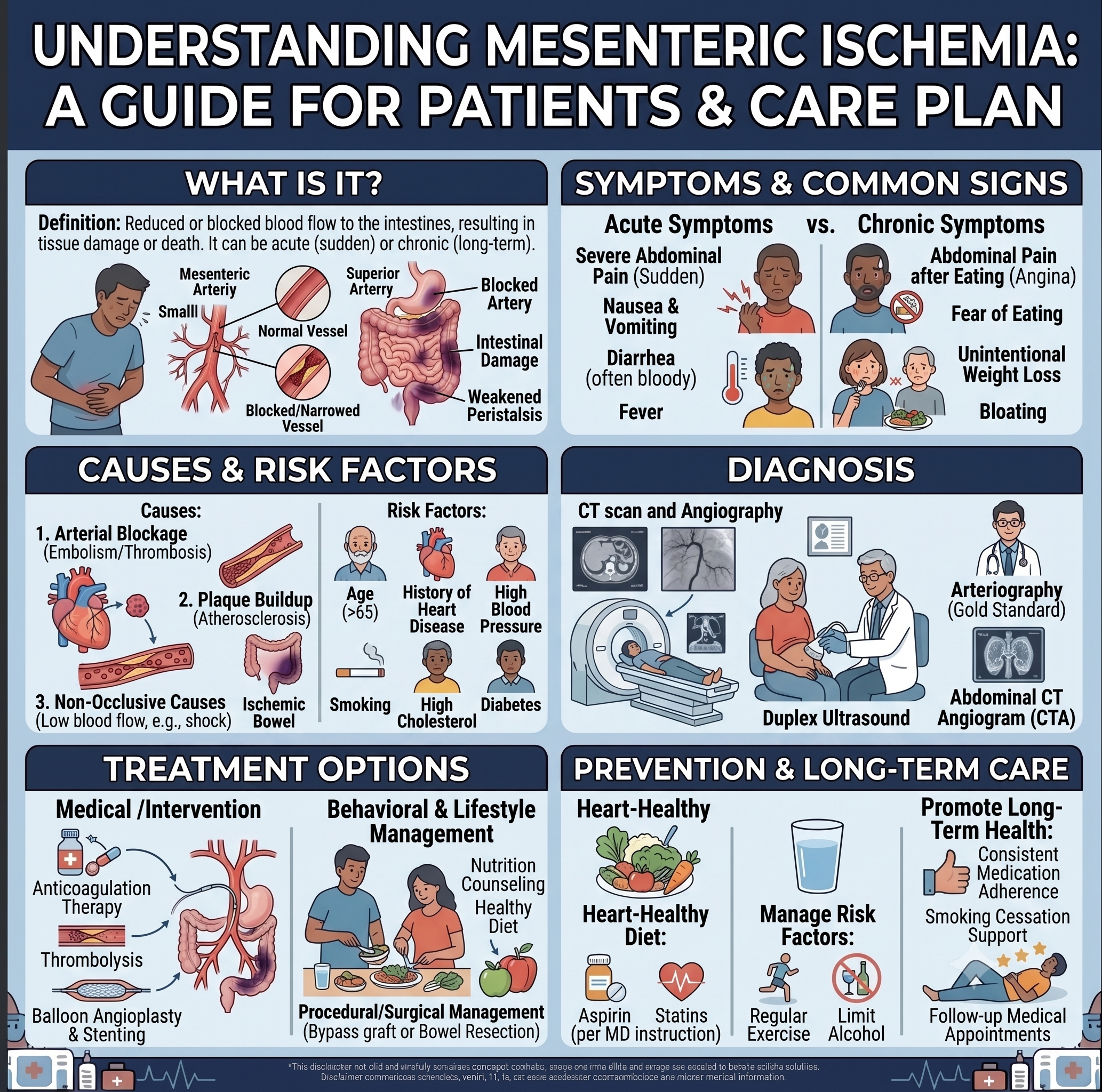
Mesenteric ischemia is a serious condition where narrowed or blocked arteries reduce blood flow to the small intestine. This reduced blood supply can cause damage to the bowel. It can develop suddenly (acute mesenteric ischemia), often due to a blood clot, requiring immediate medical care, or gradually over time (chronic mesenteric ischemia), usually from a buildup of fatty deposits in the arteries. Untreated chronic forms can worsen into the acute type, leading to severe complications like weight loss or malnutrition.
Understanding the Condition
Mesenteric Ischemia: Understanding Blocked Blood Flow to the Bowel
Understanding the Condition
Common Symptoms
Acute Mesenteric Ischemia Symptoms (Sudden Onset): Sudden, very severe pain in the belly; an urgent need to have a bowel movement; feeling sick to your stomach and throwing up.
Chronic Mesenteric Ischemia Symptoms (Develops Over Time): Belly pain that typically starts about 30 minutes after eating; this pain usually gets worse over an hour; the pain often goes away within 1 to 3 hours after eating.
When to Seek Medical Care: If you experience severe, sudden, and persistent belly pain, seek emergency medical care immediately. If you consistently get belly pain after eating, schedule an appointment with your primary healthcare provider.
Consultation Guide
Which Specialist to Meet
For sudden, severe symptoms, emergency medical attention is crucial, likely involving emergency room physicians, vascular surgeons, and potentially interventional radiologists. For chronic symptoms or initial assessment, begin with your primary healthcare provider, who may then refer you to specialists such as a gastroenterologist (a doctor specializing in digestive issues), a vascular surgeon (a surgeon who treats blood vessel diseases), or an interventional radiologist (a doctor who uses imaging to perform minimally invasive procedures).
Preparations Before Your Visit
Before your appointment, prepare a list of all your symptoms, including when they started, what makes them better or worse, and how they affect your daily life. Gather a list of all medications, vitamins, and supplements you currently take, including dosages. Be ready to discuss your medical history, any recent illnesses, and family medical history. Write down any questions you have for the doctor.
Book a doctor visit near me
Consultation Guide
Mesenteric ischemia is a serious condition where narrowed or blocked arteries reduce blood flow to the small intestine. This reduced blood supply can cause damage to the bowel. It can develop suddenly (acute mesenteric ischemia), often due to a blood clot, requiring immediate medical care, or gradually over time (chronic mesenteric ischemia), usually from a buildup of fatty deposits in the arteries. Untreated chronic forms can worsen into the acute type, leading to severe complications like weight loss or malnutrition.
You will lie on a table that slides into a large donut-shaped scanner. An IV will be placed in your arm to inject the contrast dye, which may cause a warm sensation. You will be asked to hold your breath briefly at certain times. The scan is usually painless and takes about 15-30 minutes.
Magnetic Resonance Angiography (MRA)
Similar to CTA, MRA uses a powerful magnetic field and radio waves to create detailed images of blood vessels. It can also identify blockages or narrowing without using X-ray radiation.
Blood Thinners (Anticoagulants): These medications help prevent blood clots from forming or growing larger. They are often used for acute mesenteric ischemia caused by a clot, or to prevent future clots in chronic cases. (Duration: Duration varies; acute treatment may be short-term, while chronic prevention can be long-term, possibly lifelong.)
Cholesterol-Lowering Medications: For chronic mesenteric ischemia linked to fatty deposits, these drugs help reduce cholesterol levels in the blood, which can slow the progression of plaque buildup in arteries. (Duration: Typically long-term, possibly lifelong, depending on individual needs and risk factors.)
Embolectomy/Thrombectomy (Clot Removal): In acute cases caused by a blood clot, surgery may be performed to directly remove the clot from the artery, restoring blood flow immediately. This can be an open surgery or a catheter-based procedure. (Duration: The emergency procedure is performed as quickly as possible. Hospital stay and recovery vary depending on the patient's condition and the extent of damage, typically several days to weeks.)
Prevention and Risk Factor Management
Diagnostic Procedures
This is a specialized computed tomography (CT) scan that uses X-rays and a special dye (contrast material) injected into a vein to create detailed images of your arteries. It helps identify narrowed or blocked blood vessels leading to your intestines.
What to Expect
What to Expect
You will lie on a table that slides into a large, tunnel-like machine. An IV may be placed to administer contrast material. The machine can be noisy, so you might be offered headphones. It's important to remain still during the scan, which can last 30-60 minutes.
This non-invasive test uses sound waves to measure blood flow through your arteries and can detect narrowing or blockages. It's often used as an initial screening tool.
What to Expect
You will lie on an examination table. A gel will be applied to your abdomen, and a small handheld device (transducer) will be moved over the area. You may hear whooshing sounds, which are the blood flowing. The procedure is painless and takes about 30-60 minutes.
Conventional Angiography
Considered the 'gold standard' for diagnosing blood vessel issues, this invasive procedure involves inserting a thin tube (catheter) into an artery, usually in the groin or arm, and guiding it to the mesenteric arteries. Contrast dye is then injected, and X-ray images are taken to get very precise pictures of blood flow.
What to Expect
Surgical Bypass: For more severe or complex blockages, a surgical bypass creates a new path for blood to flow around the blocked artery using a graft (a piece of vein from elsewhere in the body or a synthetic tube). This ensures adequate blood supply to the intestine. (Duration: The surgery typically takes several hours. Hospital stay can be 5-10 days, with full recovery taking several weeks to months.)
Regular Medical Check-ups: Adhere to scheduled follow-up appointments with your healthcare team to monitor your condition, adjust medications, and assess your overall health. This includes regular blood tests to check cholesterol and blood sugar levels, and imaging tests as recommended by your doctor.
Treatment Options
Medications
Blood Pressure Medications: Controlling high blood pressure is crucial for overall artery health and can help manage chronic mesenteric ischemia, reducing stress on blood vessels. (Duration: Generally long-term, often lifelong, to maintain healthy blood pressure levels.)
Antiplatelet Medications: These drugs help prevent blood cells called platelets from sticking together and forming clots, which can be beneficial in both acute and chronic forms to maintain blood flow. (Duration: Varies from short-term after procedures to long-term for prevention, often lifelong.)
Manage Underlying Conditions: Effectively manage chronic conditions like Type 2 diabetes, high cholesterol, high blood pressure, and heart rhythm disorders (e.g., atrial fibrillation) through regular monitoring and prescribed treatments. This is key to preventing artery damage.
Medication Adherence: Take all prescribed medications exactly as directed by your doctor. Do not stop or change dosages without consulting your healthcare provider, as this can have serious consequences for your condition.
Prevention & Long-Term Wellbeing
You will receive a local anesthetic to numb the insertion site, and possibly a mild sedative to help you relax. The catheter is carefully advanced, and you might feel some pressure. X-ray images are taken after dye injection. Afterward, pressure will be applied to the insertion site to prevent bleeding. The procedure typically takes 1-2 hours, followed by a recovery period for observation.
Angioplasty and Stenting: A minimally invasive procedure where a thin tube (catheter) with a balloon at its tip is guided to the narrowed artery. The balloon is inflated to open the blockage, and often a small mesh tube (stent) is left in place to keep the artery open. (Duration: The procedure itself takes 1-3 hours. Recovery is typically a few days to a week, but the stent remains permanently.)
Adopt a Heart-Healthy Lifestyle: Follow a balanced diet rich in fruits, vegetables, and whole grains, while limiting saturated and trans fats, cholesterol, and sodium. Engage in regular physical activity (aim for at least 30 minutes of moderate-intensity exercise most days of the week). If you smoke, quitting is one of the most impactful steps to improve blood vessel health.
Maintain a Healthy Weight: Achieve and maintain a healthy body weight through diet and exercise to reduce strain on your cardiovascular system and lower the risk of conditions like diabetes and high blood pressure.
Long-Term Monitoring and Support
Nutritional Support: If you experience fear of eating or unintended weight loss due to chronic pain, work with a dietitian to develop an eating plan that provides adequate nutrition while minimizing discomfort. Small, frequent meals may be helpful.
Tags & Topics
Notice an error or need an update?
Help us keep medical information accurate. Report incorrect info or suggest an edit.


