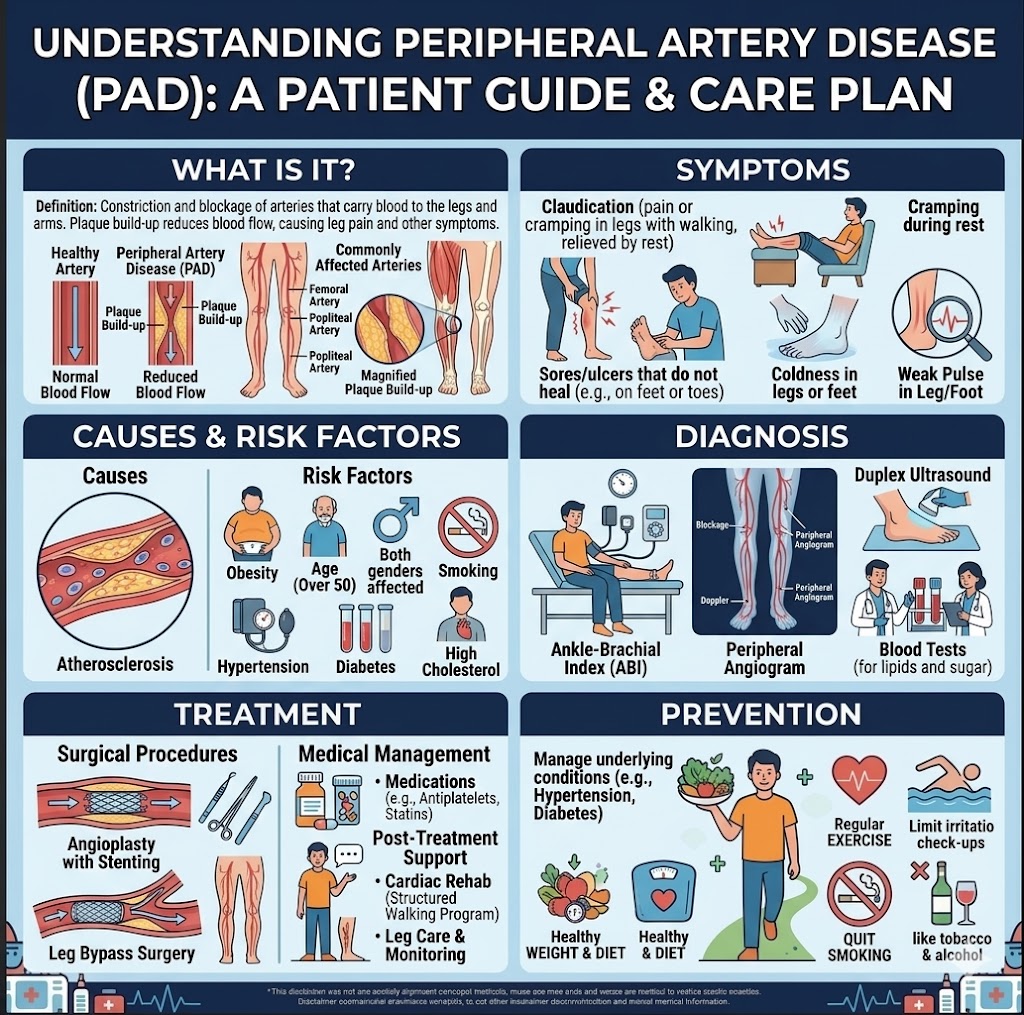
Peripheral Artery Disease (PAD) is a common condition where narrowed arteries reduce blood flow, most often to the legs, but sometimes to the arms. This narrowing is usually caused by a buildup of fatty deposits, called plaque, inside the artery walls, a condition known as atherosclerosis. When limbs don't receive enough blood, it can cause pain during activity, known as claudication, and other symptoms. PAD is a serious condition that can increase the risk of heart attack, stroke, and severe limb complications.
Understanding the Condition
Peripheral Artery Disease (PAD): A Guide for Non-Medical Persons
Understanding the Condition
Peripheral Artery Disease (PAD) is a common condition where narrowed arteries reduce blood flow, most often to the legs, but sometimes to the arms. This narrowing is usually caused by a buildup of fatty deposits, called plaque, inside the artery walls, a condition known as atherosclerosis. When limbs don't receive enough blood, it can cause pain during activity, known as claudication, and other symptoms. PAD is a serious condition that can increase the risk of heart attack, stroke, and severe limb complications.
Common Symptoms
Leg Pain with Activity (Claudication): Muscle pain or cramping in the hips, thighs, or calves that begins during exercise (like walking or climbing stairs) and eases with rest. The pain may vary from mild aching to severe cramping.
Muscle Cramps or Weakness: General muscle pain, soreness, or a feeling of weakness in the legs or arms, which might be particularly noticeable during physical activity.
Coldness or Numbness in Limbs: A feeling of coldness in the lower leg or foot, especially when compared to the other side, or numbness in the legs or feet.
Weak or Absent Pulse: A healthcare professional may detect a noticeably weak or absent pulse in the legs or feet during an examination.
Non-Healing Sores: Open sores, wounds, or ulcers on the toes, feet, or legs that heal very slowly or not at all, due to poor blood flow.
Arm Pain with Use: Aching and cramping in the arms, typically when performing activities that use the arms, such as knitting, writing, or lifting.
Consultation Guide
Which Specialist to Meet
Before your visit, make a detailed list of all your symptoms, noting when they started and how frequently they occur. Bring a complete list of all medications, supplements, and vitamins you currently take. Be prepared to discuss your medical history, including any family history of heart disease, stroke, or PAD. It's also helpful to write down any questions you have for the doctor.
Book a doctor visit near me
Symptom Relief Medications: Specific medications may be prescribed to improve blood flow to the limbs and reduce leg pain during activity. (Duration: As needed or as prescribed for ongoing symptom management.)
Minimally Invasive Procedures
Symptom Awareness: Be vigilant for any new or worsening symptoms, especially leg pain, numbness, or non-healing sores, and report them promptly to your healthcare provider.
Consultation Guide
Blood Thinning Medications: These help prevent blood clots that could block narrowed arteries or break off and cause a heart attack or stroke. (Duration: Often long-term, as prescribed by your doctor.)
Avoid Smoking: Tobacco use is a major risk factor and significantly accelerates PAD. Quitting is crucial for preventing the disease and stopping its progression.
Diagnostic Procedures
Start by consulting your primary care doctor. They can perform an initial assessment and, if necessary, refer you to a heart specialist (cardiologist) or a blood vessel specialist (vascular surgeon) for further diagnosis and specialized treatment.
Preparations Before Your Visit
Ankle-Brachial Index (ABI)
This is a quick and simple test that compares the blood pressure in your ankle to the blood pressure in your arm. A significant difference can indicate reduced blood flow in your legs, a sign of PAD.
What to Expect
You'll lie down while a healthcare professional uses a regular blood pressure cuff and a special ultrasound device (Doppler) to measure blood pressure in your ankles and arms. You might also be asked to walk on a treadmill for a few minutes, and the measurements will be repeated (called an exercise ABI) to see how blood flow changes during activity.
This non-invasive imaging test uses sound waves to create pictures of your blood vessels. It helps visualize blood flow, identify narrowed or blocked arteries, and measure the speed of blood flow in your limbs.
What to Expect
You will lie on an exam table. A gel will be applied to your skin over the area being examined (usually your legs or arms). A small handheld device called a transducer will be moved over the gelled area, sending sound waves into your body. You may hear whooshing sounds, which are the sounds of blood flowing through your arteries.
This advanced imaging scan uses X-rays and a special contrast dye injected into your bloodstream to create detailed, cross-sectional images of your arteries. It helps precisely locate and determine the severity of blockages.
What to Expect
You will lie on a table that slides into a large, donut-shaped machine. An intravenous (IV) line will be placed in your arm to inject the contrast dye. You might feel a warm sensation when the dye is injected. You'll need to lie very still and may be asked to hold your breath briefly during parts of the scan. The scan itself is painless.
Treatment Options
Medications
Cholesterol-Lowering Medications: These help reduce 'bad' cholesterol (LDL) levels, which contribute to plaque buildup in arteries, slowing disease progression. (Duration: Often long-term, as prescribed by your doctor.)
Blood Pressure Medications: Managing high blood pressure reduces stress on artery walls and lowers the risk of arterial damage and PAD complications. (Duration: Often long-term, as prescribed by your doctor.)
Bypass Grafting: A surgeon uses a healthy blood vessel (either from another part of your body or a synthetic tube) to create a new path for blood to flow around a blocked artery. (Duration: One-time major surgery. Recovery can take several weeks to months.)
Manage Chronic Conditions: Effectively control high blood pressure, high cholesterol, and diabetes through lifestyle and medication, as these are major contributors to PAD.
Maintain a Healthy Weight: Achieving and maintaining a healthy weight reduces the strain on your cardiovascular system.
Reduce Stress and Prioritize Sleep: Chronic stress and poor sleep can negatively impact cardiovascular health. Practice stress-reduction techniques and aim for 7-9 hours of quality sleep nightly.
Regular Medical Check-ups: Consistent follow-up appointments with your doctor are essential to monitor your condition, adjust treatments, and screen for complications.
Adherence to Treatment Plan: Strictly follow all prescribed medications and lifestyle modifications to manage PAD and prevent serious complications like heart attack, stroke, or critical limb ischemia.
Prevention & Long-Term Wellbeing
Lifestyle Changes & Home Remedies
Regular Exercise Program: A supervised exercise program, often involving walking, can help your body develop new blood vessel pathways around blocked arteries. This typically involves walking until pain starts, resting, and then walking again. (Duration: Ongoing, often for several months to years, with regular medical supervision.)
Healthy Eating: Adopting a diet low in saturated fats, trans fats, cholesterol, and added sugars helps manage cholesterol levels and blood pressure, slowing the progression of atherosclerosis. (Duration: Long-term, ongoing lifestyle change.)
Smoking Cessation: Quitting all forms of tobacco use is the single most important step for PAD patients, as smoking significantly worsens arterial damage and disease progression. (Duration: Permanent cessation.)
Angioplasty and Stenting: A thin tube (catheter) with a balloon at its tip is inserted into the narrowed artery. The balloon is inflated to widen the artery, and a small mesh tube (stent) may be left in place to keep it open. (Duration: One-time procedure, with potential for repeat procedures if blockages recur. Recovery typically takes a few days to a week.)
Atherectomy: This procedure uses a catheter with a small cutting device or laser to remove plaque from inside the artery, restoring blood flow. (Duration: One-time procedure. Recovery typically takes a few days to a week.)
Prevention
Maintain a Healthy Diet: Focus on fruits, vegetables, whole grains, lean proteins, and healthy fats while limiting saturated and trans fats, cholesterol, and sugar to protect your arteries.
Regular Physical Activity: Aim for at least 30 minutes of moderate-intensity exercise most days of the week, after consulting your doctor, to improve circulation and overall heart health.
Tags & Topics
Notice an error or need an update?
Help us keep medical information accurate. Report incorrect info or suggest an edit.


