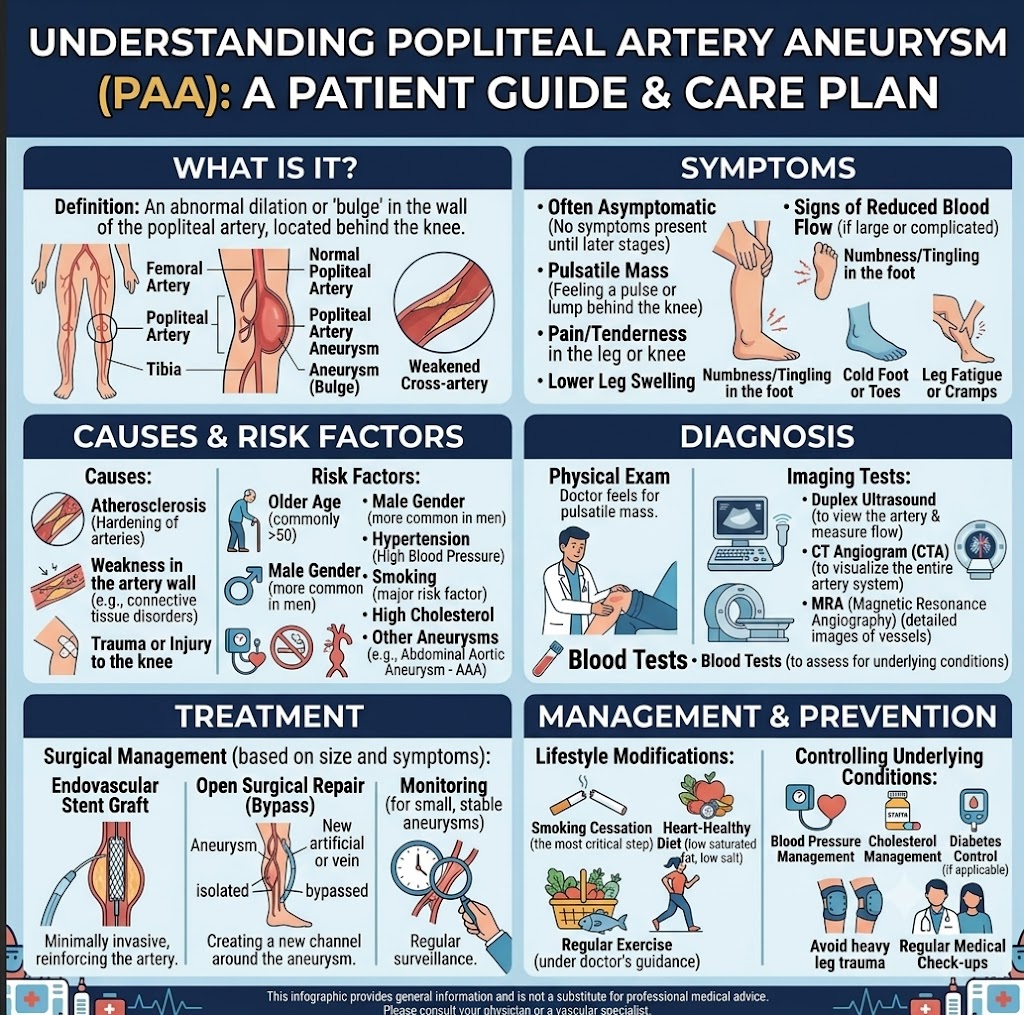
A popliteal artery aneurysm is an abnormal bulging or widening in the wall of the main artery located directly behind the knee joint. This condition occurs when a weak spot in the artery wall expands, similar to a balloon, affecting blood flow in the lower leg.
Understanding the Condition
Popliteal Artery Aneurysm: Understanding a Bulge Behind the Knee
Understanding the Condition
A popliteal artery aneurysm is an abnormal bulging or widening in the wall of the main artery located directly behind the knee joint. This condition occurs when a weak spot in the artery wall expands, similar to a balloon, affecting blood flow in the lower leg.
Common Symptoms
No Symptoms: Often, no noticeable symptoms, discovered incidentally.
Leg Pain While Walking (Claudication): Pain, cramping, or tiredness in the lower leg (calf) during activity, relieved by rest.
Swelling Behind the Knee: A visible or palpable swelling at the back of the knee.
Pulsing Sensation: A throbbing feeling behind the knee, noticeable to touch.
Severe Leg Pain: Sudden, intense pain in the lower leg if a blood clot forms.
Changes in Leg/Foot: Pale or bluish skin, coldness, numbness, or inability to move foot/toes, indicating an emergency.
Consultation Guide
Which Specialist to Meet
Start with your primary care doctor. If suspected, you'll be referred to a vascular surgeon or cardiovascular specialist.
Preparations Before Your Visit
Gather medical history, current medications, and a list of questions. Describe symptoms (when started, what helps/worsens, one or both legs).
Book a doctor visit near me
Your doctor will ask about symptoms, medical history (risk factors), and examine your leg, checking pulses and for swelling or skin changes.
Watchful Waiting: For small, symptom-free aneurysms, regular ultrasound monitoring tracks size changes. Chosen when intervention risks outweigh benefits. (Duration: Ongoing, with regular follow-up appointments and imaging (e.g., every 6-12 months).)
Be Aware of Symptoms: Understand complication symptoms (severe pain, numbness, coldness, color changes) and seek immediate medical attention if they occur.
Consultation Guide
You lie on a table in a scanner. An IV provides dye (may cause a warm flush). You must lie still, possibly holding your breath for short periods. Takes 15-30 minutes.
MR Angiography (Magnetic Resonance Angiography)
Uses magnets and radio waves (instead of X-rays) for detailed vessel images, sometimes with contrast.
Cholesterol-Lowering Medications: These medicines manage atherosclerosis (hardening of arteries), a common aneurysm cause. (Duration: Long-term, as prescribed by your doctor.)
Blood Thinners: Prevent blood clots, prescribed if clots are a concern within the aneurysm or if one has occurred. (Duration: Potentially long-term, as determined by your doctor.)
Diagnostic Procedures
Physical Exam and Medical History
What to Expect
This is a routine check-up. The doctor will gently press on parts of your leg and listen with a stethoscope.
Duplex Ultrasound (Doppler Ultrasound)
Uses sound waves to image blood vessels and measure flow. Detects aneurysm presence, size, and clots.
What to Expect
Painless, 20-45 minutes. A clear gel is applied, and a handheld transducer is moved over the skin behind your knee. You may hear blood flow sounds.
CT Angiography (Computed Tomography Angiography)
Uses X-rays and contrast dye (injected) for detailed cross-sectional images of vessels, showing aneurysm size and shape.
What to Expect
What to Expect
You lie on a table in a tunnel-like machine. It makes loud noises, so earplugs are offered. Stay still for 30-60+ minutes. Not suitable with certain metal implants.
Screening for Other Aneurysms: If diagnosed with a popliteal aneurysm, screening for other aneurysms, especially abdominal aortic aneurysm (AAA), is crucial for early detection.
Treatment Options
Medications
Blood Pressure Lowering Medications: Medications reduce high blood pressure, decreasing stress on artery walls and preventing aneurysm growth. (Duration: Long-term, as prescribed by your doctor.)
Open Surgical Repair: Involves an incision behind the knee to remove the diseased artery segment and replace it with a graft (synthetic or vein). Restores blood flow. (Duration: Several hours surgery. Hospital stay of a few days, followed by weeks to months for full recovery.)
Manage Blood Pressure and Cholesterol: Work with your doctor to control high blood pressure and cholesterol through lifestyle and, if needed, medication.
Diabetes Management: Strictly manage blood sugar if diabetic, as uncontrolled diabetes accelerates vascular damage.
Long-Term Monitoring and Awareness
Regular Medical Check-ups: Ongoing follow-up with your doctor/specialist monitors vascular health and detects new issues.
Prevention & Long-Term Wellbeing
Lifestyle and Monitoring
Heart-Healthy Lifestyle: Adopting habits like not smoking, eating balanced, and regular exercise helps manage high blood pressure and atherosclerosis. (Duration: Lifelong commitment.)
Endovascular Aneurysm Repair (EVAR): Less invasive: a catheter is guided from the groin to the aneurysm. A stent-graft is deployed to reinforce the artery and redirect blood flow. (Duration: 1-3 hour procedure. Hospital stay usually 1-2 days, with a recovery period of a few weeks. Requires regular follow-up imaging.)
Prevention
Do Not Smoke: Smoking severely damages blood vessels, a major risk for aneurysms. Quitting is a vital preventive step.
Eat a Nutritious Diet: Rich in fruits, vegetables, whole grains; low in unhealthy fats and sodium. Helps manage blood pressure and cholesterol for heart health.
Get Regular Exercise: Strengthens heart and vessels, controls weight, reduces blood pressure/cholesterol. Aim for 150 minutes moderate activity weekly.
Tags & Topics
Notice an error or need an update?
Help us keep medical information accurate. Report incorrect info or suggest an edit.


