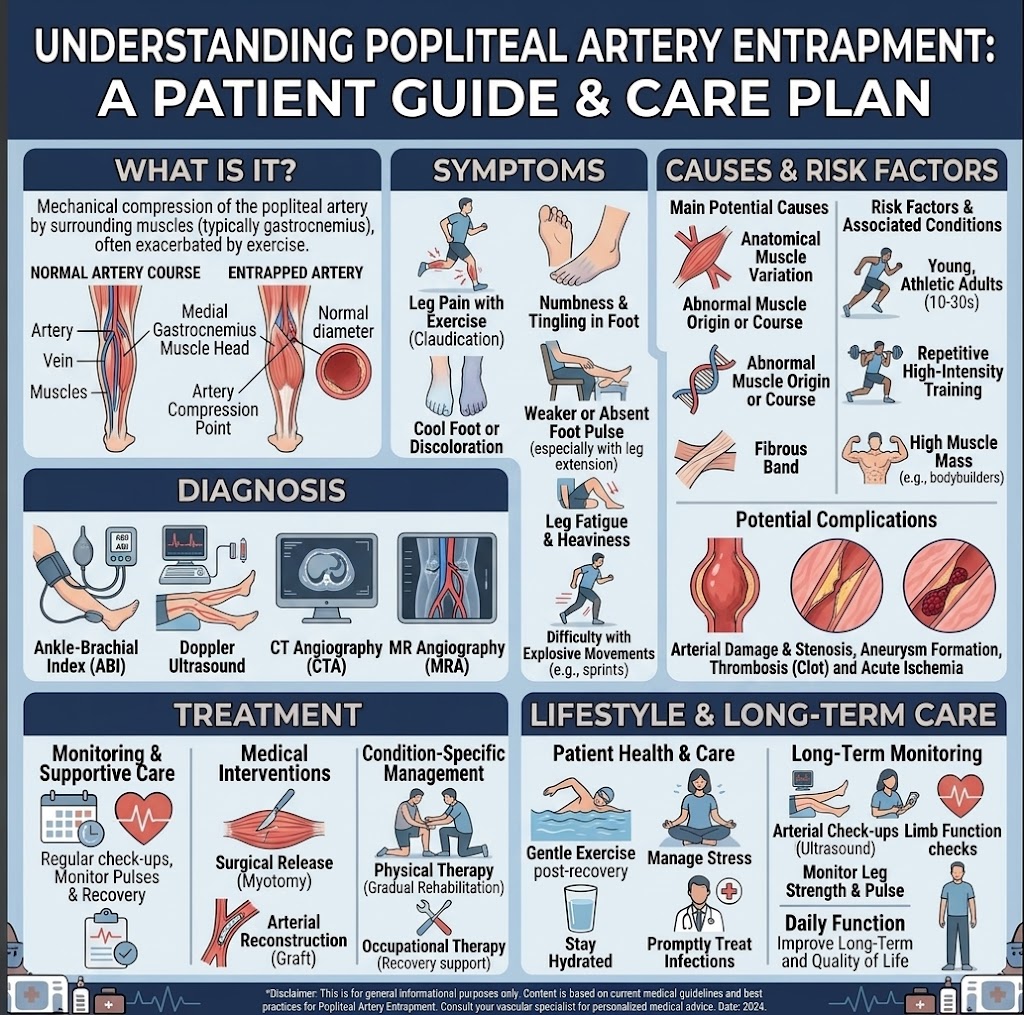
Popliteal Artery Entrapment Syndrome, known as PAES, is an uncommon condition where the main artery located behind the knee, called the popliteal artery, gets squeezed. This happens because a calf muscle is either positioned incorrectly or is larger than usual, pressing on the artery. When the artery is compressed, it becomes harder for blood to flow freely to the lower leg and foot. PAES is most often seen in athletes and active young individuals. If left untreated, this pressure can lead to artery narrowing, pain with minimal activity, and in severe cases, nerve and muscle damage or blood clots.
Understanding the Condition
Understanding Popliteal Artery Entrapment Syndrome (PAES)
Understanding the Condition
Common Symptoms
Calf Pain or Cramping: The primary symptom is pain or cramping in the back of the lower leg (the calf) that appears during exercise or physical activity and usually goes away when you rest.
Cold Feet: Feeling that your feet are unusually cold, especially after exercising.
Tingling or Burning Sensation: A feeling of pins and needles, tingling, or burning in the calf area.
Numbness: A loss of sensation or numbness in the calf.
Heavy Leg Feeling (if vein is also affected): If the vein near the artery (popliteal vein) is also compressed by the calf muscle, you might experience a persistent heavy feeling in the affected leg.
Night Cramps (if vein is also affected): Cramping in the lower leg that occurs specifically at night, often while resting or sleeping.
Calf Swelling (if vein is also affected): Noticeable swelling in the calf region.
Skin Color Changes (if vein is also affected): Visible changes in the skin color around the calf muscle, which may appear discolored or bluish.
Consultation Guide
Which Specialist to Meet
If you experience symptoms like calf pain during exercise that improves with rest, especially if you are an athlete or young, you should consult a doctor. A sports medicine physician or a vascular surgeon are the most appropriate specialists to diagnose and manage Popliteal Artery Entrapment Syndrome.
Preparations Before Your Visit
Before your visit, make a detailed list of your symptoms, including when they started, what activities trigger them, and what makes them better or worse. Note down your full medical history, any current medications, and be prepared to describe your exercise routine and activity levels. This information helps the doctor understand your condition better.
Book a doctor visit near me
Activity Modification: For mild cases, reducing or changing physical activities that trigger symptoms can help manage pain and prevent further arterial damage. This might involve temporarily stopping high-impact sports. (Duration: Variable, depending on symptom relief and progression)
Physical Therapy: A physical therapist can guide you through exercises to improve muscle flexibility, strength, and movement patterns. This may help reduce muscle pressure on the artery. (Duration: Several weeks to months, ongoing as needed for maintenance)
Pain Relievers and Anti-Inflammatories: Over-the-counter or prescription medications can help manage pain and reduce inflammation associated with the condition. (Duration: As needed for symptom control)
Regular Medical Check-ups: After diagnosis or treatment, follow up with your specialist as recommended. These appointments allow your doctor to monitor your recovery, assess blood flow, and address any recurring symptoms or potential complications.
Listen to Your Body: Pay close attention to any return of symptoms, such as calf pain during exercise, cold feet, or numbness. Early detection of issues can lead to more effective intervention.
Consultation Guide
Popliteal Artery Entrapment Syndrome, known as PAES, is an uncommon condition where the main artery located behind the knee, called the popliteal artery, gets squeezed. This happens because a calf muscle is either positioned incorrectly or is larger than usual, pressing on the artery. When the artery is compressed, it becomes harder for blood to flow freely to the lower leg and foot. PAES is most often seen in athletes and active young individuals. If left untreated, this pressure can lead to artery narrowing, pain with minimal activity, and in severe cases, nerve and muscle damage or blood clots.
You will lie on a table that slides into a large donut-shaped scanner. An intravenous (IV) line will be placed in your arm to inject the contrast dye, which might cause a warm sensation. You will need to lie still during the scan, and you may be asked to hold your breath for short periods. The scan itself is painless.
MRA uses a powerful magnetic field and radio waves to produce detailed images of your blood vessels without using X-rays. Like CTA, a contrast dye may be injected to enhance the visibility of the arteries and pinpoint areas of compression or damage.
Diagnostic Procedures
Physical Exam and Pulse Checks
Your doctor will examine your legs, feel for pulses in your feet, and may ask you to perform certain movements or exercises. They might check your pulses again after exercise or while pointing your foot in different directions to see if the blood flow changes.
What to Expect
You will be asked to lie down, and the doctor will gently press on various points on your leg and foot to feel for your pulse. You might then be asked to stand on your toes, cycle, or run on a treadmill for a short period, after which the doctor will recheck your pulses quickly to see if they have weakened.
This non-invasive test uses sound waves to create images of blood vessels and measure blood flow. It can show if the popliteal artery is being compressed and how well blood is flowing through it, both at rest and during specific movements or exercise.
What to Expect
You will lie on an examination table. A gel will be applied to your skin over the back of your knee and calf. A small handheld device called a transducer will be pressed against your skin, sending sound waves that bounce off your blood cells. These waves are converted into images and sounds on a monitor. You may be asked to perform a calf muscle contraction or point your foot in various ways during the scan.
CTA is a specialized X-ray scan that creates detailed images of your blood vessels. A special dye (contrast material) is injected into your bloodstream to make the arteries clearly visible on the images, helping to identify any narrowing or compression.
What to Expect
What to Expect
You will lie on a table that slides into a large, tunnel-like machine. An IV may be started for contrast dye. The machine can be noisy, so earplugs or headphones are usually provided. You must remain very still throughout the procedure, which can last 30 to 60 minutes. People with certain metal implants may not be able to undergo an MRA.
Treatment Options
Conservative Management
Medications
Artery Decompression (Myotomy): This is the most common surgical treatment. A surgeon makes an incision to release the entrapping calf muscle or fibrous bands that are pressing on the popliteal artery. This relieves the pressure and restores normal blood flow. (Duration: Recovery typically takes 4-8 weeks, with full return to activity over several months)
Prevention & Long-Term Wellbeing
Artery Repair (Bypass or Graft): If the popliteal artery has been significantly damaged or narrowed due to long-term compression, the surgeon may need to repair the artery. This could involve removing the damaged section and replacing it with a healthy blood vessel (a graft) taken from another part of your body or a synthetic tube, to restore blood flow. (Duration: Recovery typically takes 6-12 weeks, with full return to activity over several months)
Prevention
Smart Training Practices: For athletes, modifying training routines to include proper warm-ups, cool-downs, and gradual increases in intensity can reduce the risk. Focus on balanced muscle development rather than rapid bulking of calf muscles.
Flexibility and Stretching: Regular stretching and flexibility exercises, especially for the calf muscles, can help maintain optimal muscle length and reduce tightness that could contribute to arterial compression.
Long-Term Monitoring and Management
Maintain a Healthy Lifestyle: General cardiovascular health is important. This includes a balanced diet, regular moderate exercise (within your doctor's recommendations), and avoiding smoking, all of which support healthy blood vessels.
Tags & Topics
Notice an error or need an update?
Help us keep medical information accurate. Report incorrect info or suggest an edit.


