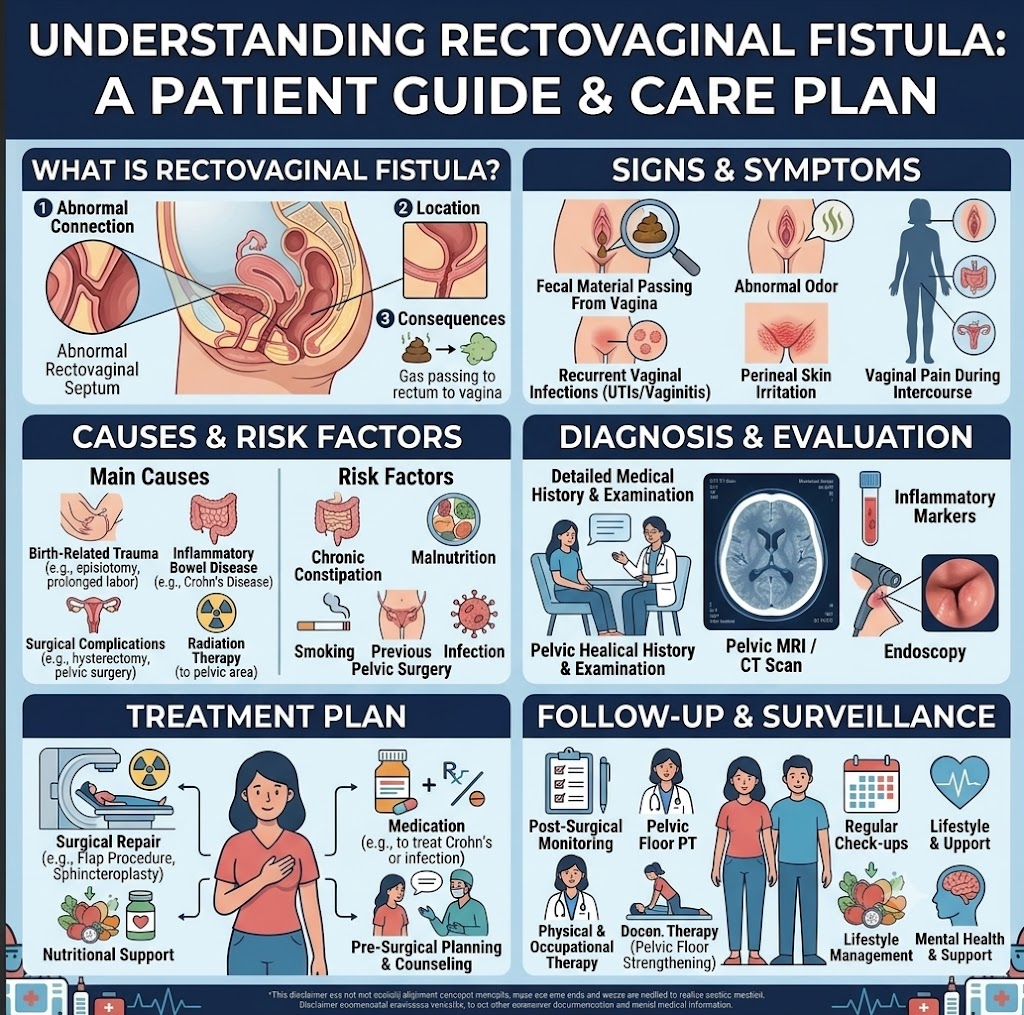
A rectovaginal fistula is an abnormal connection that forms between the lower large intestine (rectum or anus) and the vagina, allowing gas or stool to leak into the vagina. This can cause physical discomfort, emotional distress, and impact quality of life. Causes include childbirth injury, inflammatory bowel disease (Crohn's), radiation or cancer in the pelvic area, or complications from pelvic surgery or diverticulitis. While some may heal naturally, most require medical treatment, often surgery.
Understanding the Condition
Rectovaginal Fistula: Understanding the Condition and Care
Understanding the Condition
Common Symptoms
Passing Gas or Stool from the Vagina: The most common and clear sign is the involuntary passage of gas or stool from the vagina. The severity varies, from minor leakage to significant problems with bowel control and keeping the area clean.
Before your visit, list all symptoms, no matter how embarrassing. Be ready to discuss your full medical history, including past childbirth, surgeries, inflammatory bowel disease, radiation, or diverticulitis. Prepare questions for your doctor and be ready for a physical examination.
Book a doctor visit near me
Hygiene and Symptom Management: Meticulous hygiene, absorbent pads, and dietary adjustments (e.g., fiber modification) help manage leakage and prevent irritation/infection. (Duration: Ongoing as needed, potentially while awaiting healing or surgical intervention.)
Regular Medical Follow-ups: Essential to monitor healing, check for recurrence, and manage ongoing symptoms or underlying conditions.
Maintaining Good Hygiene: Continuing diligent hygiene prevents irritation and secondary infections.
Emotional and Psychological Support: Counseling or support groups can help address distress, self-esteem, and intimacy concerns. Open communication with partners is vital.
Consultation Guide
A rectovaginal fistula is an abnormal connection that forms between the lower large intestine (rectum or anus) and the vagina, allowing gas or stool to leak into the vagina. This can cause physical discomfort, emotional distress, and impact quality of life. Causes include childbirth injury, inflammatory bowel disease (Crohn's), radiation or cancer in the pelvic area, or complications from pelvic surgery or diverticulitis. While some may heal naturally, most require medical treatment, often surgery.
Vaginal Irritation or Discharge: Continuous leakage can cause irritation, inflammation, or infection in the vagina, the area between the vagina and anus (perineum), or surrounding skin. This may lead to unusual vaginal discharge, odor, or soreness.
Recurrent Infections: The presence of bowel contents in the vagina increases the risk of frequent vaginal or urinary tract infections.
Pain or Discomfort: Some individuals may experience pain during sexual activity, discomfort in the pelvic area, or tenderness due to inflammation or infection.
Consultation Guide
Which Specialist to Meet
You should consult with a gynecologist or a colorectal surgeon. If inflammatory bowel disease is a cause, a gastroenterologist may also be involved. For cancer-related cases, an oncologist would be part of your care team.
Preparations Before Your Visit
Removes a small tissue sample using a needle for lab testing, primarily to check for cancer if a tumor is suspected as the fistula's cause.
Surgery for Underlying Causes: If the fistula is due to cancer or severe diverticulitis, surgery removes the diseased tissue, addressing the root cause. (Duration: Varies significantly depending on the underlying condition and extent of surgery.)
Diagnostic Procedures
Your doctor will perform a pelvic and rectal exam to look for signs of a fistula.
What to Expect
You'll lie on an exam table. The doctor will gently use gloved fingers and potentially a speculum to examine the vaginal and rectal areas, checking for openings or abnormalities. Mild discomfort may occur.
An X-ray of the large intestine where liquid barium is inserted into the rectum. This coats the bowel lining, making it visible to detect abnormalities, including a fistula.
What to Expect
Bowel cleansing is required beforehand. A small tube is inserted into your rectum to deliver barium liquid and sometimes air. X-rays are taken. You may feel fullness or pressure.
A flexible tube with a camera is inserted into the rectum to view the entire large intestine and rectum. It identifies issues like inflammation, polyps, or the fistula itself, and allows for tissue biopsies.
What to Expect
What to Expect
You'll lie on a table that slides into a large scanner. An injected contrast dye may be used to enhance images. You must remain still for a few minutes. You might feel a warm flush or metallic taste if dye is used.
A specialized CT scan of the urinary tract (kidneys, ureters, bladder) using X-ray dye. Used if urinary involvement or complications related to the fistula are suspected.
What to Expect
Similar to a CT scan, you'll receive contrast dye intravenously, and images are taken as it passes through your urinary system. Sensations from the dye are similar to a regular CT scan.
What to Expect
The area is numbed. A thin needle, often guided by imaging, is inserted to collect a sample. You may feel pressure. The procedure is usually quick.
Treatment Options
Conservative Management
Medications for Underlying Conditions: Anti-inflammatory medications for IBD to reduce disease activity. Antibiotics for associated infections. Duration varies. (Duration: From weeks to months, or long-term management for chronic diseases.)
Surgical Procedures
Seton Placement: A temporary suture is placed through complex or infected fistulas to drain infection and promote healing before definitive repair. (Duration: Weeks to months, until the area is ready for final repair surgery.)
Temporary Colostomy: Creates an abdominal opening to divert stool away from the fistula, allowing tissues to heal without contamination. Often done before or with repair surgery. (Duration: Typically 3-6 months, sometimes longer, until the fistula is fully healed and ready for bowel reconnection.)
Colostomy Reversal: After fistula healing, this surgery closes the temporary colostomy and reconnects the bowel for normal stool passage. Not always possible. (Duration: A single surgical procedure, with recovery taking several weeks to months.)
Managing Inflammatory Bowel Disease (IBD): Adhering to IBD treatment can prevent fistula formation and recurrence.
Post-Surgical Monitoring: Close follow-up after pelvic surgeries helps detect and manage complications early.
Long-Term Monitoring and Support
Dietary and Lifestyle Adjustments: Tailoring diet with a doctor or dietitian can manage bowel function and support digestive health, especially for IBD or post-surgery.
Prevention & Long-Term Wellbeing
Bowel cleansing and sedation are required. The scope is gently inserted. Air may be used to expand the colon. The doctor views images and may take biopsies. Expect recovery from sedation.
CT Scan (Computerized Tomography)
Uses X-rays and computer processing to create detailed cross-sectional images of internal structures. Helps identify inflammation, tumors, or complications around the fistula.
Fistula Repair (Fistulotomy/Fistulectomy/Flap Procedures): Various surgical techniques close the abnormal opening. Methods depend on fistula characteristics, often involving direct closure or tissue flap creation. (Duration: Typically a single surgical procedure, followed by a recovery period of several weeks to a few months.)
Prevention Strategies
Careful Obstetric Practices: Skilled management of childbirth tears and infections can reduce the risk of delivery-related fistulas.
Tags & Topics
Notice an error or need an update?
Help us keep medical information accurate. Report incorrect info or suggest an edit.


