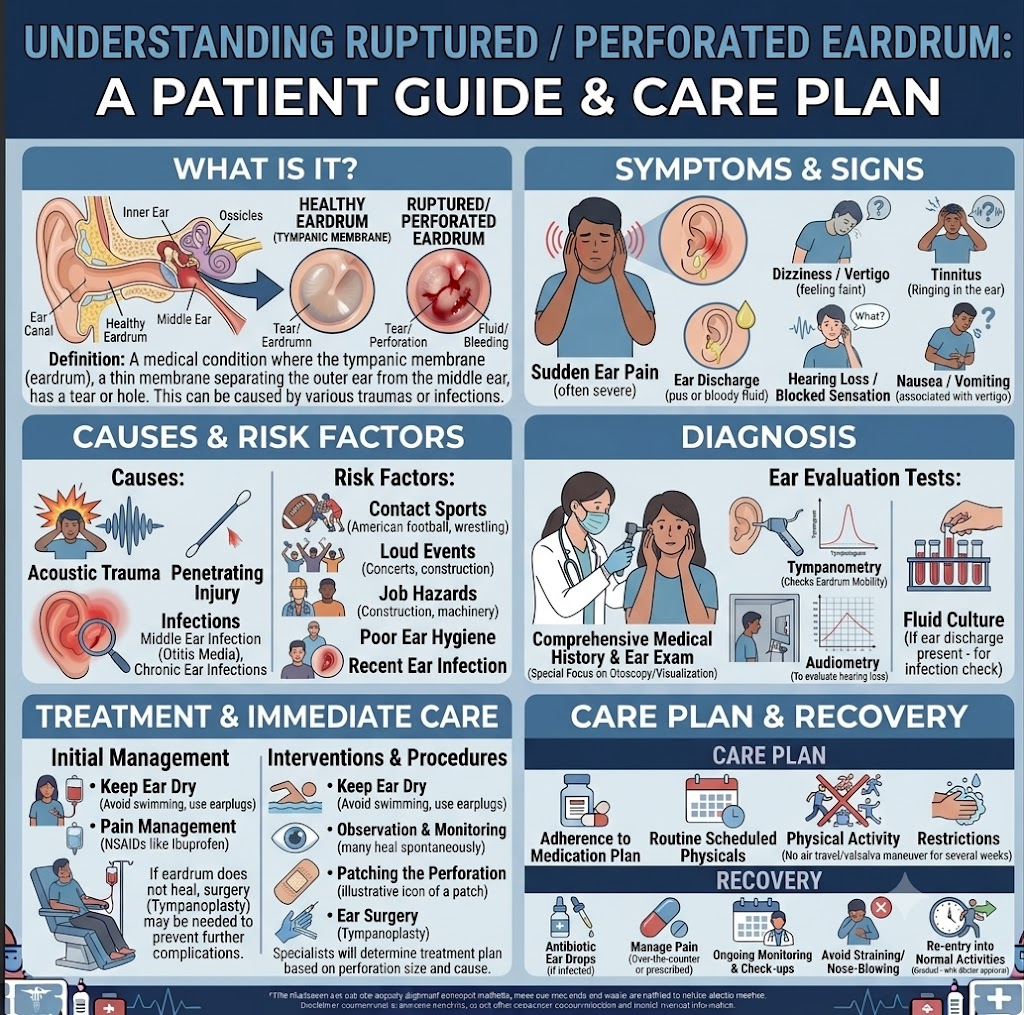
A ruptured eardrum, also known as a perforated eardrum, is a hole or tear in the thin tissue layer that separates your ear canal from your middle ear. This delicate tissue, called the eardrum, plays a crucial role in hearing by vibrating when sound waves hit it. When it's torn, sound waves can't move as they should, potentially leading to hearing loss. A ruptured eardrum also leaves the middle ear vulnerable to infections from water or other substances. While many ruptured eardrums heal on their own within a few weeks, some may require medical intervention, such as a patch or surgical repair, to close the opening.
Understanding the Condition
Ruptured Eardrum (Perforated Eardrum)
Understanding the Condition
A ruptured eardrum, also known as a perforated eardrum, is a hole or tear in the thin tissue layer that separates your ear canal from your middle ear. This delicate tissue, called the eardrum, plays a crucial role in hearing by vibrating when sound waves hit it. When it's torn, sound waves can't move as they should, potentially leading to hearing loss. A ruptured eardrum also leaves the middle ear vulnerable to infections from water or other substances. While many ruptured eardrums heal on their own within a few weeks, some may require medical intervention, such as a patch or surgical repair, to close the opening.
Common Symptoms
Sudden Ear Pain: Pain in the ear that can range from mild to severe and may suddenly lessen after the eardrum ruptures.
Ear Drainage: Discharge from the ear that might be clear, pus-like, or bloody.
Hearing Loss: A decrease in hearing, which can vary from mild to significant, in the affected ear.
Ringing or Buzzing in the Ear (Tinnitus): A perception of ringing, buzzing, or other noises in the ear.
Before your appointment, make a list of your symptoms, including when they started and how severe they are. Note any recent activities such as flying, scuba diving, swimming, or if you've had a recent ear infection or injury. Be prepared to discuss your medical history, any medications you are taking, and any questions you have for the doctor. Avoiding self-treating or putting anything into your ear before your visit is important.
Book a doctor visit near me
Consultation Guide
Spinning Sensation (Vertigo): A feeling that you or your surroundings are spinning, which can sometimes be severe enough to cause nausea or vomiting.
Consultation Guide
Which Specialist to Meet
Protect Ears from Pressure Changes (Barotrauma): During air travel, use earplugs, chew gum, yawn, or swallow frequently to help equalize air pressure in your ears. Avoid flying if you have a cold, sinus infection, or allergies that cause congestion. When scuba diving, descend and ascend slowly and equalize pressure gradually.
Avoid Inserting Objects into the Ear: Never use cotton swabs, hairpins, paper clips, or any other objects to clean your ears or relieve an itch. These can easily puncture or damage the delicate eardrum.
Guard Against Loud Noises and Trauma: Wear ear protection in noisy environments, such as construction sites, concerts, or when using power tools. Be cautious during activities or sports where direct impact to the ear is possible.
Follow-Up Appointments: Attend all scheduled follow-up visits with your doctor or specialist to ensure the eardrum is healing properly and to monitor your hearing.
Diagnostic Procedures
Otoscopy (Ear Examination)
This is the most common and initial way to diagnose a ruptured eardrum. A doctor uses a special lighted instrument called an otoscope to look directly into your ear canal and at your eardrum.
What to Expect
The doctor will gently pull on your outer ear to straighten the ear canal and then carefully insert the otoscope. They will visually inspect your eardrum for any holes, tears, or signs of inflammation and infection. This procedure is usually quick and painless, though it might feel a little uncomfortable if your ear is already sore.
This test measures the flexibility and movement of your eardrum in response to changes in air pressure. It can help identify a perforation or other issues affecting eardrum movement.
What to Expect
A small, soft probe will be placed snugly in your ear canal. The probe will then change the air pressure in your ear, and a machine will record how your eardrum moves. You might feel slight pressure changes or hear soft tones during the test. It's a quick and generally comfortable procedure.
Audiology Exam (Hearing Test)
If there's concern about hearing loss, a formal hearing test can assess the extent of the impairment and help determine the best course of action.
What to Expect
You will typically be seated in a soundproof booth and wear headphones. Sounds of different pitches and volumes will be played, and you will be asked to signal when you hear them. This test helps measure your hearing ability and can pinpoint specific types of hearing loss.
Treatment Options
Initially, you should see your primary care doctor (general practitioner). If the ruptured eardrum is confirmed or suspected, your doctor may refer you to an Ear, Nose, and Throat (ENT) specialist, also known as an otolaryngologist, for further evaluation and specialized treatment.
Preparations Before Your Visit
Home Remedies & Observation
Watchful Waiting: For small tears, many ruptured eardrums heal on their own without specific medical treatment. It's crucial to keep the ear dry and avoid swimming or diving during this time. Over-the-counter pain relievers can help manage discomfort. (Duration: Typically a few weeks to a few months)
Medications
Antibiotics: If there's an active ear infection, or if your doctor wants to prevent an infection from developing due to the tear, oral antibiotics or antibiotic ear drops may be prescribed. (Duration: Typically 7-10 days, or as directed by your doctor)
Pain Relievers: Over-the-counter pain medication can help alleviate earache and discomfort while the eardrum heals. (Duration: As needed for pain)
Eardrum Patch (Tympanoplasty Patch): If the eardrum doesn't heal naturally, a specialist may apply a special paper-like patch over the tear. This patch acts as a scaffold to encourage new tissue growth and help the eardrum close. (Duration: The patch may remain for several weeks; the procedure might be repeated multiple times over a few weeks or months until the eardrum heals.)
Surgical Procedures
Tympanoplasty: For larger tears, those that don't respond to patching, or persistent perforations, surgery may be necessary. During a tympanoplasty, a surgeon uses a small piece of your own tissue (a graft) to seal the hole in the eardrum. This procedure is typically performed under general anesthesia. (Duration: Recovery usually takes a few weeks, with full healing and hearing improvement potentially taking several months.)
Prevention & Long-Term Wellbeing
Prevention
Treat Ear Infections Promptly: Seek medical attention for ear infections to prevent fluid buildup and pressure that can lead to eardrum rupture.
Regular Hearing Checks: If you experienced hearing loss, periodic hearing evaluations may be recommended to track recovery or address any long-term changes.
Ear Protection in Water: If your eardrum has not fully healed or if you are prone to recurrent infections, your doctor might advise using earplugs or a swim cap to keep water out of your ear canal when swimming or showering.
Tags & Topics
Notice an error or need an update?
Help us keep medical information accurate. Report incorrect info or suggest an edit.


