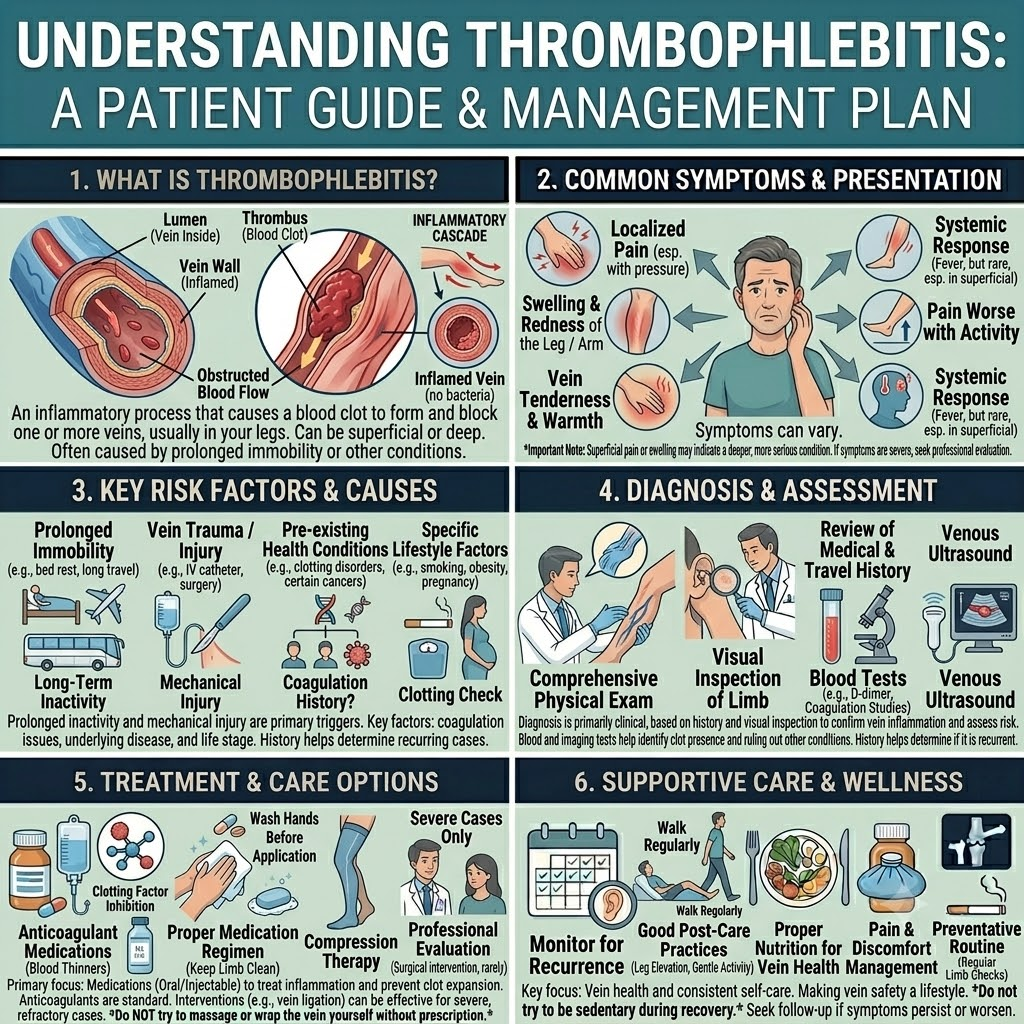
Thrombophlebitis is inflammation where a blood clot forms, blocking one or more veins, usually in the legs. It occurs either near the skin's surface (superficial thrombophlebitis) or deep within muscles (deep vein thrombosis or DVT). DVT is more serious, increasing the risk of severe health issues if the clot travels to the lungs. Both types require medical assessment and often involve medication to prevent clot growth or new formations.
Understanding the Condition
Thrombophlebitis: Understanding and Managing Blood Clots in Veins
Understanding the Condition
Common Symptoms
Superficial Thrombophlebitis: Symptoms include warmth, tenderness, and pain in the affected area, often accompanied by redness and swelling. You might also notice a red, hard cord just under the skin's surface that is tender when touched.
Deep Vein Thrombosis (DVT): Symptoms typically involve swelling, tenderness, and pain in the affected leg. The skin over the area might also feel warm.
Consultation Guide
Which Specialist to Meet
Before your visit, detail your symptoms (onset, severity, influencing factors). Share your complete medical history, including past clots, recent surgeries, injuries, periods of inactivity, and all current medications, vitamins, and supplements. This aids in risk assessment and treatment planning.
Book a doctor visit near me
Anti-inflammatory Medications: Used to reduce pain and inflammation associated with the clot. (Duration: As needed for symptom relief, usually days to weeks.)
Supportive Care and Home Remedies
Warm Compresses: Applying warm, moist cloths helps relieve pain and inflammation. (Duration: As needed, several times daily.)
Recognize Warning Signs: Be aware of recurrence symptoms or serious complications like sudden shortness of breath, chest pain, or coughing blood. Seek immediate medical attention for these.
Consultation Guide
Discuss Risk Factors: Talk to your doctor about personal clot risk factors, especially before surgery or with a family history of clotting disorders.
Long-Term Management and Monitoring
Diagnostic Procedures
Consult your primary care physician first. Depending on the diagnosis, you may be referred to a vascular specialist (vein expert), a hematologist (blood disorder specialist), or a vascular surgeon.
Preparations Before Your Visit
Ultrasound (Sonography)
An ultrasound uses sound waves to create images of internal structures, including veins and blood flow, to identify blood clots. It's non-invasive and helps assess clot location and size.
What to Expect
You lie down, gel is applied, and a handheld device (transducer) is moved over your skin. It's usually painless, takes 15-30 minutes, and typically requires no special preparation for leg exams. Wear loose clothing.
CT Scan (Computerized Tomography Scan)
A CT scan uses X-rays and computer processing to generate detailed cross-sectional images of bones, blood vessels, and soft tissues. It provides intricate views, useful for detecting clots in deeper veins or ruling out other conditions.
What to Expect
You lie on a table that slides into a large machine, remaining still and possibly holding your breath. A contrast dye may be injected to highlight vessels, causing a warm sensation. Preparation might involve fasting if dye is used; remove metal objects.
Treatment Options
Thrombophlebitis is inflammation where a blood clot forms, blocking one or more veins, usually in the legs. It occurs either near the skin's surface (superficial thrombophlebitis) or deep within muscles (deep vein thrombosis or DVT). DVT is more serious, increasing the risk of severe health issues if the clot travels to the lungs. Both types require medical assessment and often involve medication to prevent clot growth or new formations.
Medications
Anticoagulant Therapy (Blood Thinners): These medications prevent existing blood clots from growing and reduce new clot formation, critical for DVT and sometimes superficial thrombophlebitis. (Duration: Typically 3 to 6 months for DVT, potentially longer based on risk; shorter for superficial cases.)
Adhere to Medication Regimen: If prescribed blood thinners, take them exactly as directed. Do not skip or stop without doctor consultation.
Regular Medical Follow-ups: Attend all scheduled appointments to monitor your condition, assess medication effectiveness, and adjust treatment.
Prevention & Long-Term Wellbeing
Elevation: Raising the affected leg above heart level reduces swelling and discomfort. (Duration: As often as possible during initial recovery.)
Compression Stockings: Graduated compression stockings improve blood flow, reducing swelling and discomfort, especially post-DVT. (Duration: Often recommended long-term after DVT, per doctor's advice.)
Gentle Movement: If safe and advised, light walking or movement enhances circulation and prevents blood pooling. (Duration: Ongoing, as tolerated and directed.)
Procedures (Less Common)
Clot Removal: In rare, severe DVT cases, a surgical procedure may remove a large blood clot. (Duration: A one-time procedure requiring recovery time.)
Vena Cava Filter Placement: For patients unable to take blood thinners, a filter may be placed in a large abdominal vein to catch clots before they reach the lungs. (Duration: Device remains as long as needed, temporary or permanent.)
Prevention
Stay Active and Move Regularly: Regular activity keeps blood flowing. During prolonged sitting (long trips, bed rest), walk, stretch legs, and flex ankles hourly.
Maintain Adequate Hydration: Drink plenty of fluids to prevent blood from thickening, reducing clot risk.
Manage Weight and Health Conditions: Maintain a healthy weight to reduce vein strain. Work with your doctor to manage conditions increasing clot risk.
Maintain Consistent Diet (if on certain blood thinners): For specific blood thinners, consistent daily intake of vitamin K-rich foods is vital. Avoid drastic diet changes. Limit excessive alcohol and certain fruit juices. Discuss all diet and supplements with your healthcare team.
Tags & Topics
Notice an error or need an update?
Help us keep medical information accurate. Report incorrect info or suggest an edit.


