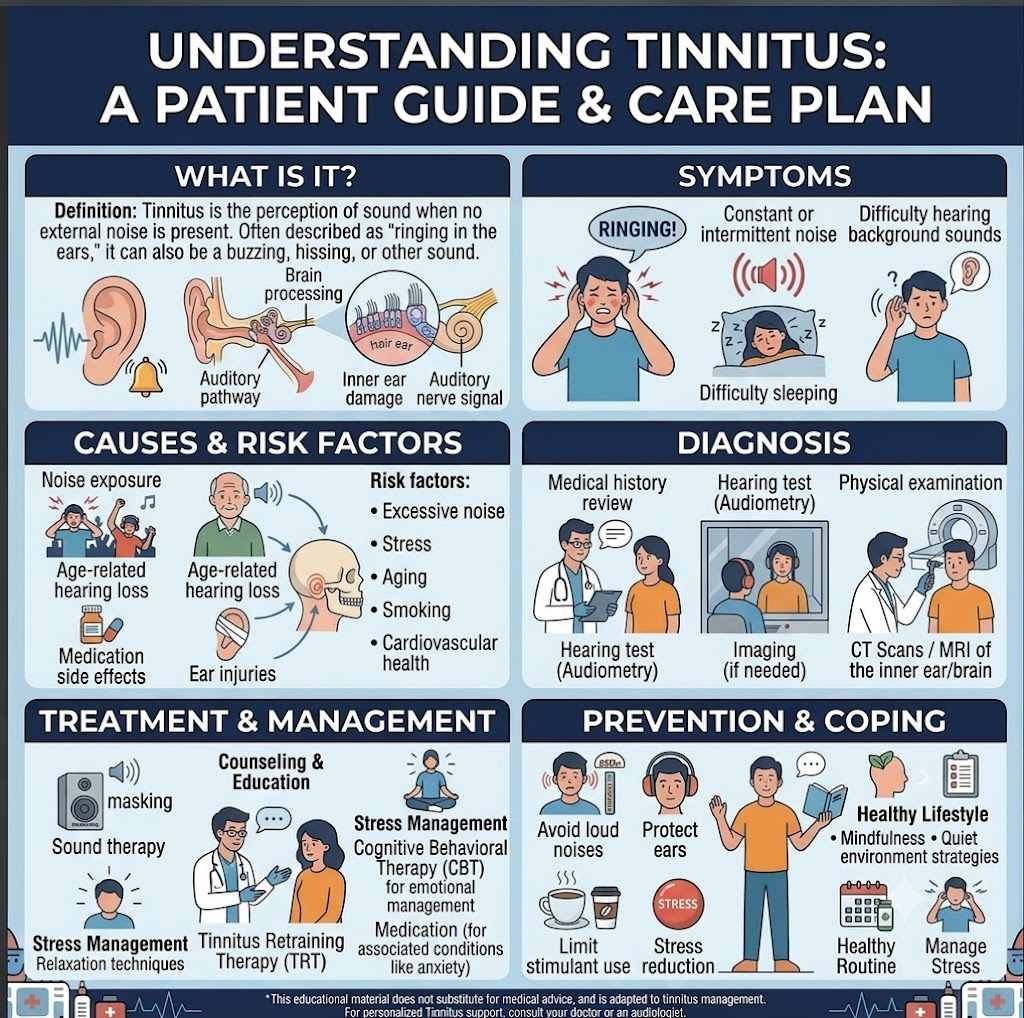
Tinnitus is the sensation of hearing internal sounds like ringing, buzzing, or hissing in one or both ears when no external sound is present. Affecting 15-20% of people, it's often a symptom of an underlying condition such as hearing loss or an ear injury. While common, many find relief by treating the root cause or using methods to reduce or mask the sound.
Understanding the Condition
Tinnitus: Understanding Persistent Ear Noises
Understanding the Condition
Tinnitus is the sensation of hearing internal sounds like ringing, buzzing, or hissing in one or both ears when no external sound is present. Affecting 15-20% of people, it's often a symptom of an underlying condition such as hearing loss or an ear injury. While common, many find relief by treating the root cause or using methods to reduce or mask the sound.
Common Symptoms
Internal Sounds: Experiencing sounds like ringing, buzzing, roaring, clicking, hissing, or whistling in one or both ears without any external source.
Subjective Tinnitus: Most often, only you hear these sounds. They can vary significantly in pitch, from a low hum to a high-pitched squeal, and may be constant or intermittent.
Impact on Daily Life: For some, the internal sound can be loud enough to interfere with concentration, sleep, or hearing external sounds, significantly affecting daily activities.
Pulsatile Tinnitus: In rare cases, tinnitus can manifest as a rhythmic pulsing or whooshing sound, often in sync with your heartbeat. A doctor may sometimes hear this type during an examination.
When to See a Doctor: Seek medical attention if tinnitus is significantly bothersome, persists for more than a week after an upper respiratory infection, is accompanied by hearing loss or dizziness, or leads to feelings of anxiety or depression.
Consultation Guide
Which Specialist to Meet
Before your appointment, be ready to describe your symptoms in detail: when the tinnitus started, how often it occurs, its specific sounds, and anything that makes it better or worse. List all current medications, including supplements, and any recent head injuries or significant health changes. Prepare a list of questions for your doctor.
Book a doctor visit near me
You will answer detailed questions about your health, lifestyle, and symptoms. During the physical exam, the doctor will look into your ears, check your jaw, and listen with a stethoscope. For the hearing test, you'll sit in a soundproof room and wear headphones, signaling when you hear tones presented at various pitches and volumes. Bone conduction tests might also be performed where a vibrator is placed behind your ear.
Imaging Studies (CT Scan)
A CT (Computerized Tomography) scan uses X-rays and computer processing to create detailed cross-sectional images of your bones, blood vessels, and soft tissues. It helps doctors identify structural issues in your head or neck that could be causing tinnitus, such as tumors, blood vessel abnormalities, or problems with the ear bones.
Management of Related Symptoms: Prescribed medications, often for short-term use, can help manage anxiety, depression, or sleep disturbances that are often linked to or worsened by tinnitus. (Duration: As prescribed by doctor)
Consultation Guide
You should initially consult your primary care doctor. Depending on the suspected cause, they may refer you to an otolaryngologist (an ear, nose, and throat, or ENT, specialist), an audiologist (hearing specialist), or potentially other specialists like a neurologist, cardiologist, or dentist.
Preparations Before Your Visit
You will lie on a movable table that slides into a large, donut-shaped machine. You'll need to remain still during the scan, which typically lasts from a few minutes to half an hour. You might hear buzzing or clicking noises from the machine. In some cases, a contrast dye may be injected into a vein to highlight specific areas, which might cause a brief warm sensation.
Addressing Underlying Conditions: If an underlying health issue (e.g., high blood pressure, ear infection) is identified as the cause, specific medications may be prescribed to treat that condition, potentially improving tinnitus. (Duration: As prescribed by doctor)
Sound and Behavioral Therapies
Tinnitus Maskers: Small, ear-level electronic devices that produce low-level white noise to mask the internal sounds of tinnitus, making them less noticeable. (Duration: Ongoing as needed)
Tinnitus Retraining Therapy (TRT): A long-term therapy combining sound therapy (using broad-band noise generators) with counseling to help your brain learn to ignore the tinnitus sound. (Duration: Typically requires 12-24 months of consistent effort)
Cognitive Behavioral Therapy (CBT): A type of counseling that helps change negative thought patterns and emotional responses to tinnitus, reducing its impact on your quality of life. (Duration: Usually involves several weeks to months of sessions)
Medical Procedures & Surgical Interventions
Earwax Removal/Foreign Body Extraction: A simple procedure performed by a doctor to remove blockages in the ear canal that contribute to tinnitus. (Duration: Immediate relief often)
Addressing Structural Issues: In specific cases where tinnitus is caused by conditions like Eustachian tube dysfunction, stiffening of middle ear bones (otosclerosis), or a tumor, surgical intervention may be performed to correct the underlying problem. (Duration: Varies based on procedure, aiming for long-term improvement or resolution)
Vascular Treatments: For pulsatile tinnitus caused by blood vessel disorders, medical procedures or surgery may be undertaken to correct the vascular abnormality. (Duration: Varies based on specific vascular intervention)
Diagnostic Procedures
Your doctor will conduct a thorough physical examination of your head, neck, and ears, and review your medical history. They will listen for any sounds that indicate pulsatile tinnitus. A comprehensive hearing test (audiometry) will assess your hearing ability, identifying any hearing loss that might be contributing to the tinnitus.
What to Expect
What to Expect
Treatment Options
Medications
Prevention & Long-Term Wellbeing
Lifestyle Adjustments & Home Remedies
Sound Enrichment: Using low-level background noise (e.g., a fan, soft music, white noise machine) to mask tinnitus, especially in quiet environments or at bedtime. (Duration: Ongoing as needed)
Stress Management: Practicing relaxation techniques like meditation, deep breathing, or yoga to reduce stress, as stress can sometimes intensify tinnitus perception. (Duration: Ongoing as needed)
Trigger Avoidance: Limiting exposure to loud noises, and reducing intake of caffeine, alcohol, and nicotine, which can sometimes aggravate tinnitus. (Duration: Ongoing as needed)
Prevention
Protect Your Hearing: Use earplugs or earmuffs in noisy environments (e.g., concerts, construction sites, using power tools, firearms). Limit prolonged exposure to loud sounds.
Manage Listening Volume: When using headphones or earbuds, keep the volume at a moderate level and take regular breaks. Long-term exposure to high volumes can lead to permanent hearing damage and tinnitus.
Maintain Cardiovascular Health: Regular exercise, a balanced diet, and managing conditions like high blood pressure, cholesterol, and diabetes promote healthy blood flow, which can help prevent tinnitus linked to blood vessel problems.
Limit Stimulants: Reduce or avoid excessive intake of alcohol, caffeine, and nicotine, as these substances can affect blood flow and may exacerbate tinnitus in some individuals.
Long-Term Management
Regular Medical Check-ups: Continue to see your doctor to monitor your tinnitus and any underlying conditions, adjusting management strategies as needed.
Support and Therapies: Utilize support groups to connect with others, and continue with recommended sound therapies or counseling to maintain comfort and minimize the impact of tinnitus on your life.
Tags & Topics
Notice an error or need an update?
Help us keep medical information accurate. Report incorrect info or suggest an edit.


