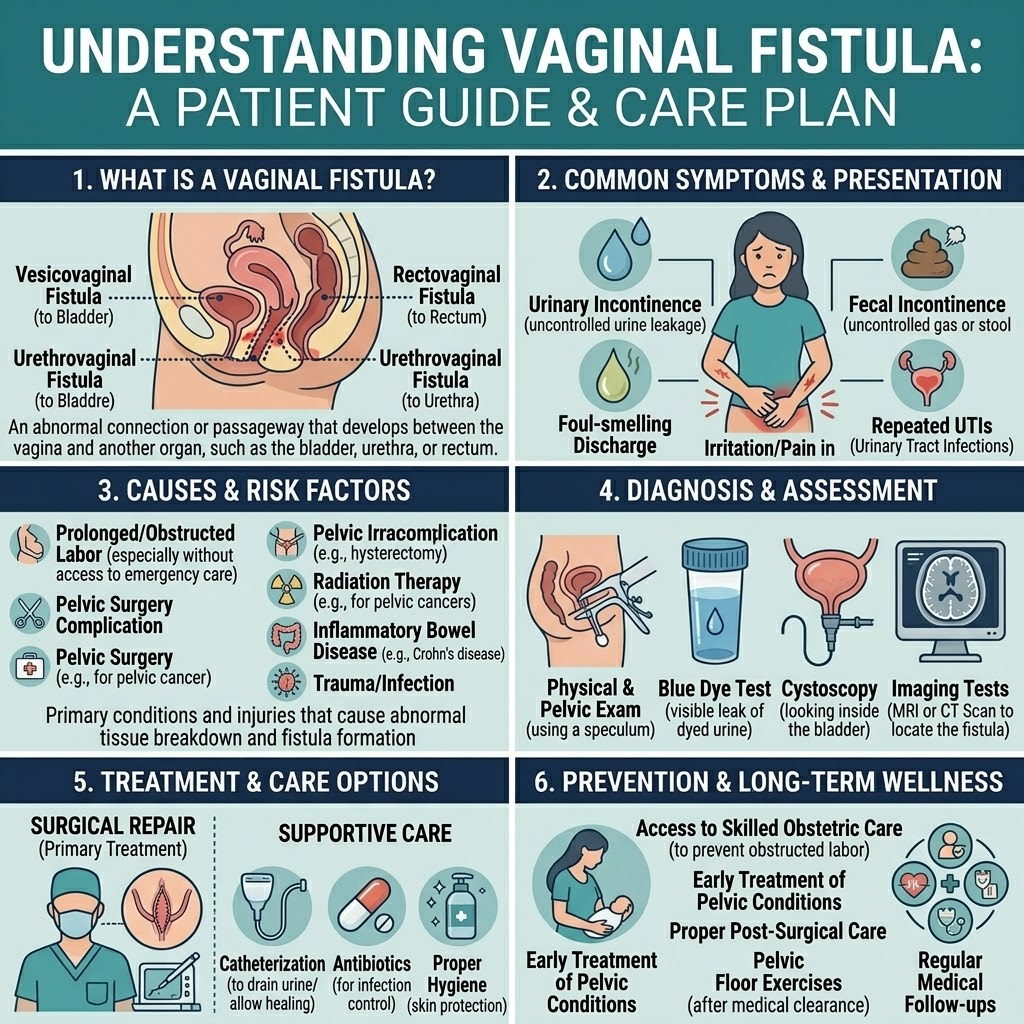
A vaginal fistula is an abnormal opening between the vagina and another nearby organ, such as the bladder or bowel. This allows fluids like urine, gas, or stool to leak into the vagina. Causes include childbirth complications, surgical injuries, infections, or radiation treatments. Several types exist, named by the organs they connect, and surgical repair is often necessary.
Understanding the Condition
Vaginal Fistula: Understanding an Unusual Connection
Understanding the Condition
Common Symptoms
Leaking Fluids or Gas: Unintended leaking of urine or stool, or passing gas, through the vagina.
Frequent Urinary Tract Infections: Repeated bladder infections.
Unusual Urine: Urine with an unusual odor or containing blood.
Abnormal Vaginal Discharge: Vaginal fluid that looks or smells unusual.
Pain During Sex: Discomfort or pain during sexual activity.
Perineal Pain or Irritation: Pain, swelling, or irritation in the area between the vagina and the anus (perineum).
Repeated Vaginal Infections: Recurring infections of the vagina. Symptoms vary based on fistula location.
Consultation Guide
Which Specialist to Meet
Prepare by listing all symptoms (when they started, how they affect you), your complete medical history (surgeries, pregnancies, conditions like Crohn's or diabetes), and all current medications. Have questions ready for your doctor. This comprehensive information helps in diagnosis and treatment planning.
Book a doctor visit near me
Regular Follow-Up and Hygiene: Crucial for monitoring healing, detecting recurrence, and managing symptoms. Maintaining excellent personal hygiene prevents irritation and infection.
Consultation Guide
A vaginal fistula is an abnormal opening between the vagina and another nearby organ, such as the bladder or bowel. This allows fluids like urine, gas, or stool to leak into the vagina. Causes include childbirth complications, surgical injuries, infections, or radiation treatments. Several types exist, named by the organs they connect, and surgical repair is often necessary.
You'll lie on a table that slides into a CT scanner. Dye injection may cause warmth. You'll hold your breath periodically. The scan is painless but noisy, taking about 30-60 minutes.
MRI (Magnetic Resonance Imaging)
Utilizes magnets and radio waves for detailed soft tissue images, precise for locating the fistula tract and assessing surrounding damage.
Diagnostic Procedures
Consult a Gynecologist, Urologist, Colorectal Surgeon, or Urogynecologist. These specialists can diagnose and treat vaginal fistulas.
Preparations Before Your Visit
Physical Examination and Dye Test
A doctor examines the vagina and may use a colored dye in the bladder or rectum to visually detect any leaks into the vagina.
What to Expect
You'll lie on an exam table. The doctor visually inspects and gently feels the area. Dye may be introduced, causing a sensation of fullness. A pad checks for leaks. This is generally quick with minimal discomfort.
CT Urogram (Computed Tomography Urogram)
Uses X-rays and an injected dye to create detailed images of the kidneys, ureters, and bladder, helping identify urinary tract issues and potential fistulas.
What to Expect
What to Expect
You'll lie still in a long, tube-like machine. It's noisy, so earplugs are provided. Some may feel claustrophobic. Takes 30-60 minutes.
A thin tube with a camera (cystoscope) is inserted through the urethra into the bladder to visually inspect for fistula openings.
What to Expect
The area around your urethra is numbed. The scope is gently inserted, possibly causing pressure or an urge to urinate. The procedure lasts 10-20 minutes.
Sigmoidoscopy or Colonoscopy
A flexible tube with a camera is used to examine the rectum and colon for openings or inflammation associated with a fistula.
What to Expect
Bowel preparation is required for colonoscopy. Sedation or anesthesia is typically given. The doctor guides the scope. It's usually painless under sedation and takes 30-60 minutes.
Treatment Options
Conservative and Medical Management
Observation and Medications: Very small fistulas may heal with observation, excellent hygiene, and antibiotics for infection. Medications can also manage underlying conditions like Crohn's or regulate bowel function. (Duration: Weeks to months for observation; 1-2 weeks for antibiotics; ongoing for chronic conditions.)
Minimally Invasive Procedures
Fibrin Glue or Plug: Special biological glue or a small plug is inserted into the fistula to seal it and promote natural healing. (Duration: Single procedure; healing takes several weeks to months.)
Temporary Urinary Catheter: A catheter is placed in the bladder to divert urine, allowing urinary fistula tissues to rest and potentially heal. (Duration: Several weeks to a few months.)
Surgical Procedures
Direct Fistula Repair: Damaged tissue is removed, and the opening is stitched closed, sometimes reinforced with healthy tissue. Approach (vaginal or abdominal) varies by fistula location. (Duration: Single surgery; full recovery 4-8 weeks, with activity restrictions for several months.)
Tissue Graft or Flap Repair: For complex fistulas, healthy tissue (e.g., muscle or skin) is transferred to cover and reinforce the repair, improving healing by providing new blood supply. (Duration: Single surgery; full recovery 6-12 weeks, with restrictions for several months.)
Temporary Bowel Diversion: In severe bowel-related fistulas, a temporary surgical opening (stoma) diverts stool away, allowing healing. A second surgery reverses the stoma later. (Duration: Two surgeries, typically 3-6 months apart. Full recovery from both takes several months.)
Skilled Obstetric and Surgical Care: Access to experienced healthcare professionals during childbirth and for pelvic/abdominal surgeries can significantly reduce the risk of fistula formation by minimizing complications.
Managing Chronic Health Conditions: Effectively managing conditions like Crohn's disease, diverticulitis, or diabetes can reduce vulnerability of tissues and lower fistula risk.
Long-Term Monitoring and Support
Prevention & Long-Term Wellbeing
Prevention Strategies
Pelvic Floor Therapy and Lifestyle: Specialized physical therapy strengthens pelvic muscles and improves control. Balanced diet, hydration, avoiding tobacco, and addressing emotional well-being support overall recovery.
Tags & Topics
Notice an error or need an update?
Help us keep medical information accurate. Report incorrect info or suggest an edit.


