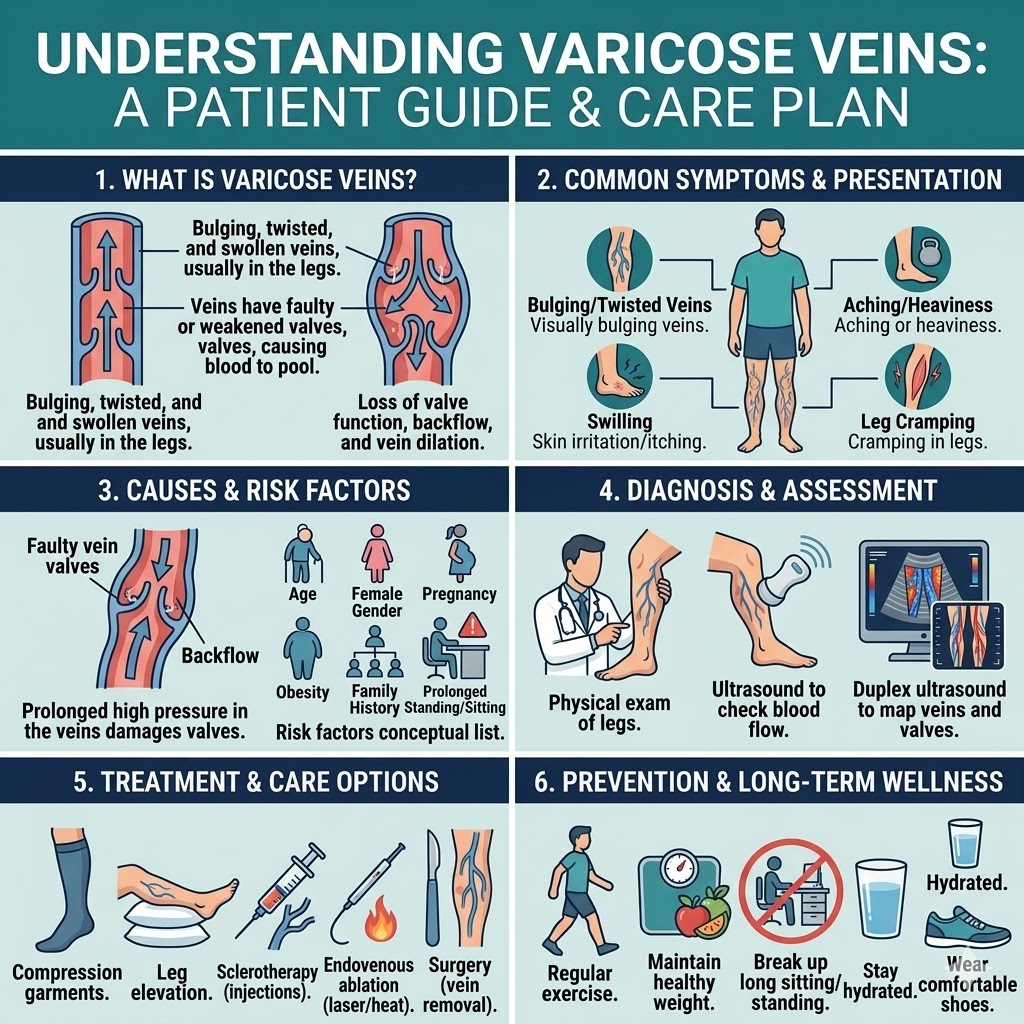
Varicose veins are visible, enlarged, and often twisted veins, most commonly found in the legs. These veins lie close to the skin's surface. While often a cosmetic concern, they can cause discomfort like aching pain and heaviness, and sometimes lead to more serious health issues. Standing and walking naturally increase pressure in leg veins, making them particularly susceptible.
Understanding the Condition
Varicose Veins: Understanding and Managing the Condition
Understanding the Condition
Common Symptoms
Appearance: Veins that appear dark purple, blue, or skin-colored, twisted and bulging, often resembling cords on the legs. Visibility can vary based on skin tone.
Achy or Heavy Feeling: Achy or heavy feeling in the legs.
Burning, Throbbing, Cramping: Burning, throbbing, muscle cramping, and swelling in the lower legs.
Pain After Prolonged Activity: Worse pain after sitting or standing for long periods.
Itching: Itching around one or more veins.
Skin Color Changes: Changes in skin color around a varicose vein.
Spider Veins: Spider veins are smaller, milder varicose veins, closer to the skin, appearing as thin red lines or web-like networks on legs and feet.
Consultation Guide
Which Specialist to Meet
Initially, you should see your primary care physician. If needed, they may refer you to a vascular specialist, such as a phlebologist (a doctor specializing in vein conditions) or a vascular surgeon.
Preparations Before Your Visit
Before your visit, make a list of all your symptoms, including when they started and how often they occur. Be prepared to discuss your family medical history, current medications, and any other health conditions. It’s also helpful to note down any questions you have. Wear loose, comfortable clothing for the examination.
Book a doctor visit near me
Monitor for Blood Clot Symptoms: Persistent leg pain, swelling, or tenderness can indicate a blood clot. Seek immediate medical attention if these symptoms develop.
Address Bleeding: While rare, if a varicose vein close to the skin surface bleeds, apply pressure and seek medical help.
Consultation Guide
Varicose veins are visible, enlarged, and often twisted veins, most commonly found in the legs. These veins lie close to the skin's surface. While often a cosmetic concern, they can cause discomfort like aching pain and heaviness, and sometimes lead to more serious health issues. Standing and walking naturally increase pressure in leg veins, making them particularly susceptible.
Endovenous Thermal Ablation: Uses heat (from a laser or radiofrequency energy) delivered via a thin tube (catheter) inserted into the vein. The heat causes the vein to collapse and seal shut, redirecting blood flow to healthy veins. (Duration: The procedure itself is short (less than an hour). Recovery is typically a few days to a week. Full vein closure and fading can take several weeks.)
Manage Leg Swelling: Long-standing varicose veins can cause chronic leg swelling. Consistent use of compression and leg elevation can help manage this.
Diagnostic Procedures
Your doctor will visually inspect and feel your legs while you stand and sit, assessing vein size, tenderness, and texture. This quick exam helps identify problematic veins.
What to Expect
The doctor will examine your legs thoroughly. They might ask you to stand or walk briefly to see how the veins appear under pressure. This examination is quick and generally painless.
This non-invasive test uses sound waves to image veins and assess blood flow, identifying weakened valves and clots. It helps determine the exact location and extent of problematic veins.
What to Expect
You'll lie down while a technician applies a gel to your skin over the affected area. A small handheld device (transducer) will be moved across your skin. You might hear whooshing sounds, which are the sounds of blood flow. The procedure is painless and typically takes 30-60 minutes. You may be asked to stand for part of the exam to evaluate blood flow while gravity is active.
Prevention & Long-Term Wellbeing
Home Remedies & Lifestyle Changes
Regular Exercise: Engaging in activities like walking helps improve blood circulation in your legs. (Duration: Ongoing)
Elevating Legs: Raising your legs above heart level for 15 minutes, several times a day, helps reduce swelling and improve blood flow back to the heart. (Duration: Daily practice)
Maintaining a Healthy Weight: Losing excess weight reduces pressure on your veins. (Duration: Ongoing)
Avoiding Prolonged Standing or Sitting: Change positions frequently to encourage blood flow. If you must stand or sit for long periods, shift your weight often or take short walks. (Duration: Daily practice)
Dietary Adjustments: Eating a high-fiber, low-salt diet can help prevent constipation (which adds pressure) and reduce swelling. (Duration: Ongoing)
Compression Stockings: These specially designed stockings apply steady pressure to your legs, helping blood flow more efficiently and reducing swelling and discomfort. They are tighter at the ankle and gradually loosen up the leg. (Duration: Daily wear as prescribed)
Minimally Invasive Procedures
Sclerotherapy: A solution is injected directly into the varicose or spider vein, causing it to scar and close. Blood then reroutes through healthier veins, and the treated vein fades over time. (Duration: Veins typically fade within a few weeks to a month or more. Multiple sessions may be needed over several weeks or months.)
Vein Ligation and Stripping: This involves tying off the affected vein before it joins a deeper vein (ligation) and then removing a large section of the vein through small incisions (stripping). (Duration: Typically an outpatient procedure. Recovery can take a few weeks. Modern techniques are often less invasive.)
Prevention
Regular Physical Activity: Regular exercise, particularly walking, improves leg muscle tone and blood circulation, reducing the risk of vein problems.
Maintain a Healthy Body Weight: Keeping your weight in a healthy range reduces undue pressure on your leg veins.
Elevate Your Legs: Periodically raising your legs, especially after long periods of standing or sitting, aids blood flow.
Avoid Prolonged Inactivity: Change positions frequently if your job requires long periods of standing or sitting. Take short breaks to walk around.
Wear Appropriate Footwear and Clothing: Avoid high heels and tight clothing around the waist, groin, or legs, which can restrict blood flow. Compression stockings are beneficial if recommended.
Balanced Diet: A diet rich in fiber and low in salt can help prevent constipation and reduce fluid retention, both of which can negatively impact vein health.
Long-Term Monitoring & Complication Awareness
Recognize Skin Changes: Be vigilant for any skin discoloration or changes, especially near the ankles, which could signal the start of an ulcer. Seek prompt medical advice if you notice this.
Tags & Topics
Notice an error or need an update?
Help us keep medical information accurate. Report incorrect info or suggest an edit.


