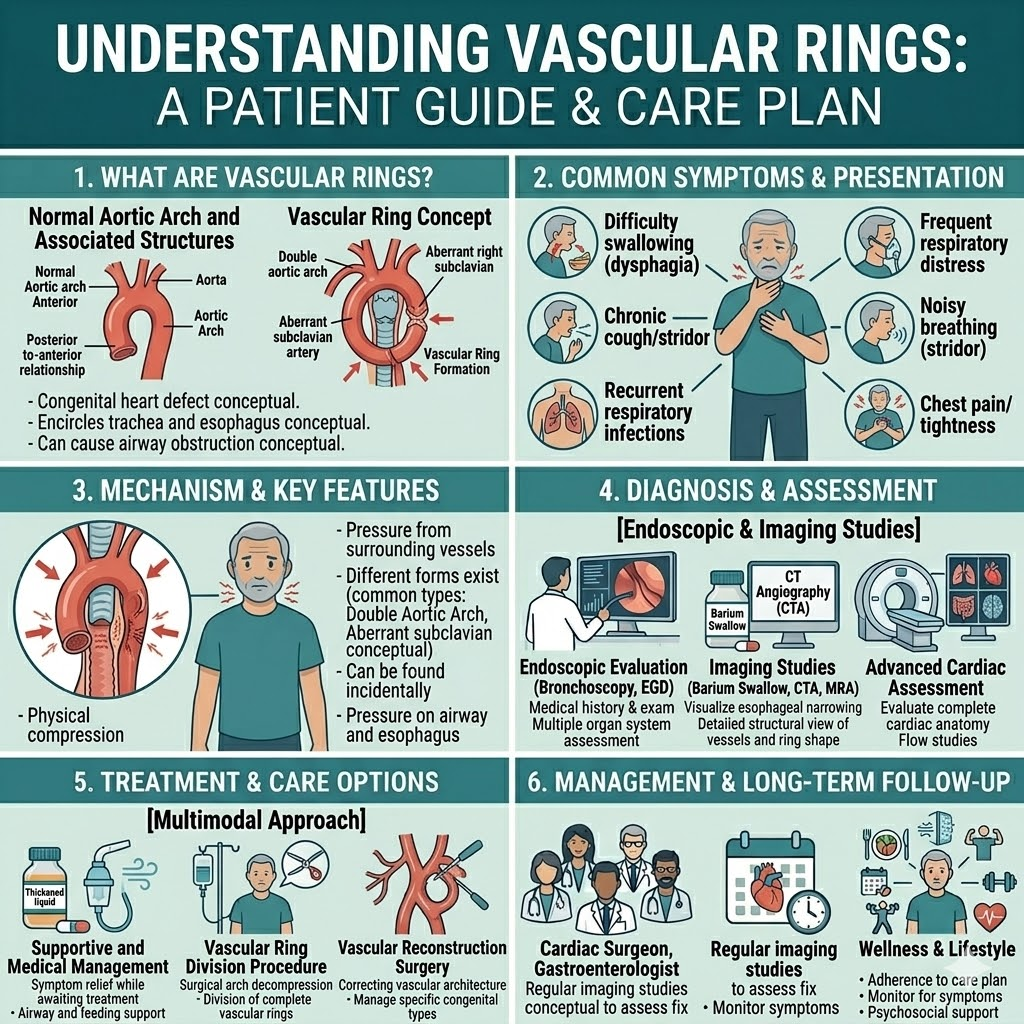
A vascular ring is a heart condition present at birth, meaning it's a type of congenital heart defect. It occurs when the body's main artery, called the aorta (specifically its curved part, the aortic arch), or its connecting blood vessels form a complete or nearly complete circle around the windpipe (trachea) and the food pipe (esophagus). This ring can press on these tubes, making it difficult to breathe or swallow. A common example is a "double aortic arch," where two aortic arches form the ring. While some related conditions, like a vascular sling, may not need treatment, surgery is usually required for a true vascular ring.
Understanding the Condition
Vascular Rings: Understanding a Congenital Heart Condition
Understanding the Condition
Common Symptoms
Breathing Difficulties: Children may experience wheezing, a persistent cough, shortness of breath, or noisy breathing sounds. They might also have frequent lung infections due to pressure on the windpipe.
Swallowing Problems: Difficulty swallowing, especially solid foods, choking, or gagging during or after meals. Infants might arch their back during or after feeding.
Bluish Skin Color (Cyanosis): A bluish tint around the mouth or fingernails can indicate insufficient oxygen, especially during feeding or crying. Some individuals may not show symptoms until later in life, or symptoms might be mild, varying if other heart conditions are present.
Consultation Guide
Which Specialist to Meet
If your child shows symptoms of a heart condition, consult a pediatrician first. They will likely refer you to a pediatric cardiologist, a doctor specialized in heart diseases in children. In cases requiring surgery, a pediatric cardiovascular surgeon will also be involved.
Preparations Before Your Visit
Make a detailed list of all symptoms, including when they started, how often they occur, and what seems to make them better or worse. Bring a list of your child's medical history, any medications they are taking, and family medical history, especially any known heart conditions. Be prepared to describe your child's feeding and breathing patterns.
Book a doctor visit near me
For Symptoms/Complications: Medications are not a cure for the vascular ring itself but may be used to manage symptoms like breathing issues, recurrent lung infections, or to support affected heart function. (Duration: As needed; short-term for acute issues, or long-term for ongoing management, as determined by a doctor.)
Nutritional Support: For infants or children experiencing significant feeding difficulties, specialized feeding techniques, modified food textures, or nutritional supplements may be recommended to ensure proper growth. (Duration: Ongoing until symptoms improve, potentially for several months or longer.)
For Asymptomatic Cases or Vascular Sling: In rare instances where a vascular ring causes no symptoms, or for related conditions like a vascular sling that are less likely to cause problems, doctors may recommend a "watch and wait" approach with regular monitoring instead of immediate surgery. (Duration: Ongoing, with regular follow-up appointments to check for symptom development or changes.)
Regular Cardiology Follow-ups: Children and adults who have been diagnosed with or treated for a vascular ring require ongoing care with a pediatric or adult cardiologist to monitor the repair, assess for potential complications, and address any new symptoms throughout life.
Lifestyle and Symptom Management
Symptom Awareness: Families should be educated on recognizing any changes in breathing, swallowing, or activity levels that might suggest a need for medical attention.
Multidisciplinary Care
Team Approach: Managing a congenital heart condition often involves a collaborative team of specialists, including cardiologists, surgeons, pulmonologists (lung specialists), gastroenterologists (digestive specialists), and nutritionists, to provide comprehensive care tailored to the individual's needs.
Diagnostic Procedures
Uses a small amount of radiation to create images of the heart, lungs, and airways. Helps identify abnormal structures or fluid that might suggest a vascular ring or related issues.
What to Expect
Your child will stand or lie still on an X-ray table. A technician will position them, and they may be asked to briefly hold their breath. It's a quick and painless procedure.
Uses sound waves (ultrasound) to produce moving pictures of the heart, showing blood flow and heart structure. It's crucial for visualizing the aortic arch and identifying a vascular ring.
What to Expect
Gel is applied to the chest, and a handheld device (transducer) is moved over it. Images appear on a screen. It's painless, but expect mild pressure. Electrodes may monitor heart rhythm.
Electrocardiogram (ECG or EKG)
Records the heart's electrical signals to assess rhythm, rate, and potential strain on the heart muscle, which can be affected by a vascular ring or associated conditions.
What to Expect
Small, sticky patches (electrodes) are placed on the chest and sometimes on the arms or legs and connected to a machine. Your child lies still for a few minutes. It's quick, painless, and radiation-free.
Cardiac Catheterization
A thin, flexible tube (catheter) is guided through a blood vessel to the heart. Provides detailed information about pressures, blood flow, and the exact anatomy of the vascular ring.
What to Expect
Typically performed under sedation or general anesthesia. A small incision (usually in the groin) allows catheter insertion, guided by X-ray. Dye may be injected to visualize vessels. The procedure can take hours, with close monitoring afterward.
Treatment Options
A vascular ring is a heart condition present at birth, meaning it's a type of congenital heart defect. It occurs when the body's main artery, called the aorta (specifically its curved part, the aortic arch), or its connecting blood vessels form a complete or nearly complete circle around the windpipe (trachea) and the food pipe (esophagus). This ring can press on these tubes, making it difficult to breathe or swallow. A common example is a "double aortic arch," where two aortic arches form the ring. While some related conditions, like a vascular sling, may not need treatment, surgery is usually required for a true vascular ring.
Surgical Procedures
Surgical Repair: This is the primary treatment. An operation divides the abnormal blood vessel forming the ring, relieving pressure on the windpipe and food pipe. The specific surgical approach depends on the type of vascular ring. (Duration: A one-time procedure. Hospital stay typically a few days to a week, with several weeks of home recovery.)
Medications
Respiratory Support: In severe cases, especially for infants with significant breathing difficulties, temporary respiratory support, such as oxygen therapy or breathing treatments, may be necessary before or after surgery. (Duration: Short-term, as required to stabilize breathing.)
Monitoring for Changes: Even after successful surgery, it's important to be alert for any return of breathing or swallowing difficulties, as scar tissue or growth can sometimes lead to new issues.
Prevention & Long-Term Wellbeing
Prevention
Prenatal Screening: While congenital heart defects cannot always be prevented, prenatal ultrasounds can sometimes identify structural heart abnormalities during pregnancy, allowing for early planning and preparation for care.
Long-Term Monitoring
Heart-Healthy Habits: Encourage a balanced diet and appropriate physical activity, as guided by a cardiologist, to support overall cardiovascular health.
Infection Protection: Practice good hand hygiene and discuss recommended vaccinations with your healthcare professional to prevent respiratory infections, especially in individuals who have had previous breathing difficulties.
Tags & Topics
Notice an error or need an update?
Help us keep medical information accurate. Report incorrect info or suggest an edit.


