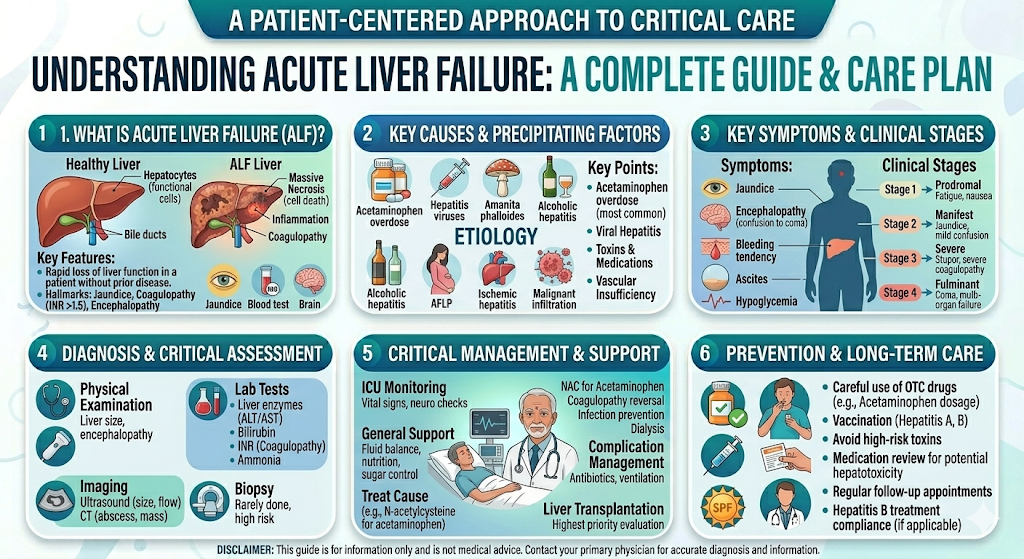
Acute liver failure is a severe and sudden loss of your liver’s ability to function. This failure happens quickly—over days or weeks—and typically affects people who did not have a pre-existing liver disease. It is most commonly triggered by a hepatitis virus or by certain medications, such as pain relievers like acetaminophen.
Understanding the Condition
If acute liver failure is developing, symptoms may include:
Jaundice: A yellowing of the skin and eyeballs.
Pain in the upper right side of the belly.
Note all symptoms and when they began.
List every medicine, vitamin, and herbal supplement currently being taken.
Be ready to discuss any known medical history, including liver disease or hepatitis exposure.
Book a doctor visit near me
Consultation Guide
Acute liver failure is a life-threatening medical emergency that requires immediate hospitalization. It can lead to serious complications, including bleeding problems and a dangerous buildup of fluid and pressure in the brain. Depending on what caused the failure, treatment can sometimes reverse the condition. However, in many cases, a liver transplant may be the only available cure.
Ascites: A swollen belly caused by fluid buildup.
A general feeling of being unwell.
Confusion or disorientation.
Excessive sleepiness.
Breath with an unusual, musty, or sweet odor.
Since this condition can develop rapidly in a person who was previously healthy, you must seek medical attention immediately if you notice a sudden yellowing of the skin or eyes, tenderness in the upper belly, or any unusual changes in a person’s mental state or personality.
Acute liver failure happens when liver cells are severely damaged and can no longer work. Common causes include:
Medication Overdose: Taking too much of the common pain relievers, like acetaminophen, is the most frequent cause in the United States. This can happen from a single very large dose or from taking slightly higher-than-recommended doses over several days. If an overdose is suspected, seek medical help right away, as treatment can prevent liver failure.
Viral Infections: Hepatitis A, B, and E viruses, along with other viruses like Epstein-Barr, cytomegalovirus, and herpes simplex virus, can increase the risk.
Toxins: Exposure to certain toxins, such as the poisonous wild mushroom Amanita phalloides or the industrial chemical carbon tetrachloride (found in refrigerants and solvents), can cause the liver to fail.
Autoimmune Disease: Liver failure can be triggered by autoimmune hepatitis, a condition where the body’s immune system mistakenly attacks liver cells, causing injury.
Vascular Diseases: Conditions like Budd-Chiari syndrome can cause blockages in the liver’s veins.
Metabolic Diseases: Rare inherited conditions, such as Wilson's disease, and acute fatty liver of pregnancy can sometimes be the cause.
Cancer: Cancer that starts in the liver or spreads to it can cause the organ to fail.
Severe Infection (Sepsis) or Shock: These conditions can drastically reduce blood flow to the liver.
Heat Stroke: Extreme physical activity in a hot environment can sometimes trigger the condition.
Risk Factors
Factors that can increase a person’s risk for acute liver failure include:
Sex: A higher number of people affected by this condition are female.
Underlying Illness: Having conditions such as viral hepatitis, metabolic disease, autoimmune disease, or cancer increases the risk.
Acute liver failure frequently causes serious complications, including:
Cerebral Edema (Swelling in the Brain): Too much fluid can cause pressure to build up inside the brain. This can lead to severe confusion, disorientation, and seizures.
Preparations Before the Visit:Because this is an emergency, the priority is to get to the hospital immediately. If there is time, or for follow-up appointments, preparing the following information is helpful:
A detailed diagnosis is essential to determine the cause and the severity of the liver failure. Procedures may include:
Treatment focuses on managing complications and addressing the underlying cause. It often requires immediate and intensive care in a hospital setting.
Maintain a Healthy Weight: Obesity can lead to metabolic dysfunction-associated steatotic liver disease (MASLD), which may cause serious liver damage.
Diagnostic Procedures
Bleeding Problems: The failing liver cannot produce enough clotting factors, which are necessary for blood to clot properly. Bleeding, particularly in the stomach and intestines, is common and may be difficult to control.
Infections: People with acute liver failure are more susceptible to infections, especially in the blood, respiratory system, and urinary tract.
Kidney Failure: The kidneys often fail after the liver, which is particularly common in cases involving an overdose of acetaminophen, as this substance damages both organs.
Consultation and Preparation
Specialist to Meet:Since acute liver failure is a medical emergency, you will need immediate care from a team of specialists in a hospital setting. The primary specialists involved in your ongoing care will be a Hepatologist (a physician specialising in the liver) or a Gastroenterologist (a physician specialising in the digestive system).
Liver Function Tests (LFTs)
Description: LFTs are blood tests that measure the levels of specific enzymes and proteins in your blood. These tests check how well the liver is performing its main jobs, such as producing protein and clearing bilirubin (a waste product in the blood). Irregular results suggest liver damage or disease.
What to Expect
Ultrasound (Sonography)
Description: Diagnostic ultrasound uses high-frequency sound waves to create live images of the organs and structures inside your body. This imaging is used to help diagnose and guide treatment by showing the liver's structure.
What to Expect
Liver Biopsy
Description: A liver biopsy is a procedure that removes a small sample of liver tissue so it can be examined under a microscope in a laboratory for signs of damage or disease. This helps determine the type and stage of the liver disease. The most common method involves inserting a thin needle through the skin into the liver (percutaneous biopsy), but a needle can also be inserted through a vein in the neck (transjugular biopsy).
What to Expect
Ongoing Medical Monitoring: Attend regular check-ups with your Hepatologist or Gastroenterologist, and undergo frequent blood tests (LFTs) and imaging scans as scheduled.
Disclaimer: This article provides general health information and is not intended to be a substitute for professional medical advice, diagnosis, or treatment. Always consult your treating physician or another qualified healthcare provider with any questions you may have regarding a medical condition.
To report an error in the article, please send an email to errors@medicalwriter.com.
Treatment Options
Acute liver failure is a severe and sudden loss of your liver’s ability to function. This failure happens quickly—over days or weeks—and typically affects people who did not have a pre-existing liver disease. It is most commonly triggered by a hepatitis virus or by certain medications, such as pain relievers like acetaminophen.
Prescription Medicines: Certain prescription drugs, including some antibiotics, anti-inflammatory medications, and anticonvulsants, can lead to liver failure.
Treatment Overview (Bulleted List)
Medication (Duration: Days to Weeks)
Treatment for bleeding disorders involves administering substances that help the blood clot.
Monitoring and support for failing kidneys may be necessary, especially if kidney failure is also present.
Liver Transplant: This major surgery is often the only permanent cure when acute liver failure cannot be reversed with other treatments. It involves removing the diseased liver and replacing it with a healthy liver from either a deceased or living donor. Recovery is a multi-month process that includes post-operative care and long-term use of anti-rejection medicines.
Medication Adherence: Strictly follow all prescribed medication regimens, which is especially critical for transplant patients taking immunosuppressants.
Prevention & Long-Term Wellbeing
Herbal and Dietary Supplements: Some herbal products and supplements, such as kava, ephedra, skullcap, and pennyroyal, have been linked to acute liver failure.
Specific medicines may be given to counteract the effects of a poisoning or overdose, such as for acetaminophen toxicity, to prevent further damage and aid recovery.
Antibiotics and other medicines are used to treat and prevent common infections, such as those in the blood or respiratory system.
Supportive Care and Therapies (Duration: Ongoing, throughout hospitalization)
Intensive care is required to manage serious complications like brain swelling (cerebral edema) and bleeding problems.
Surgical Procedures (Duration: Long-term recovery)
Prevention
You can reduce your risk of acute liver failure by taking proactive steps to protect your liver:
Handle Medicines Safely: Always follow the recommended dosage on medicine labels, even for common pain relievers. If you have existing liver disease, consult your healthcare team before taking any amount of these medicines.
Communicate with Your Doctor: Always inform your healthcare team about all medicines, nonprescription drugs, and herbal supplements you are taking, as they can interact with prescription drugs.
Limit Alcohol: If you choose to drink alcohol, do so in moderation (up to one drink per day for women, and up to two drinks per day for men).
Practice Safe Behavior: Avoid using illicit intravenous drugs, do not share needles, and practice safe sex. Ensure that any tattoo or piercing shops are clean and safe.
Get Vaccinated: Discuss getting vaccines for Hepatitis A and B with your care team, especially if you have chronic liver disease or an increased risk of infection.
Avoid Blood and Fluid Contact: Be cautious to prevent coming into contact with other people's blood and body fluids, as this can spread hepatitis viruses. Avoid sharing razors or toothbrushes.
Do Not Eat Wild Mushrooms: It is extremely difficult to distinguish between safe and poisonous mushrooms.
Use Chemicals with Care: When using aerosol cleaners, insecticides, paints, or other toxic chemicals, ensure the area is well-ventilated or wear a mask. Use gloves and protective clothing to cover your skin.
To ensure recovery and maintain health after an episode of acute liver failure, consider these key aspects of long-term care:
Lifestyle Management: Adopt a liver-friendly diet, practice complete abstinence from alcohol, and engage in regular moderate physical activity.
Mental and Emotional Support: Seek professional help or join support groups to manage the psychological stress associated with a major health emergency.
Tags & Topics
Notice an error or need an update?
Help us keep medical information accurate. Report incorrect info or suggest an edit.


