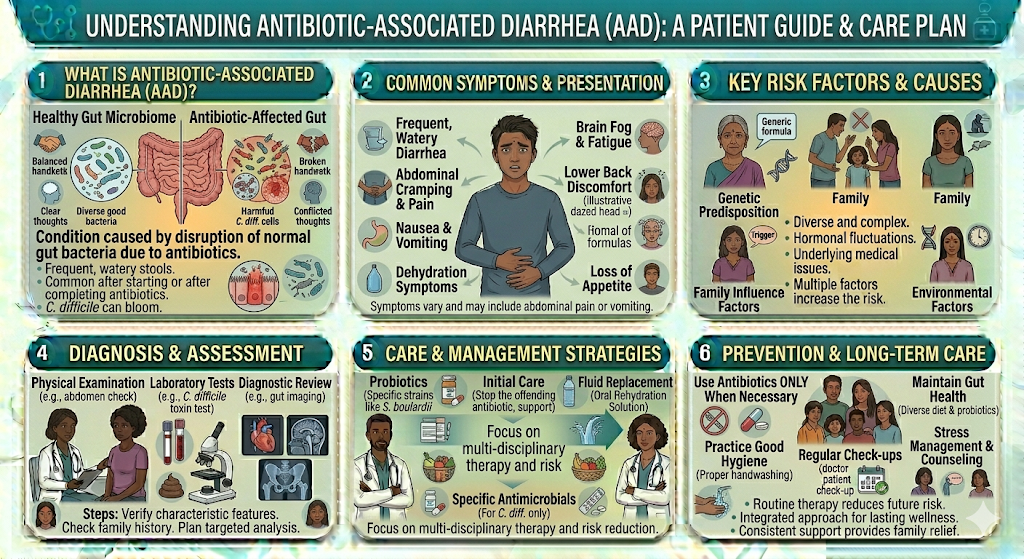
Antibiotic-associated diarrhea occurs when a person experiences three or more loose, watery bowel movements per day after starting a course of antibiotics. Antibiotics are powerful medicines prescribed to fight bacterial infections, but they can also unintentionally destroy the healthy, protective bacteria that naturally live in your digestive tract.
Understanding the Condition
Understanding Diarrhea Associated with Antibiotics
Antibiotic-associated diarrhea occurs when a person experiences three or more loose, watery bowel movements per day after starting a course of antibiotics. Antibiotics are powerful medicines prescribed to fight bacterial infections, but they can also unintentionally destroy the healthy, protective bacteria that naturally live in your digestive tract.
Roughly one out of every five people who take antibiotics will develop diarrhea.
Severe Diarrhea can be caused by a bacterium called Clostridioides difficile (often shortened to C. diff), which can rapidly grow in the large intestine (colon) when the natural gut bacteria are reduced. Severe symptoms can start several days after beginning the antibiotic or up to two months after finishing the medication.
Symptoms of Severe Infection and Dehydration
Symptoms of severe infection include:
Frequent watery diarrhea (up to 10 to 15 times a day).
Severe cramping and pain in the abdomen.
Fever and fast heart rate.
Loss of appetite and weight loss.
Swollen abdomen, or blood or pus in the stool.
A major risk of severe diarrhea is dehydration, which is a dangerous loss of body fluids and minerals (electrolytes). Symptoms of dehydration include:
Excessive thirst and dry mouth.
Little or no urination.
Weakness, dizziness, or lightheadedness.
In young children, signs of dehydration may include a lack of tears when crying, little or no urination for three hours or more, or a noticeable change in alertness.
If you are taking antibiotics and develop diarrhea, contact your primary healthcare professional. If symptoms are severe, such as high frequency of diarrhea, severe abdominal pain, or signs of dehydration, you should see a specialist, such as a Gastroenterologist (a doctor specializing in the digestive system).
Preparations Before Your Visit
Symptom Record: When your diarrhea started, how frequent it is, and a description of other symptoms like fever or pain.
Book a doctor visit near me
Treating diarrhea associated with antibiotics focuses on restoring healthy gut bacteria, and managing symptoms like dehydration.
Home Remedies and Supportive Care (Duration: Ongoing)
Behavioral Therapy: In chronic cases where severe symptoms have led to issues like malnutrition, a care team may provide behavioral support.
Consultation Guide
Severe C. diff infection causes inflammation of the colon (colitis) and can lead to serious loss of body fluid.
Maintaining hydration is essential. Severe diarrhea causes a significant loss of fluids and minerals (electrolytes), requiring consistent fluid replacement.
Initial treatment for mild to moderate cases often involves stopping the antibiotic that caused the problem, if possible.
Diagnostic Procedures
To help your doctor make an accurate diagnosis, be prepared to share the following information:
Medicine Details: The name of the antibiotic you are currently taking or have recently finished, and when you started or finished it.
Description: This is a lab test performed on a sample of your stool to look for the presence of the C. diff bacteria or the tissue-damaging toxins it releases.
What to Expect
Flexible Sigmoidoscopy
Description: An exam used to look inside the rectum and the lower part of the large intestine (the sigmoid colon). This helps detect irregular tissues, inflammation, or the patches of raw tissue (pseudomembranes) that can be a sign of a severe C. diff infection.
What to Expect
Description: A more extensive exam than a sigmoidoscopy, used to view the entire length of the large intestine (colon).
What to Expect
CT Scan (Computed Tomography Scan)
Description: An imaging test that uses X-ray techniques and computer processing to create detailed cross-sectional images (slices) of bones, blood vessels, and soft tissues inside your body. It is used to diagnose disease or injury, and to check for severe complications like an enlarged or perforated colon.
What to Expect
Description: A quick, painless test that captures images of internal structures. It is used to check for a rare, serious condition where the colon becomes severely enlarged and cannot get rid of gas and stool (toxic megacolon).
What to Expect
For severe cases, if a person cannot eat or drink enough, a temporary feeding tube (home enteral nutrition) may be used to deliver liquid nutrition directly to the stomach or small intestine.
Disclaimer: This article provides general health information and is not intended to be a substitute for professional medical advice, diagnosis, or treatment. Always consult your treating physician or another qualified healthcare provider with any questions you may have regarding a medical condition.
Treatment Options
Mild Diarrhea usually starts soon after beginning the antibiotic and typically stops within a few days or shortly after the treatment is completed.
Medication (Duration: Typically 10 to 14 days)
For C. diff infection, treatment requires a course of a different antibiotic medicine that specifically targets the C. diff bacterium to kill the harmful cells and prevent toxin release.
Procedures and Therapies (Duration: Single procedure or short-term therapy)
Fecal Transplant: This procedure involves transferring stool, containing healthy bacteria, from a healthy donor into the digestive tract of the person with C. diff to restore the balance of gut bacteria.
Colectomy (Colon Resection): This surgery involves removing all or part of the colon and is reserved for life-threatening complications.
Ostomy: Following a colectomy, a procedure is usually needed to reattach the remaining parts of the digestive system to allow waste to leave the body through an opening in the belly called a stoma. This may be temporary or permanent.
Prevention & Long-Term Wellbeing
Surgical Procedures (Duration: Single procedure; Recovery Varies)
Prevention and Long-Term Wellbeing Strategies
Preventing recurrent infection and managing long-term health involves careful use of antibiotics and strict hygiene measures.
Prudent Antibiotic Use: Avoid taking antibiotics unless absolutely necessary, as they are ineffective against viruses.
Narrow-Spectrum Options: If an antibiotic is needed, ask your doctor about a medicine that is a narrow-spectrum type, meaning it targets a limited number of bacteria types and is less likely to harm helpful gut bacteria.
Infection Control: In healthcare settings (hospitals, nursing homes), infection prevention rules are critical. If a loved one has C. diff, they will be placed under contact precautions, often in a private room.
Superior Hand Hygiene: Health care staff and visitors should wash their hands with soap and warm water before and after leaving rooms. Alcohol-based hand sanitizers do not destroy the durable spores of C. diff.
Environmental Cleaning: All surfaces in healthcare settings should be thoroughly cleaned using products that contain chlorine bleach, as C. diff spores can survive other cleaning agents.
Lifestyle Management: Staying well-hydrated, especially in warm climates or during vigorous activity, helps protect against recurrent issues. If a specific medicine is suspected of causing recurrent problems, your healthcare professional may recommend stopping it.
Tags & Topics
Notice an error or need an update?
Help us keep medical information accurate. Report incorrect info or suggest an edit.


