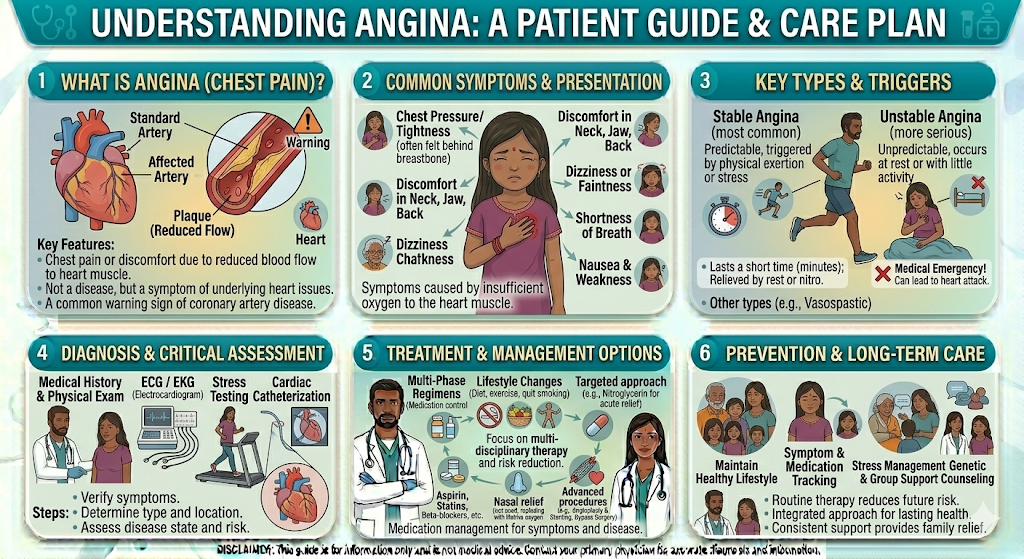
Angina (an-JIE-nuh or AN-juh-nuh), also known as angina pectoris, is a type of chest pain or discomfort caused by reduced blood flow and, therefore, reduced oxygen to the heart muscle. It is most commonly a symptom of coronary artery disease (CAD). If you have unexplained chest pain, get medical help right away.
Understanding the Condition
Angina: Understanding Chest Pain
Angina (an-JIE-nuh or AN-juh-nuh), also known as angina pectoris, is a type of chest pain or discomfort caused by reduced blood flow and, therefore, reduced oxygen to the heart muscle. It is most commonly a symptom of coronary artery disease (CAD). If you have unexplained chest pain, get medical help right away.
Angina is often described as a feeling of squeezing, pressure, heaviness, tightness, or pain in the chest, sometimes feeling like a heavy weight. This discomfort may also be felt in the arms, neck, jaw, shoulder, or back. Other symptoms include shortness of breath.
In women, symptoms can be different and may include discomfort in the neck, jaw, teeth, or back, stabbing pain instead of chest pressure, and stomach pain. Any new or worsening chest pain should be checked immediately by a healthcare professional.
Which Specialist to Meet
You should consult with a doctor who specializes in heart conditions, known as a Cardiologist.
Preparations Needed Before the Visit
To ensure a comprehensive evaluation, prepare the following before your appointment:
A detailed list of all symptoms you have experienced, including when they started, their severity, and how long they last.
Your complete medical history and family history of heart disease or heart attacks.
Description: An imaging exam that produces pictures of your heart, lungs, blood vessels, airways, and the bones of the chest and spine. It is often one of the first tests used to help determine whether your symptoms are caused by heart or lung problems.
Treatment aims to reduce the frequency and severity of angina symptoms and lower the risk of a heart attack by addressing the underlying cause.
Treatment Adherence: Strictly adhere to all prescribed long-term medications to manage symptoms, reduce cholesterol, and prevent blood clots.
Consultation Guide
Angina is caused by reduced blood flow (ischemia) to the heart muscle. The most frequent cause is the buildup of fatty deposits, called plaques, in the heart's arteries—a condition known as atherosclerosis. This plaque narrows the arteries, restricting blood flow. When the heart needs more oxygen, such as during physical activity, this lack of adequate blood flow triggers the pain. A severe reduction in blood flow, often caused by a blood clot forming where plaque has ruptured, can be a medical emergency.
Variant Angina (Prinzmetal Angina): This type is caused by a spasm in the heart's arteries that temporarily reduces blood flow, rather than being due to plaque buildup. It often occurs at rest, typically overnight.
Diagnostic Procedures
Diagnostics: Detailed Description of Procedures
Electrocardiogram (ECG or EKG)
Description: A quick test that records the electrical signals in the heart to show how fast or slow it is beating and to detect irregular heart rhythms (arrhythmias) or heart damage.
What to Expect
What to Expect
Description: This test uses sound waves to create pictures of the heart, showing how blood flows through its chambers and valves. It is often ordered if a healthcare professional suspects heart disease, chest pain, or shortness of breath.
What to Expect
Stress Test (Exercise Stress Test)
Description: A test that shows how your heart functions during physical activity. Exercise forces the heart to pump faster and harder, which can reveal changes in blood flow within the heart that might indicate coronary artery disease.
What to Expect
Description: An imaging test that uses a small amount of radioactive material (tracer) injected into a vein to show how blood flows to the heart both at rest and during exercise. It helps locate areas of poor blood flow or damage in the heart.
What to Expect
Coronary Angiogram (with Cardiac Catheterization)
Description: A test that uses X-rays to visualize the heart's blood vessels (coronary arteries) to check if they are narrowed or blocked.
What to Expect
Coronary CT Angiogram (CCTA)
Description: An imaging test that uses a powerful X-ray machine (CT scan) to make non-invasive images of the heart's blood vessels. It checks for narrowed or blocked arteries and is often used to determine if a patient needs a full cardiac catheterization.
What to Expect
Long-term wellbeing focuses on continued health management after diagnosis.
Disclaimer: This article provides general health information and is not intended to be a substitute for professional medical advice, diagnosis, or treatment. Always consult your treating physician or another qualified healthcare provider with any questions you may have regarding a medical condition.
To report an error in the article, please send an email to errors@medicalwriter.com.
Treatment Options
Stable Angina: The most common form. It is predictable, usually triggered by activity (exertion), and goes away quickly with rest or medication, lasting five minutes or less.
Unstable Angina: A medical emergency. It is unpredictable, occurs even at rest, is typically severe, lasts longer (20 minutes or more), and does not improve with rest or standard medication. It signals a dangerous and urgent risk of a heart attack.
A list of all prescription and non-prescription medications, vitamins, and supplements you are currently taking.
A list of questions you wish to ask the doctor.
Book a doctor visit near me
Medication (Duration: Long-term):
Medicines to relax blood vessels, which helps increase blood flow to the heart and reduce chest pain.
Medicines to reduce cholesterol levels, which helps stabilize plaques in the arteries.
Medicines to prevent blood clots, reducing the risk of a heart attack.
Medicines to lower blood pressure and heart rate, reducing the heart's workload and oxygen demand.
Coronary Artery Bypass Grafting (CABG): A major surgery that creates a new route for blood to flow around a blocked heart artery. A healthy blood vessel is taken from another part of the body (e.g., chest or leg) and connected to the blocked heart artery to restore proper blood flow to the heart muscle.
Regular Monitoring: Attend all scheduled follow-up appointments with your Cardiologist to monitor your heart condition and treatment effectiveness.
Prevention & Long-Term Wellbeing
Refractory Angina: Frequent episodes of chest pain that continue despite a combination of medicines and lifestyle changes.
Home Remedies/Lifestyle Changes (Duration: Ongoing/Long-term):
Avoid or limit alcohol consumption.
Stop all tobacco use and avoid secondhand smoke exposure.
Eat a heart-healthy diet.
Exercise regularly to maintain a healthy weight and help control blood pressure, blood sugar, and cholesterol levels.
Manage and reduce emotional stress.
Ensure you get 7 to 9 hours of sleep per day.
Procedure/Therapies (Duration: Varies, often short-term intervention followed by long-term recovery/monitoring):
Coronary Angioplasty and Stenting: A non-surgical procedure where a catheter with a small balloon is used to open a clogged artery. A wire mesh tube (stent) is typically placed to keep the artery open and maintain blood flow.
Surgical Procedures (Duration: Recovery of several weeks to months):
Prevention and Long-term Wellbeing
Prevention involves adopting and maintaining lifestyle changes crucial for managing angina and slowing the progression of coronary artery disease.
Adopt a Heart-Healthy Lifestyle: This includes eating a heart-healthy diet, exercising regularly, and maintaining a healthy weight.
Avoid Tobacco and Limit Alcohol: Stop all tobacco use (including secondhand smoke exposure) and avoid or limit alcohol consumption.
Manage Stress and Sleep: Manage and reduce emotional stress, and ensure you get 7 to 9 hours of sleep per day.
Control Other Health Conditions: Actively manage related conditions such as high blood pressure and diabetes.
Get Vaccinated: Receive recommended vaccines to help avoid heart complications.
Commitment to Lifestyle: Maintain lifestyle changes (diet, exercise, stress reduction) as a critical, ongoing part of management.
Tags & Topics
Notice an error or need an update?
Help us keep medical information accurate. Report incorrect info or suggest an edit.

