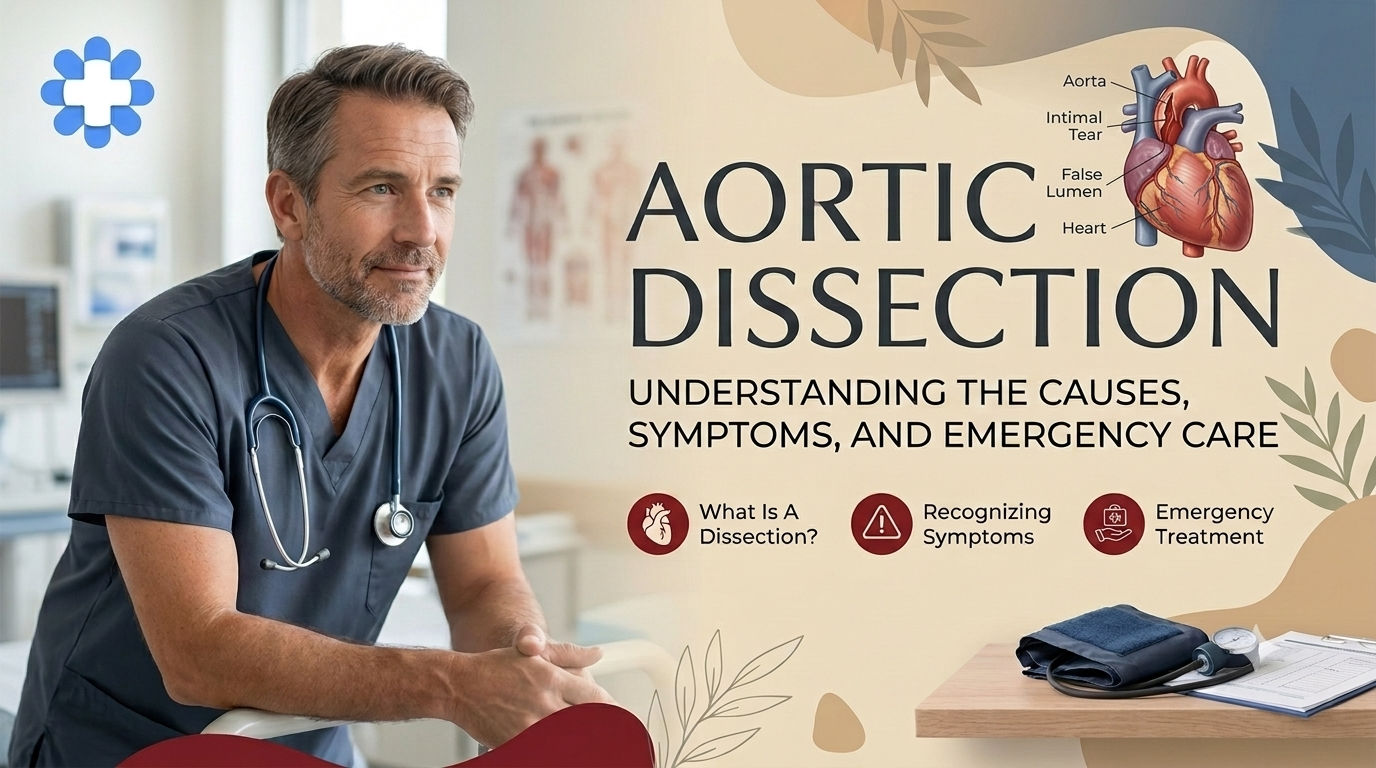
An aortic dissection is a medical emergency in which a tear occurs in the inner layer of the aorta, the body's main artery. Blood rushes through this tear, causing the inner and middle layers of the artery to split (dissect). If blood leaks outside the artery, it can be fatal.
Understanding the Condition
Aortic Dissection: A Patient Guide
An aortic dissection is a medical emergency in which a tear occurs in the inner layer of the aorta, the body's main artery. Blood rushes through this tear, causing the inner and middle layers of the artery to split (dissect). If blood leaks outside the artery, it can be fatal.
While not a common condition, it is most frequently observed in men between the ages of 60 and 70. Because the symptoms can often mimic those of other health conditions, such as a heart attack, there can sometimes be delays in diagnosis. Understanding that a pre-existing thoracic aortic aneurysm—a weakened, bulging area in the aorta—increases the risk of a dissection is important. Recognizing symptoms quickly and seeking immediate medical care remains critical for survival.
Which Specialist to Meet
A detailed list of all symptoms and when they began.
Your complete personal and family medical history.
Consultation Guide
If you have concerns about your heart health or risk factors for aortic disease, you should consult a Cardiologist (a heart specialist) or a Vascular Specialist (a blood vessel specialist). In an acute emergency, you will be treated by a cardiovascular or cardiothoracic surgeon.
Preparations Needed Before Your Visit
To help your doctor evaluate your condition, please prepare the following:

Diagnostic Procedures
Diagnostics: What to Expect
Description: This test uses X-rays and computer processing to create detailed cross-sectional images ("slices") of your blood vessels and tissues.
What to Expect
Description: This test uses sound waves to generate moving pictures of your heart, showing how blood flows through the chambers and valves.
What to Expect
Ongoing Screening: If you have a family history or genetic predisposition (such as Marfan syndrome), routine imaging tests, such as echocardiograms or CT scans, are necessary to monitor the aorta's condition.
Disclaimer: This article provides general health information and is not intended to be a substitute for professional medical advice, diagnosis, or treatment. Always consult your treating physician or another qualified healthcare provider with any questions you may have regarding a medical condition.
To report an error in the article, please send an email to errors@medicalwriter.com.
Treatment Options
A current list of all medications, vitamins, and supplements you are taking.
A list of specific questions for your healthcare team.
Book a doctor visit near me
Doctors use specific imaging to confirm a dissection and plan treatment.
Computed Tomography (CT) Scan
Treatment depends on the location and severity of the dissection.
Medication (Duration: Long-term)
Medications are prescribed to lower heart rate and blood pressure, reducing stress on the aortic wall.
Specific drugs may be used to control cholesterol levels.
Aortic Root Surgery: Specialized surgery for damage located where the aorta connects to the heart.
Strict Blood Pressure Control: Consistent monitoring and adherence to prescribed medications are essential to minimize strain on your vessels.
Tobacco Cessation: Quitting all tobacco products is the most effective way to protect your arterial health.
Cholesterol Management: Work with your doctor to maintain healthy blood lipid levels.
Prevention & Long-Term Wellbeing
Lifestyle Management (Duration: Ongoing)
Stop all tobacco use immediately.
Maintain a healthy weight and follow a nutritious, heart-healthy diet.
Avoid illicit substances.
Surgical Procedures (Duration: Weeks to months for recovery)
Aortic Graft Repair: This involves removing the damaged section of the aorta and replacing it with a synthetic tube (graft) to prevent rupture.
Prevention and Long-term Well-being
Healthy Lifestyle: Focus on a diet rich in fruits, vegetables, and whole grains while limiting sodium and saturated fats.
Tags & Topics
Notice an error or need an update?
Help us keep medical information accurate. Report incorrect info or suggest an edit.

