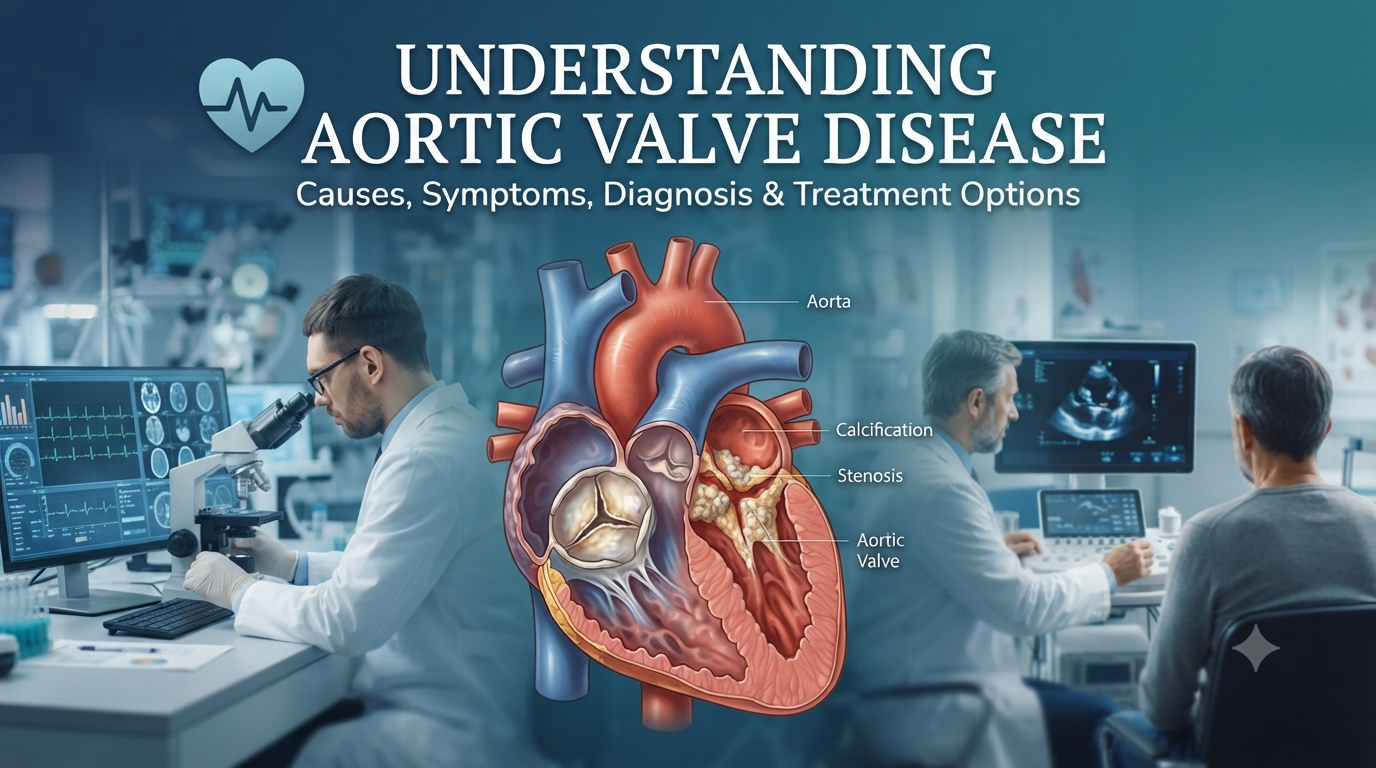
Aortic valve disease is a condition where the valve between the main pumping chamber of your heart (the left ventricle) and the body's main artery (the aorta) does not function correctly. Under normal conditions, this valve acts as a critical gatekeeper, opening to allow oxygen-rich blood to pump out to your body and closing securely to prevent blood from flowing back into the heart.
Understanding the Condition
Aortic Valve Disease: A Comprehensive Guide
Aortic valve disease is a condition where the valve between the main pumping chamber of your heart (the left ventricle) and the body's main artery (the aorta) does not function correctly. Under normal conditions, this valve acts as a critical gatekeeper, opening to allow oxygen-rich blood to pump out to your body and closing securely to prevent blood from flowing back into the heart.
Because the aortic valve is subjected to high pressure and movement throughout your life—opening and closing billions of times—it can wear down, stiffen, or lose its ability to seal effectively over time. In many cases, the disease progresses silently for years before symptoms become noticeable, making early detection and understanding vital. There are two primary ways this valve can fail:
Aortic Valve Stenosis: This occurs when the valve flaps become thick or stiff, causing the opening to narrow. This restriction makes it harder for the heart to pump blood out to the body.
Aortic Valve Regurgitation: In this case, the valve does not close tightly. This allows blood to leak backward into the heart instead of moving forward to the organs.
While some individuals may not notice changes for years, common symptoms include:
Chest pain, pressure, or tightness.
Shortness of breath, especially during activity or when lying down.
Fatigue and decreased ability to perform daily tasks.
Irregular heartbeats or a pounding sensation in the chest.
Swelling in the ankles and feet.
A detailed list of symptoms and when they started.
Your personal and family medical history.
Consultation Guide
The condition can be present from birth (congenital) or develop later in life. Key factors include:
Aging: Calcium deposits can build up on the valve over time, causing it to stiffen.
Congenital Defects: Being born with an abnormal valve, such as a bicuspid valve (two flaps instead of three).
Health Conditions: High blood pressure, chronic kidney disease, and past infections like rheumatic fever or endocarditis.
If you suspect a heart valve issue, you should consult a Cardiologist or a Vascular Specialist.
Preparations for the Visit
To make the most of your appointment, prepare the following:

Diagnostic Procedures
Diagnostics (What to expect)
Transthoracic Echocardiogram
This test uses sound waves to create moving pictures of your heart to check blood flow.
What to Expect
A non-invasive test providing images of the heart and lungs.
What to Expect
This uses X-rays to create detailed, cross-sectional "slices" of the heart.
What to Expect
Cardiac Catheterization
A procedure used to find or fix heart conditions.
What to Expect
Electrocardiogram (ECG/EKG)
This records the electrical signals in your heart.
What to Expect
Disclaimer: This article provides general health information and is not intended to be a substitute for professional medical advice, diagnosis, or treatment. Always consult your treating physician or another qualified healthcare provider with any questions you may have regarding a medical condition.
To report an error in the article, please send an email to errors@medicalwriter.com.
Treatment Options
A list of all current medications, vitamins, and supplements.
Specific questions for your healthcare provider.
Book a doctor visit near me
Medication: Long-term use of medicines to lower blood pressure, manage cholesterol, and reduce heart rate.
Procedures: Minimally invasive options like inserting a replacement valve through a catheter (tube), typically requiring shorter recovery than open surgery.
Surgery: Open-heart surgery to repair or replace the valve. Recovery usually takes several weeks to months.
Prevention & Long-Term Wellbeing
Home Remedies and Lifestyle: Ongoing management focused on quitting tobacco, maintaining a healthy weight, and following a heart-healthy diet.
Prevention and Long-term Well-being
Consistent Monitoring: Regular health checkups and imaging (like echocardiograms) are essential to track the condition's progress.
Blood Pressure Control: Strictly managing high blood pressure to reduce strain on the heart and arteries.
Tobacco Cessation: Quitting all forms of tobacco is critical for maintaining arterial health.
Healthy Diet: Eating a diet rich in fruits, vegetables, and whole grains while limiting salt and saturated fats.
Tags & Topics
Notice an error or need an update?
Help us keep medical information accurate. Report incorrect info or suggest an edit.

