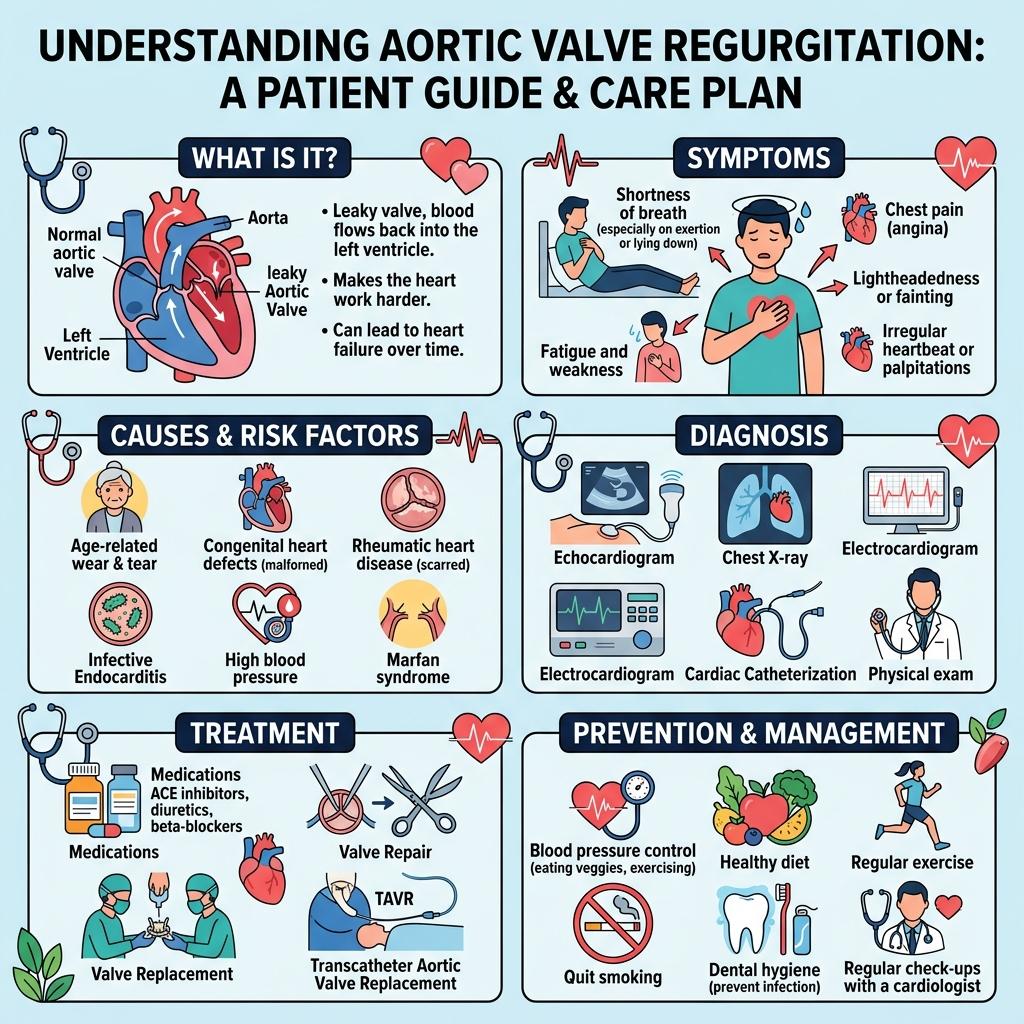
Aortic valve regurgitation, also known as aortic regurgitation, is a heart valve condition where the valve between the heart's main pumping chamber (left ventricle) and the body's largest artery (aorta) doesn't close completely. This causes some blood, freshly pumped out, to leak backward into the left ventricle. Over time, this leakage makes the heart work harder to deliver blood to the rest of the body, potentially leading to tiredness and shortness of breath. The condition can develop gradually over years or appear suddenly. When severe, surgery is often necessary to repair or replace the valve.
Understanding the Condition
Aortic Valve Regurgitation: Understanding a Leaky Heart Valve
Understanding the Condition
Common Symptoms
Shortness of Breath: Difficulty breathing, particularly during exercise or when lying down.
Tiredness and Weakness: Feeling unusually fatigued or weak, especially with increased activity.
Irregular Heartbeat: A heart rhythm that feels uneven or inconsistent.
Lightheadedness or Fainting: Feeling dizzy or losing consciousness briefly.
Chest Discomfort: Pain, discomfort, or a feeling of tightness in the chest, which can worsen with physical activity.
Palpitations: Sensations of a rapid, fluttering, or pounding heartbeat.
Swollen Ankles and Feet: Accumulation of fluid causing swelling in the lower extremities.
Consultation Guide
Which Specialist to Meet
Before your visit, compile a list of all your symptoms, including when they started, how often they occur, and their severity. Please bring a list of all medications, supplements, and vitamins you are currently taking, along with their corresponding dosages. Be prepared to discuss your medical history, including any allergies and family history of heart conditions. It's also helpful to write down any questions you have for your doctor.
Book a doctor visit near me
You will receive a local anesthetic at the catheter insertion site. You may feel some pressure during insertion but generally no pain. A contrast dye may be injected to make blood vessels and heart chambers visible on X-ray. The procedure can take from 30 minutes to several hours, depending on what is being done. You will be monitored closely throughout.
Regular Medical Check-ups: For mild or asymptomatic cases, doctors may recommend regular monitoring to track the condition's progression. (Duration: Ongoing)
Diuretics: Often called 'water pills,' these medications help reduce fluid buildup in the body, which can alleviate symptoms like swelling. (Duration: Ongoing, as prescribed by your doctor)
Symptom Awareness: Be vigilant for any new or worsening symptoms and report them to your healthcare team promptly.
Consultation Guide
Aortic valve regurgitation, also known as aortic regurgitation, is a heart valve condition where the valve between the heart's main pumping chamber (left ventricle) and the body's largest artery (aorta) doesn't close completely. This causes some blood, freshly pumped out, to leak backward into the left ventricle. Over time, this leakage makes the heart work harder to deliver blood to the rest of the body, potentially leading to tiredness and shortness of breath. The condition can develop gradually over years or appear suddenly. When severe, surgery is often necessary to repair or replace the valve.
An ECG records the electrical signals of your heart. It can detect irregularities in heart rhythm and rate, and may show signs of heart enlargement or strain caused by aortic regurgitation.
Diagnostic Procedures
This common test uses sound waves to create live images of your heart. It shows the structure of your heart chambers and valves, how well they are working, and how blood flows through the heart. It's crucial for diagnosing aortic valve regurgitation and assessing its severity.
What to Expect
You will lie on an examination table, and a gel will be applied to your chest. A device called a transducer will be moved across your chest, sending sound waves to your heart. These waves bounce back and are converted into images on a screen. The test is non-invasive, painless, and typically takes 30 to 60 minutes.
Electrocardiogram (ECG or EKG)
What to Expect
Small, sticky patches called electrodes will be placed on your chest and sometimes on your arms or legs. These electrodes are connected by wires to an ECG machine, which records your heart's electrical activity. The test is quick, non-invasive, painless, and usually takes only a few minutes.
A chest X-ray produces images of your heart, lungs, blood vessels, airways, and the bones of your chest and spine. It can reveal if your heart is enlarged due to the extra workload from regurgitation, or if there is fluid in your lungs.
What to Expect
You will typically stand or sit in front of an X-ray machine. You may be asked to hold your breath for a few seconds while the image is taken. The procedure is quick, generally painless, and involves minimal radiation exposure.
Cardiac Catheterization
This procedure involves inserting a thin, flexible tube (catheter) into a blood vessel, usually in the arm or groin, and guiding it to the heart. It allows doctors to measure pressures within the heart chambers and blood vessels, and to visualize the aortic valve and aorta directly.
What to Expect
Family Screening for Congenital Defects: If a close family member has a bicuspid aortic valve (a valve with two flaps instead of the usual three), you should have an echocardiogram to check for similar valve issues, as early diagnosis can improve treatment outcomes.
Long-Term Wellbeing and Monitoring
Consistent Medical Follow-ups: Regular visits with your cardiologist are crucial for monitoring your condition, especially if you have been diagnosed with aortic valve regurgitation, even if mild.
Treatment Options
You should consult with a cardiologist, a doctor specialising in heart conditions. If surgery is considered, you may also see a cardiac surgeon.
Preparations Before Your Visit
Medications
Blood Pressure Medications: These medications can help relax blood vessels and lower blood pressure, which may ease the workload on the heart. (Duration: Ongoing, as prescribed by your doctor)
Heart Rhythm Medications: If irregular heartbeats (arrhythmias) develop, specific medications may be prescribed to help control the heart's rhythm. (Duration: Ongoing, as prescribed by your doctor)
Surgical Procedures
Minimally Invasive Heart Surgery: This approach involves smaller incisions in the chest, often between the ribs, to repair or replace the aortic valve. It generally leads to less pain and a quicker recovery compared to traditional open-heart surgery. (Duration: Recovery is often shorter compared to traditional open-heart surgery, typically several weeks.)
Open-Heart Surgery: This is the traditional method for valve repair or replacement, involving a larger incision down the center of the chest to access the heart. It provides the surgeon with a full view of the heart. (Duration: Recovery typically takes several weeks to months.)
Adherence to Treatment Plan: Faithfully follow your doctor's instructions regarding medications and lifestyle recommendations.
Prevention & Long-Term Wellbeing
Lifestyle Changes and Monitoring
Healthy Lifestyle: Adopting a heart-healthy diet, engaging in regular physical activity as advised by your doctor, and managing stress can support overall heart health. (Duration: Ongoing)
Aortic Valve Repair: A surgeon reshapes or reinforces the existing aortic valve so it can close properly, reducing or eliminating the backward blood flow. (Duration: Recovery typically takes several weeks to months, depending on the surgical approach.)
Aortic Valve Replacement: The damaged aortic valve is removed and replaced with a new valve, which can be mechanical (made of synthetic materials) or biological (made from animal or human tissue). (Duration: Recovery typically takes several weeks to months, depending on the surgical approach.)
Prevention
Prevent and Treat Infections: Seek prompt medical attention for severe sore throats, as untreated strep throat can lead to rheumatic fever, which can damage heart valves. Antibiotics can effectively treat strep throat.
Manage Blood Pressure: Regularly monitor your blood pressure and follow your doctor's recommendations to keep it within a healthy range, as high blood pressure can contribute to valve damage.
Healthy Lifestyle Choices: Maintain a balanced diet, engage in appropriate physical activity, manage stress, and avoid smoking to support overall cardiovascular health and potentially slow disease progression.
Tags & Topics
Notice an error or need an update?
Help us keep medical information accurate. Report incorrect info or suggest an edit.

