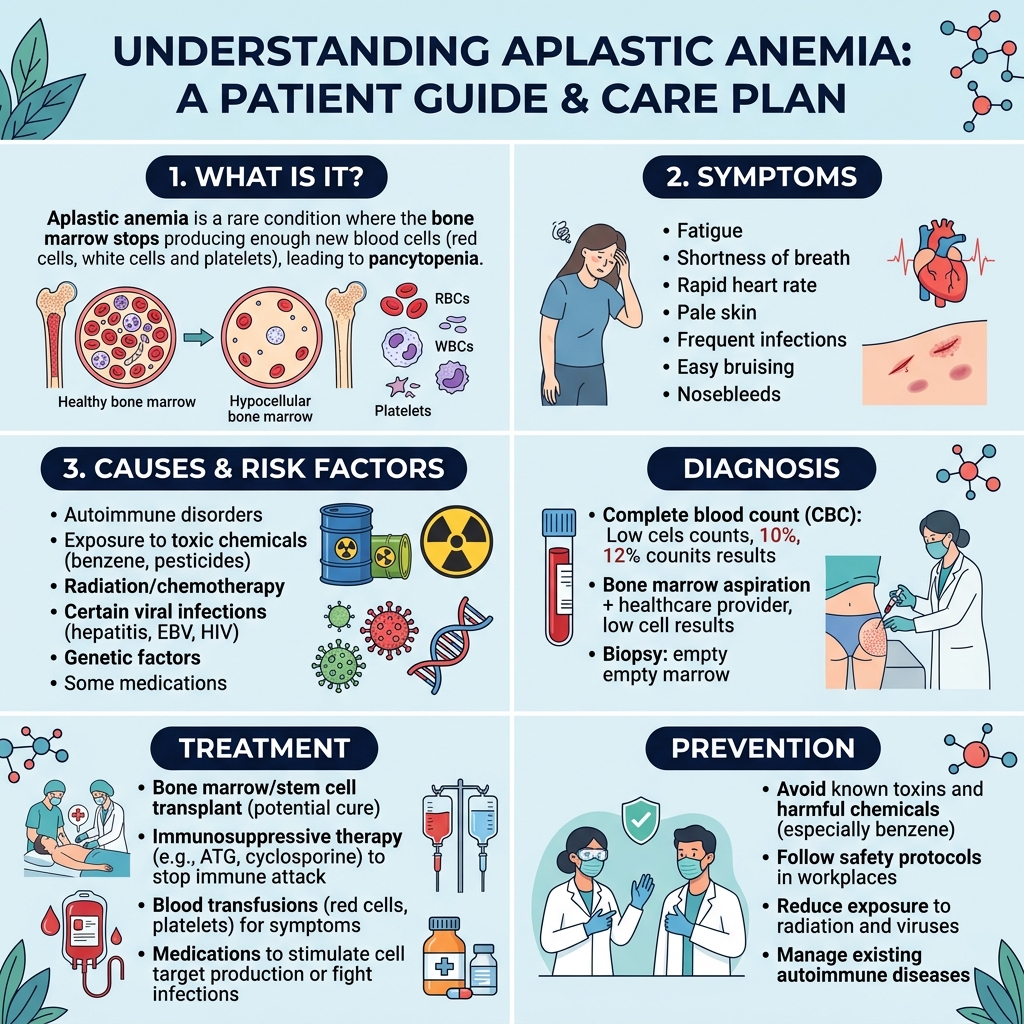
Aplastic anemia is a serious and rare condition where your bone marrow, the soft, spongy material inside your bones, stops producing enough new blood cells. This shortage of blood cells can leave you feeling very tired, make you more susceptible to infections, and lead to uncontrolled bleeding. It can develop at any age, sometimes appearing suddenly or progressing slowly over time, ranging from mild to life-threatening. The most common cause is when your own immune system mistakenly attacks the stem cells in your bone marrow, which are responsible for making all types of blood cells. Other factors like exposure to certain chemicals, radiation, medications, or viral infections can also damage bone marrow.
Understanding the Condition
Aplastic Anemia: A Comprehensive Guide for Non-Medical Persons
Understanding the Condition
Common Symptoms
Fatigue: Feeling extremely tired and weak, even after rest, due to a lack of red blood cells (anemia).
Dizziness: Feeling lightheaded or faint, a common symptom of anemia.
Headache: Persistent or frequent headaches, also related to anemia.
Fever: Elevated body temperature, often a sign of an underlying infection.
Consultation Guide
Which Specialist to Meet
You should first consult with your primary care physician, who can evaluate your symptoms and initial blood test results. If aplastic anemia is suspected, you will likely be referred to a hematologist, a doctor specializing in blood disorders.
Preparations Before Your Visit
Before your appointment, gather a list of all symptoms you've experienced, including when they started and how they affect your daily life. Prepare a list of all medications, vitamins, and supplements you currently take. Be ready to discuss your medical history, any recent illnesses, treatments, and family history of blood disorders. Write down any questions you have for the doctor.
Book a doctor visit near me
Blood Transfusions: This supportive treatment replenishes the red blood cells, white blood cells, or platelets that your bone marrow isn't making. It helps manage symptoms like fatigue and bleeding, and prevents complications, but it does not cure the underlying condition. (Duration: Ongoing, as needed, potentially for months or years. Each transfusion session typically takes a few hours.)
Adherence to Treatment Plan: It is crucial to strictly follow all prescribed medications and recommended treatments, including scheduled transfusions, to effectively manage the condition and prevent symptoms from worsening or complications arising.
Consultation Guide
Aplastic anemia is a serious and rare condition where your bone marrow, the soft, spongy material inside your bones, stops producing enough new blood cells. This shortage of blood cells can leave you feeling very tired, make you more susceptible to infections, and lead to uncontrolled bleeding. It can develop at any age, sometimes appearing suddenly or progressing slowly over time, ranging from mild to life-threatening. The most common cause is when your own immune system mistakenly attacks the stem cells in your bone marrow, which are responsible for making all types of blood cells. Other factors like exposure to certain chemicals, radiation, medications, or viral infections can also damage bone marrow.
Shortness of Breath: Difficulty catching your breath, especially during physical activity, because your body isn't getting enough oxygen.
Rapid or Irregular Heart Rate: Your heart may beat faster or feel as though it's skipping beats as it tries to compensate for the low red blood cell count.
Pale Skin: A noticeable paleness in your skin, gums, and nail beds due to insufficient red blood cells.
Frequent or Prolonged Infections: Getting sick often, or infections that take a long time to heal, because of too few white blood cells to fight germs.
Unexplained or Easy Bruising: Bruises appearing without a clear injury, or bruising more easily than usual, due to low platelet counts affecting blood clotting.
Nosebleeds and Bleeding Gums: Frequent nosebleeds or bleeding from your gums, often spontaneous, linked to low platelet levels.
Prolonged Bleeding from Cuts: Minor cuts taking an unusually long time to stop bleeding.
Skin Rash (Petechiae): Tiny red or purple spots on the skin, resembling a rash, caused by small bleeds under the skin surface due to low platelets.
The procedure is usually performed by a doctor, often from the back of your hip bone (pelvis). You will lie on your stomach or side. The area will be cleaned, and a local anesthetic will be injected to numb it, which might cause a brief stinging sensation. For aspiration, a thin needle is inserted into the bone to withdraw a small amount of liquid bone marrow. You might feel a quick, sharp pain or pulling sensation. For the biopsy, a slightly larger needle is used to remove a small piece of bone tissue containing marrow. You'll likely feel pressure during this step. Both procedures are often done together and typically take about 15-30 minutes. Afterward, pressure will be applied to the site, and a bandage will be placed. You might experience mild soreness or aching for a few days, and it's advisable to avoid strenuous activities.
Bleeding Management: Be mindful of activities that could cause injury or bleeding. Use a soft-bristle toothbrush, avoid contact sports, and report any unusual bruising, prolonged bleeding, or petechiae (tiny red spots) to your doctor immediately.
Diagnostic Procedures
Complete Blood Count (CBC)
This is a standard blood test that measures the number of red blood cells, white blood cells, and platelets in a sample of your blood. In aplastic anemia, the counts of all three types of blood cells are typically lower than normal.
What to Expect
A healthcare professional will draw a small sample of blood, usually from a vein in your arm, using a thin needle. You might feel a brief pinch or sting. The process is quick, typically taking only a few minutes. No special preparation, such as fasting, is usually required for a CBC.
Bone Marrow Biopsy and Aspiration
These procedures collect and examine samples of bone marrow — the soft, spongy tissue inside your bones where blood cells are made. Doctors use them to determine if your bone marrow is healthy and producing normal amounts of blood cells, which is crucial for diagnosing aplastic anemia and monitoring its progression.
What to Expect
Avoid Unnecessary Radiation Exposure: Discuss with your doctor the necessity of medical imaging procedures that involve radiation, especially if alternative diagnostic methods are available, to limit potential bone marrow damage.
Long-Term Monitoring and Support
Treatment Options
Medications
Immunosuppressants: These medicines work by suppressing your immune system, preventing it from attacking the stem cells in your bone marrow. This allows the bone marrow to recover and begin producing new blood cells. They are a common first-line treatment, especially for those who cannot undergo a stem cell transplant. (Duration: Often long-term, potentially for several months to years, or indefinitely, depending on the response and condition stability.)
Bone Marrow Stimulants (Growth Factors): These substances stimulate the bone marrow to produce more blood cells, particularly white blood cells. They can help improve specific blood cell counts and reduce the risk of infections. (Duration: Varies, often used for several weeks or months, or as needed to support blood counts.)
Stem Cell Transplant (Bone Marrow Transplant): This procedure replaces diseased bone marrow with healthy blood-forming stem cells, usually from a compatible donor. It is often the most effective treatment for younger patients with severe aplastic anemia. Before the transplant, chemotherapy is typically given to destroy the existing, malfunctioning bone marrow. The transplanted stem cells then travel to the bone marrow and ideally begin producing new, healthy blood cells. (Duration: The transplant procedure itself is a single event, but the preparation (chemotherapy) takes days to weeks, and the recovery process is long, typically several months to a year or more.)
Regular Medical Check-ups: Maintain consistent follow-up appointments with your hematologist. These visits are essential to monitor your blood counts, assess the effectiveness of your treatment, and check for any potential complications or changes in your condition.
Prevention & Long-Term Wellbeing
Prevention
Minimize Exposure to Harmful Chemicals: If your work or hobbies involve contact with toxic chemicals like insecticides, herbicides, or certain industrial solvents, take precautions such as using protective gear and ensuring proper ventilation to reduce exposure.
Infection Prevention: Due to reduced white blood cell counts, people with aplastic anemia are more vulnerable to infections. Practice rigorous hand hygiene, avoid close contact with sick individuals, ensure you receive recommended vaccinations (after consulting your doctor), and seek prompt medical attention for any signs of infection (e.g., fever, chills).
Healthy Lifestyle: Support your overall health and energy levels by maintaining a balanced, nutritious diet, ensuring adequate rest, and engaging in gentle physical activity or exercise as advised and approved by your doctor.
Tags & Topics
Notice an error or need an update?
Help us keep medical information accurate. Report incorrect info or suggest an edit.

