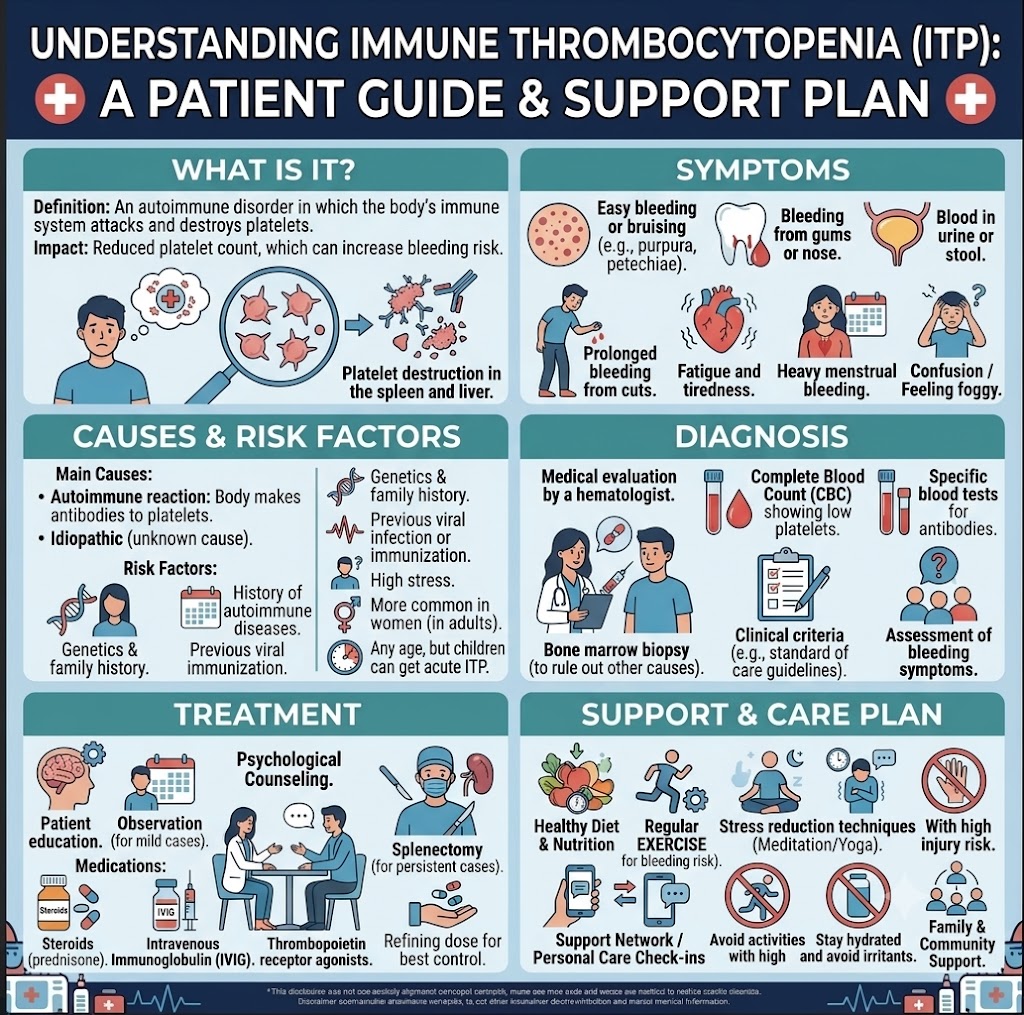
Immune thrombocytopenia (ITP) is a condition where the body's immune system mistakenly attacks and destroys its own platelets. Platelets are tiny blood cells essential for clotting, helping to stop bleeding and bruising. When platelet levels are too low, it can lead to easy bruising and bleeding. While children often recover from ITP quickly, especially after a viral infection, adults may experience the condition for months or even years. The severity of ITP varies; some people might not need treatment, while others require interventions to raise platelet counts or manage bleeding.
Understanding the Condition
Immune Thrombocytopenia (ITP): Understanding and Managing Low Platelets
Understanding the Condition
Common Symptoms
Easy Bruising: Unexplained bruises appearing frequently or with minimal injury.
Heavy Menstrual Periods: Unusually heavy or prolonged menstrual bleeding in women. It's important to note that some people with ITP may not show any symptoms. If you or your child experiences worrying symptoms, especially bleeding that doesn't stop with usual first aid (like applying pressure), seek immediate medical help. This is a medical emergency.
Consultation Guide
Which Specialist to Meet
You should first consult with your primary care provider or your child's pediatrician. If ITP is suspected, they will likely refer you to a hematologist, a doctor specializing in blood disorders. For children, a pediatric hematologist would be the appropriate specialist.
Preparations Before Your Visit
Before your appointment, prepare a list of your symptoms, including when they started and how often they occur. Bring a complete list of all medications, supplements, and vitamins you are taking. Be ready to discuss your medical history, any recent illnesses, and family medical history. Prepare a list of questions you want to ask your doctor.
Book a doctor visit near me
A Complete Blood Count (CBC) is a routine blood test that measures the different components of your blood, including red blood cells, white blood cells, and platelets. For ITP, this test is crucial for determining if your platelet count is unusually low, which is a hallmark of the condition. It also helps rule out other conditions that could cause similar symptoms or low platelet counts.
Consultation Guide
Tiny Reddish-Purple Spots (Petechiae): Small, pinprick-sized spots under the skin, often on the lower legs, that look like a rash and don't fade when pressed. These are caused by minor bleeding into the skin.
Larger Reddish-Purple Patches (Purpura): Bigger patches of bleeding under the skin, larger than petechiae.
Bleeding from Gums or Nose: Unexplained or prolonged bleeding from the gums (e.g., when brushing teeth) or frequent nosebleeds.
Blood in Urine or Stools: Visible blood in urine, or black/tarry stools indicating blood in the digestive tract.
Diagnostic Procedures
Complete Blood Count (CBC)
What to Expect
During a CBC, a healthcare professional will draw a small sample of blood, usually from a vein in your arm. The procedure is quick, typically taking only a few minutes, and involves a slight pinch or sting as the needle is inserted. After the blood is drawn, a bandage will be applied. There's no special preparation required, and you can usually resume your normal activities immediately afterward.
Watchful Waiting: For individuals with mild ITP, no significant bleeding, and platelet counts that are not critically low, your doctor might recommend simply monitoring your condition without immediate active treatment. Children, especially, often recover from ITP on their own without specific interventions. (Duration: May last for weeks, months, or even years, with regular blood tests to monitor platelet levels.)
Regular Medical Check-ups: Consistent follow-up with your healthcare provider, including regular blood tests to monitor platelet counts, is crucial for managing ITP and detecting any changes in your condition early.
Avoid Injury and High-Risk Activities: To prevent bleeding and bruising, especially with low platelet counts, avoid contact sports, activities with a high risk of falls, and unnecessary physical trauma.
Monitor for Bleeding Signs: Be vigilant for any signs of bleeding, such as new bruises, petechiae, nosebleeds, gum bleeding, or blood in urine/stools. Report severe or persistent bleeding to your doctor immediately.
Treatment Options
Immune thrombocytopenia (ITP) is a condition where the body's immune system mistakenly attacks and destroys its own platelets. Platelets are tiny blood cells essential for clotting, helping to stop bleeding and bruising. When platelet levels are too low, it can lead to easy bruising and bleeding. While children often recover from ITP quickly, especially after a viral infection, adults may experience the condition for months or even years. The severity of ITP varies; some people might not need treatment, while others require interventions to raise platelet counts or manage bleeding.
Observation and Supportive Care
Medications
Corticosteroids: These medications work by calming the immune system, reducing its attack on platelets, and can help to increase platelet counts quickly. (Duration: Usually prescribed for a few weeks to several months, with dosages gradually reduced over time.)
Immune Globulin Therapy: Given intravenously, this treatment provides healthy antibodies that can temporarily block the immune system's destructive activity against platelets, leading to a rapid increase in platelet count. (Duration: Typically administered over a few hours or days, with effects lasting for weeks.)
Platelet Production Boosters: These drugs stimulate the bone marrow to produce more platelets, helping to maintain higher platelet levels over time. (Duration: Often used for long-term management in chronic ITP, potentially for many months or years.)
Other Immune-Modulating Medications: If initial treatments aren't effective, other medications that suppress or alter the immune response may be used to protect platelets. (Duration: Varies depending on the specific medication and individual response, often for several months or longer.)
Surgical Procedures
Splenectomy (Spleen Removal): The spleen is an organ that filters blood and removes old or damaged cells, including platelets, especially in ITP where it might be overly active in destroying platelets. Removing the spleen can significantly reduce platelet destruction and improve platelet counts in many individuals. This surgery is often performed using a minimally invasive technique called laparoscopic splenectomy, involving small incisions and a camera. (Duration: The surgical procedure itself takes a few hours. Recovery from laparoscopic surgery is typically 1-2 weeks, but the impact on ITP is long-term. Life-long precautions, like vaccinations, are needed after spleen removal.)
Special Considerations During Pregnancy: If you are pregnant and have ITP or low platelet counts, work closely with your healthcare provider. There's an increased risk of heavy bleeding during delivery, and special monitoring or treatment might be needed to keep platelet counts stable. The baby's platelet count will also be checked shortly after birth.
Discuss Medications with Your Doctor: Always inform your doctor about all medications you are taking, including over-the-counter drugs and supplements, as some can interfere with platelet function or increase bleeding risk.
Prevention & Long-Term Wellbeing
Prevention and Risk Management
Manage Underlying Infections: If ITP is triggered by infections like HIV, hepatitis, or H. pylori bacteria, treating these underlying conditions can sometimes improve platelet counts and help manage ITP.
Be Aware of Autoimmune Links: If you have other autoimmune diseases such as rheumatoid arthritis or lupus, you might have a higher risk of ITP. Regular monitoring and managing your existing conditions can be important for overall health.
Long-Term Monitoring and Lifestyle
Tags & Topics
Notice an error or need an update?
Help us keep medical information accurate. Report incorrect info or suggest an edit.

