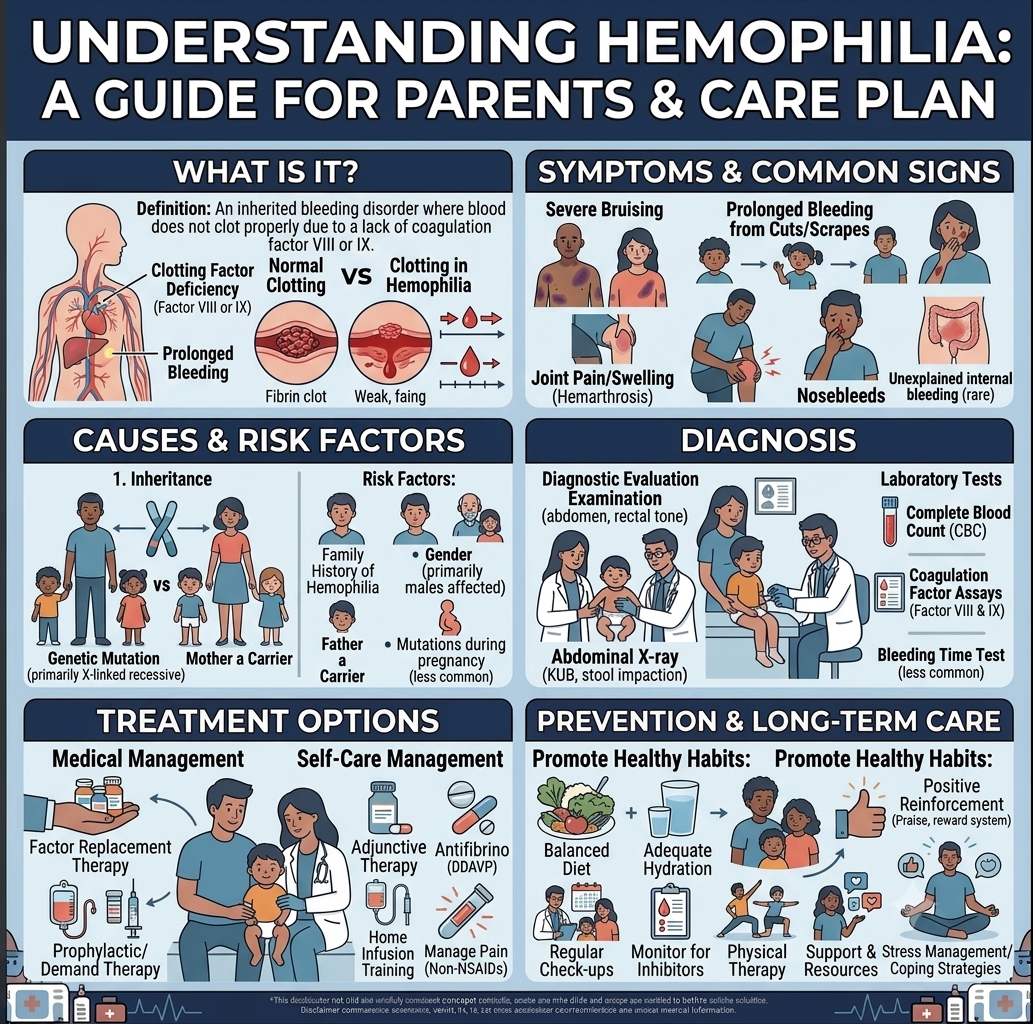
Hemophilia is a rare inherited condition where blood doesn't clot properly. This happens because the body lacks enough specific proteins called clotting factors, which are essential for stopping bleeding. Individuals with hemophilia may bleed for a longer time after injuries, even minor ones. While small cuts are usually manageable, severe forms can lead to dangerous internal bleeding, particularly in joints like knees, ankles, and elbows, or even organs, potentially causing serious damage or being life-threatening. Treatment typically involves replacing the missing clotting factors, though newer non-factor therapies are also available.
Understanding the Condition
Hemophilia: Understanding and Managing a Bleeding Disorder
Understanding the Condition
Common Symptoms
General Bleeding Symptoms: Symptoms vary based on the level of clotting factors in the blood. If levels are slightly reduced, bleeding might only occur after surgery or a significant injury. With severe deficiency, bleeding can happen easily and without an obvious cause.
When you bleed, your body's platelets and special proteins called clotting factors work together to form a clot and stop the flow. Hemophilia occurs when your body lacks enough of a specific clotting factor.Most cases are inherited (congenital) and are classified by the missing factor: Hemophilia A (low factor 8) and Hemophilia B (low factor 9). 'Acquired hemophilia' occurs when your immune system attacks your own clotting factors, sometimes linked to autoimmune conditions or medications.Inherited hemophilia is typically passed from mother to son via a faulty gene on the X chromosome, almost exclusively affecting males. Females are usually carriers without symptoms, though some may experience mild bleeding if their factor levels are moderately reduced.
Consultation Guide
Hemophilia is a rare inherited condition where blood doesn't clot properly. This happens because the body lacks enough specific proteins called clotting factors, which are essential for stopping bleeding. Individuals with hemophilia may bleed for a longer time after injuries, even minor ones. While small cuts are usually manageable, severe forms can lead to dangerous internal bleeding, particularly in joints like knees, ankles, and elbows, or even organs, potentially causing serious damage or being life-threatening. Treatment typically involves replacing the missing clotting factors, though newer non-factor therapies are also available.
General Information on Causes and Types
Acquired Hemophilia Treatment: In addition to clotting factor replacement, treatment focuses on suppressing the immune system to prevent it from attacking the body's own clotting factors. This might involve immunosuppressants. (Duration: Varies depending on the underlying cause and how the immune system responds.)
Diagnostic Procedures
What to Expect
Coagulation Tests (PT and aPTT)
These initial blood tests measure how quickly your blood clots. In hemophilia, the activated partial thromboplastin time (aPTT) is typically prolonged, indicating a problem in the clotting pathway.
What to Expect
A small blood sample is drawn from a vein in your arm. The process is quick, involving a skin clean, needle insertion (a brief pinch), and blood collection. A bandage is applied afterward.
Clotting Factor Assays
These specific blood tests measure the exact levels of individual clotting factors (e.g., factor 8 and factor 9) in your blood. They confirm the type and severity of hemophilia.
What to Expect
This is a standard blood draw from your arm, similar to the coagulation tests.
This test identifies the specific gene mutation causing hemophilia, confirming diagnosis and identifying carriers within a family.
What to Expect
Typically involves a blood sample, following the same procedure as other blood draws. Results can take several weeks.
Inhibitor Monitoring: Be regularly tested for the development of 'inhibitors' – antibodies that your immune system might produce against the infused clotting factors, making treatment less effective.
Genetic Counseling: For individuals planning families, genetic counseling can provide information about the risks of passing hemophilia to children and available options.
Emergency Preparedness
Emergency Plan: Develop a clear emergency plan with your family and healthcare team, including what to do, who to contact, and where to go in case of a severe bleeding episode.
Treatment Options
Signs of Spontaneous Bleeding: These include unexplained or excessive bleeding from cuts, injuries, or after surgery or dental work; numerous large or deep bruises; unusual bleeding following vaccinations; pain, swelling, or a feeling of tightness in joints; visible blood in urine or stool; nosebleeds without a known reason; and unexplained irritability in infants.
Serious Complication: Brain Bleeding: In severe cases, a simple bump on the head can lead to bleeding inside the brain, which is rare but a very serious complication.
Consultation Guide
Which Specialist to Meet
To manage hemophilia, you should consult with a hematologist (a doctor specializing in blood disorders). A genetic counselor can also provide valuable information about the inherited aspects of the condition. If joint issues arise, an orthopedic specialist and a physical therapist may be beneficial.
Preparations Before Your Visit
Book a doctor visit near me
Medication and Therapies
Replacement Therapy: This involves infusions of concentrated clotting factors (factor 8 or 9) directly into a vein. It is used routinely (prophylaxis) to prevent bleeding or on-demand to stop bleeding episodes. (Duration: Often lifelong, given several times a week for prophylaxis, or as needed for bleeding.)
Non-Factor Therapies: Newer injectable medications that do not replace clotting factors but work by rebalancing the blood's clotting system or bypassing the need for specific factors. (Duration: Regular injections, typically weekly or monthly, lifelong.)
Desmopressin (DDAVP): A synthetic hormone used for mild hemophilia A. It stimulates the body to release more existing factor 8 and is given as an injection or nasal spray. Not effective for severe hemophilia A or hemophilia B. (Duration: Used as needed for bleeding episodes or before minor procedures.)
Antifibrinolytic Medications: These medications help prevent blood clots from breaking down too quickly. They are often used alongside replacement therapy, especially for bleeding in the mouth, nose, or during dental work. (Duration: Taken orally or intravenously, as needed.)
Gene Therapy: An advanced treatment that aims to introduce a healthy gene into the body, enabling it to produce the missing clotting factor on its own. It holds promise for a long-term or potentially curative effect. Currently available for some individuals, often through clinical trials. (Duration: A single treatment, with ongoing study on long-term effectiveness.)
Specific Treatment Approaches
Blood Transfusion: If significant blood loss occurs due to a severe bleeding episode, a blood transfusion may be necessary to replace lost blood or specific blood components (like red blood cells). This is a supportive measure for blood loss, not a primary treatment for the clotting deficiency itself. (Duration: A single or multiple sessions, depending on the extent of blood loss.)
Medication Awareness: Avoid medications that thin the blood, such as aspirin or certain non-steroidal anti-inflammatory drugs (NSAIDs), unless specifically approved by your hematologist. Always inform healthcare providers about your hemophilia before any prescription.
Excellent Dental Hygiene: Maintain good oral health to prevent gum disease and reduce the risk of bleeding during dental procedures. Use a soft toothbrush and regular, gentle flossing.
Medical Identification: Always wear or carry medical identification (e.g., a bracelet or card) stating your condition, its type, and emergency contact information.
Vaccinations: Ensure you receive recommended vaccinations, including hepatitis A and B, given the historical risk associated with blood products. Always inform the vaccinator about your hemophilia.
Prompt Bleed Treatment: Treat any joint bleeds immediately to prevent long-term damage, chronic pain, and arthritis.
Physical Therapy: Work with a physical therapist to maintain joint strength, flexibility, and range of motion, which helps protect joints from further bleeding.
Regular Doctor Visits: Schedule regular follow-up appointments with your hematologist to monitor your condition, assess treatment effectiveness, and address any potential complications.
Home Treatment Supplies: If trained, ensure you have an adequate supply of your specific clotting factor medication and supplies for home infusion.
Prevention & Long-Term Wellbeing
Prevention and Management of Bleeding
Safe Physical Activity: Engage in non-contact sports and activities that strengthen muscles and protect joints, like swimming or walking. Avoid high-impact activities that carry a significant risk of injury.
Tags & Topics
Notice an error or need an update?
Help us keep medical information accurate. Report incorrect info or suggest an edit.

