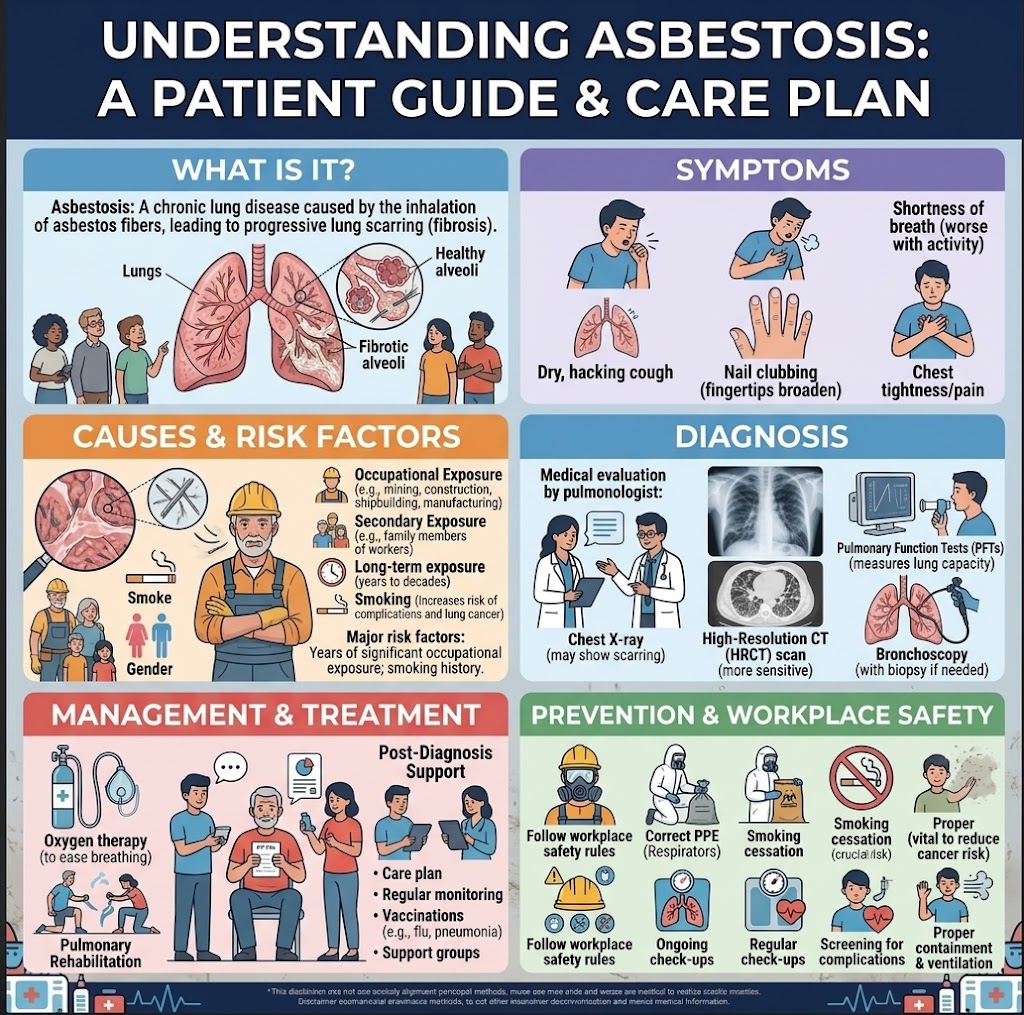
Asbestosis is a chronic lung disease caused by breathing in tiny asbestos fibers over a long period. These fibers irritate and scar the lung tissue, making it stiff and difficult to expand and contract normally. This scarring leads to shortness of breath and other respiratory issues. Symptoms typically develop very slowly, often appearing 10 to 40 years after the initial exposure. Asbestos is a naturally occurring mineral once widely used in construction and manufacturing due to its heat and corrosion resistance. Today, its handling is strictly regulated, making new exposures unlikely if safety guidelines are followed.
Understanding the Condition
Asbestosis: Understanding a Lung Disease from Asbestos Exposure
Understanding the Condition
Asbestosis is a chronic lung disease caused by breathing in tiny asbestos fibers over a long period. These fibers irritate and scar the lung tissue, making it stiff and difficult to expand and contract normally. This scarring leads to shortness of breath and other respiratory issues. Symptoms typically develop very slowly, often appearing 10 to 40 years after the initial exposure. Asbestos is a naturally occurring mineral once widely used in construction and manufacturing due to its heat and corrosion resistance. Today, its handling is strictly regulated, making new exposures unlikely if safety guidelines are followed.
Common Symptoms
Shortness of Breath: This is often the first and most common symptom, initially occurring with physical activity and worsening over time.
Persistent Cough: A dry, nagging cough that doesn't go away.
Chest Tightness or Pain: A feeling of pressure, discomfort, or aching in the chest area.
Unexpected Weight Loss: Losing weight without intentionally trying to.
Clubbing of the Fingers and Toes: The tips of the fingers and toes become wider and rounder than usual, often linked to heart or lung conditions.
Consultation Guide
Which Specialist to Meet
If you have a history of asbestos exposure and are experiencing increasing shortness of breath or other lung symptoms, you should consult a pulmonologist (a doctor specializing in lung diseases) or an occupational medicine specialist (a doctor focused on health issues related to the workplace).
Preparations Before Your Visit
Before your visit, prepare a detailed history of your potential asbestos exposure, including when and where it occurred and for how long. Make a list of all your current symptoms, noting when they started and how severe they are. Also, bring a list of any other medical conditions you have and all medications you are currently taking.
Book a doctor visit near me
Symptom Management and Support
Oxygen Therapy: If your blood oxygen levels are low due to lung damage, supplemental oxygen is provided through a mask or nasal tubes. This helps improve breathing, reduce shortness of breath, and ease the strain on your heart. (Duration: Ongoing, as needed, potentially long-term.)
Pulmonary Rehabilitation: This is a supervised program that includes tailored exercises, education about lung disease, and counseling. It helps improve lung function, reduce breathing difficulties, strengthen breathing muscles, and teaches techniques for more effective breathing, ultimately enhancing your quality of life. (Duration: Typically several weeks to months of guided sessions, with ongoing home exercises recommended.)
Medications: While there is no cure for asbestosis, your doctor may prescribe medications to help manage specific symptoms, such as coughing or inflammation, which can make breathing easier and improve comfort. (Duration: As prescribed by your doctor, potentially long-term.)
Regular Medical Check-ups: If you have a history of asbestos exposure, even without symptoms, regular medical check-ups, including lung function tests and imaging (like X-rays or CT scans), are crucial for early detection of any lung changes.
Avoid Smoking: Smoking significantly worsens lung damage in individuals with asbestosis and drastically increases the risk of developing lung cancer. Quitting smoking is one of the most important steps you can take for your lung health.
Diagnostic Procedures
A chest X-ray is a common imaging test that uses a small amount of radiation to create pictures of your heart, lungs, blood vessels, airways, and the bones of your chest and spine. For asbestosis, it can reveal signs of scarring or other changes in the lung tissue.
What to Expect
You will stand or sit in front of an X-ray machine. A technician will position you and ask you to hold your breath for a few seconds while the images are taken. The procedure is quick, generally painless, and you can usually resume normal activities immediately afterward.
CT Scan (Computed Tomography Scan)
A CT scan uses specialized X-ray equipment and a computer to create very detailed cross-sectional images, often called 'slices,' of your internal organs, bones, and soft tissues. It provides much more detailed views of the lung tissue than a standard X-ray, allowing doctors to better identify and assess the extent of asbestos-related scarring and other complications.
What to Expect
You will lie on a motorized table that slides into a large, donut-shaped machine. The table will move slowly through the scanner while an X-ray beam rotates around your body. You may be asked to hold your breath at certain times. The scan itself is painless, but the machine can be noisy. Sometimes, an injected dye (contrast material) is used to make certain structures clearer. The scan usually takes 15-30 minutes.
Treatment Options
Lung Transplant: In very severe cases where lung damage is life-threatening and other treatments are no longer effective, a diseased lung (or both lungs) may be replaced with a healthy lung from a deceased donor. This is a major operation considered when a person's quality of life is severely impacted. (Duration: The surgery itself takes several hours, followed by a lengthy recovery period in the hospital and at home, and lifelong medication to prevent organ rejection.)
Prevention & Long-Term Wellbeing
Prevention
Avoid Asbestos Exposure: The most effective way to prevent asbestosis is to avoid breathing in asbestos fibers. If you work in an environment where asbestos might be present, strictly follow all safety regulations and use appropriate protective equipment, such as respirators.
Professional Asbestos Management: If asbestos-containing materials are in your home or workplace, ensure they are only handled, removed, or encapsulated by trained and certified asbestos professionals. Never attempt to disturb asbestos-containing materials yourself, as this can release harmful fibers into the air.
Long-Term Monitoring and Lifestyle
Maintain a Healthy Lifestyle: Eating a balanced, nutritious diet, staying physically active (within your capabilities), and getting adequate rest can help support overall health and lung function, improving your body's ability to cope with the disease.
Flu and Pneumonia Vaccinations: Individuals with asbestosis have compromised lung function, making them more vulnerable to severe respiratory infections. Getting vaccinated against the flu and pneumonia can help protect your lungs from these preventable illnesses.
Tags & Topics
Notice an error or need an update?
Help us keep medical information accurate. Report incorrect info or suggest an edit.


