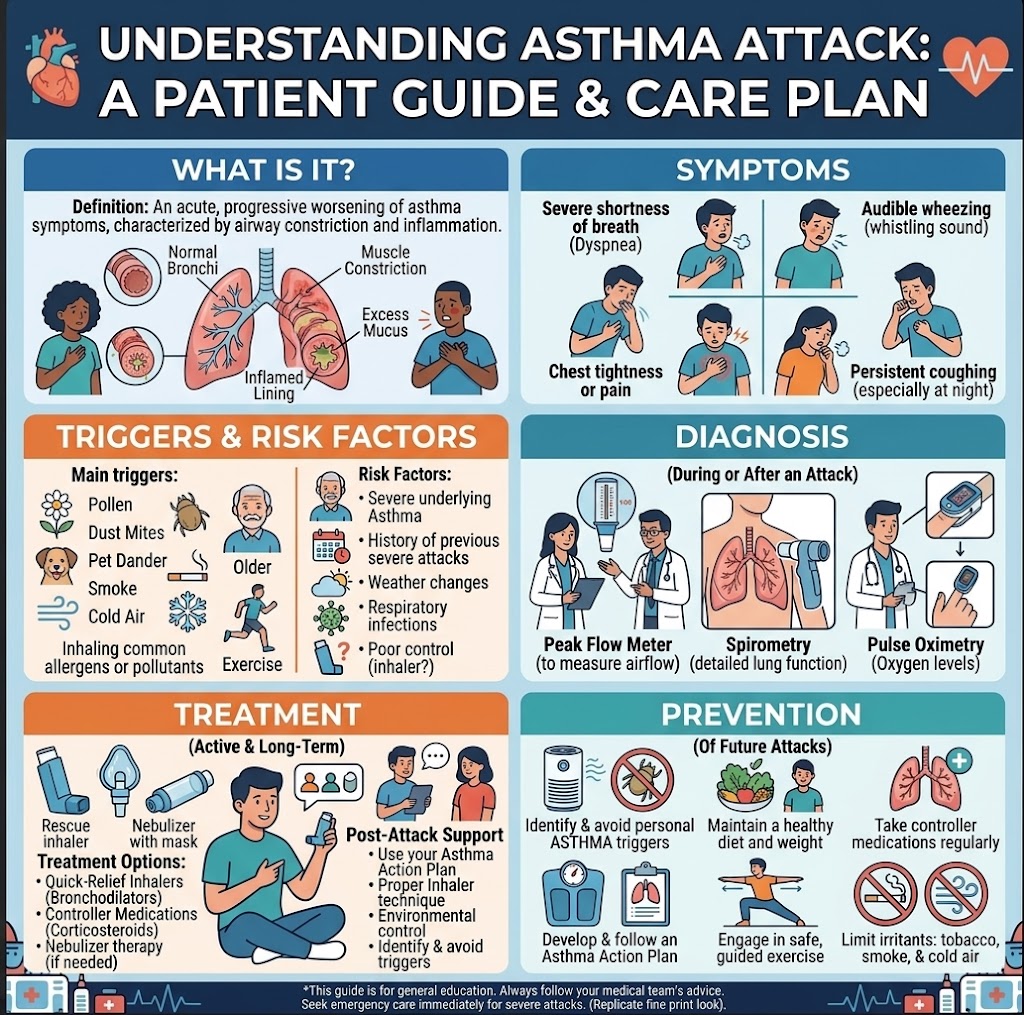
Asthma is a chronic lung condition that makes breathing difficult. An asthma attack, also known as an asthma exacerbation or flare-up, is a sudden and severe worsening of these symptoms. During an attack, the muscles around the lung's airways tighten, the airways become inflamed and swollen, and excess sticky mucus is produced. These combined factors severely narrow the air passages, making it hard to breathe.
Understanding the Condition
Asthma Attack: Understanding, Managing, and Preventing Flare-ups
Understanding the Condition
Asthma is a chronic lung condition that makes breathing difficult. An asthma attack, also known as an asthma exacerbation or flare-up, is a sudden and severe worsening of these symptoms. During an attack, the muscles around the lung's airways tighten, the airways become inflamed and swollen, and excess sticky mucus is produced. These combined factors severely narrow the air passages, making it hard to breathe.
Common Symptoms
Common Symptoms
Severe Symptoms: Gasping for breath, significant difficulty speaking due to breathlessness, visible straining of chest muscles to breathe, severe sweating, and symptoms worsening when lying on the back. A significant drop in your personal best peak flow reading can also indicate a severe attack.
Consultation Guide
Which Specialist to Meet
Before your visit, be prepared to discuss your detailed symptom history (including when symptoms started, how often they occur, and their severity), any identified triggers, your current medications (including how often you use quick-relief inhalers), any existing asthma action plan, your complete medical history (including allergies and other long-term conditions), and a list of any questions you have for the doctor.
Book a doctor visit near me
Quick-Relief Inhaled Medications: These medications work rapidly to relax the muscles around your airways, opening them up and providing immediate relief from asthma symptoms during an attack. They are used as needed for symptoms or sometimes before exercise. (Duration: Provide relief for a few hours.)
Oral Medications: For some individuals with more severe or persistent asthma, oral anti-inflammatory drugs or bronchodilators may be prescribed. These can help manage symptoms when inhalers alone are not sufficient. (Duration: Daily, or short courses for severe flare-ups, as prescribed.)
Rest and Hydration: During an asthma flare-up, ensuring adequate rest and staying well-hydrated can support recovery and ease symptoms. (Duration: As advised)
Follow Your Asthma Action Plan: Adhere to your individualized plan developed with your doctor. This includes taking prescribed long-term control medicines daily, monitoring your lung function with a peak flow meter as directed, and using quick-relief medicine as stated in your plan (e.g., before exercise or for symptoms).
Avoid Triggers: Identify and minimize exposure to your known asthma triggers, such as allergens (pollen, pets, mold, dust mites), tobacco smoke, pollution, strong chemicals, and cold, dry air.
Manage Infections: Practice frequent handwashing to reduce the risk of colds and flu. Stay up-to-date on vaccinations, including annual flu shots and COVID-19 vaccinations, as recommended by your healthcare professional.
Regular Medical Check-ups: Schedule routine visits with your healthcare professional to review your symptoms, assess medication effectiveness, and adjust your treatment plan as needed to maintain optimal asthma control.
Peak Flow Monitoring: Regularly take peak flow readings as directed by your doctor. Tracking these measurements can help detect worsening asthma early, allowing for timely intervention before a severe attack develops.
Diagnostic Procedures
It is important to consult a primary care physician, a pulmonologist (a doctor specializing in lung conditions), or an allergist (a doctor specializing in allergies) to diagnose and manage asthma.
Preparations Before Your Visit
Spirometry is a common test used to assess lung function. It measures how much air you can breathe in, how much you can breathe out, and how quickly you can forcefully exhale. Healthcare professionals use spirometry to diagnose asthma, evaluate its severity, and monitor how well treatments are working.
What to Expect
During the test, you will typically sit down, a clip will be placed on your nose, and you'll breathe into a mouthpiece connected to a device called a spirometer. You will be instructed to take a deep breath in and then blow out as hard and fast as possible for several seconds. This process may be repeated multiple times to ensure accurate readings. You might feel a brief moment of shortness of breath or dizziness after performing the test. Spirometry is generally safe but is not recommended if you have recently had a heart attack or have certain other heart conditions. Your healthcare professional may advise you to temporarily stop using certain inhaled medications before the test.
Treatment Options
Medications
Long-Term Control Inhaled Medications: These medicines, often corticosteroids, reduce inflammation and swelling in the airways over time, helping to prevent asthma attacks. They are taken daily, even when you feel well. (Duration: Daily, long-term use; effects build over weeks.)
Biologic Therapies: These are injectable medications that target specific immune system pathways involved in severe asthma. They are typically used for individuals whose asthma is not well-controlled by other treatments. (Duration: Administered every few weeks or months, long-term.)
Allergy Medications and Immunotherapy: If allergies trigger your asthma, medications like antihistamines or decongestants may be prescribed. For long-term allergy management, immunotherapy (allergy shots) may be an option to reduce your sensitivity to specific allergens. (Duration: Allergy medications are daily or as needed; immunotherapy involves regular injections over several years.)
Home Remedies and Supportive Care
Trigger Avoidance: Identifying and minimizing exposure to personal asthma triggers (e.g., pollen, pet dander, smoke, cold air) is crucial for preventing attacks. (Duration: As advised)
Address Co-existing Conditions: Seek and maintain treatment for conditions that can worsen asthma, such as allergies, gastroesophageal reflux disease (GERD), depression, and anxiety.
Track Quick-Relief Medicine Use: Keep a record of how often you use your quick-relief inhaler. Frequent use (e.g., three or more days a week, or using an entire inhaler canister within a month) often indicates that your asthma is not well-controlled and requires a review of your overall treatment plan by your healthcare professional.
Prevention & Long-Term Wellbeing
Prevention
Healthy Lifestyle Choices: If you smoke, quitting is essential. Stay indoors during air quality warnings. Wear a mask while cleaning or cover your mouth with a scarf on cold days to protect your airways.
Long-Term Monitoring and Management
Tags & Topics
Notice an error or need an update?
Help us keep medical information accurate. Report incorrect info or suggest an edit.


