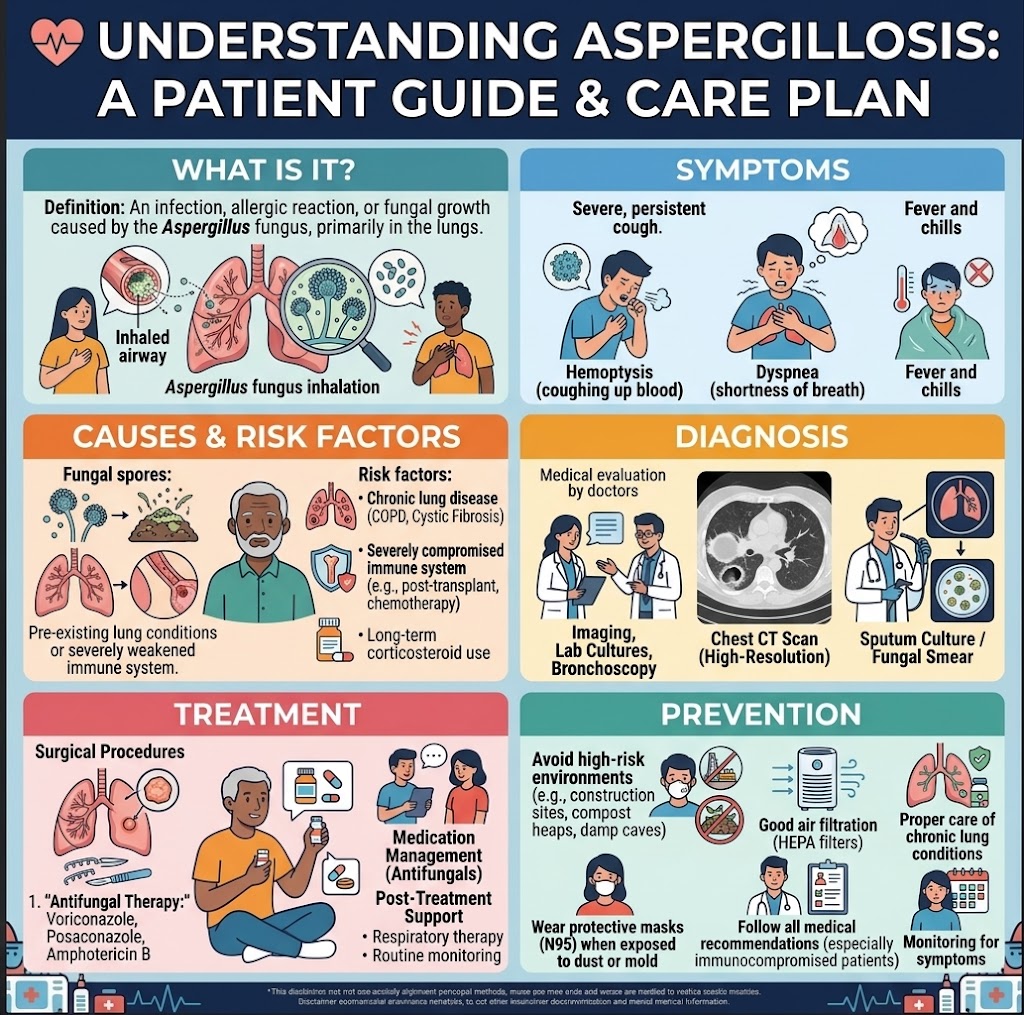
Aspergillosis is a group of conditions caused by a common type of mold called Aspergillus. This mold, a form of fungus, is found almost everywhere, both indoors and outdoors. While most people breathe in its spores without any ill effects, certain individuals can develop various illnesses. These conditions typically affect the breathing system, ranging from allergic reactions and lung infections to, in severe cases, a widespread and life-threatening infection. Those most at risk include people with weakened immune systems, existing lung conditions, or asthma.
Understanding the Condition
Aspergillosis: Understanding a Common Fungal Infection
Understanding the Condition
Common Symptoms
Allergic Bronchopulmonary Aspergillosis (ABPA): This is an allergic reaction to the Aspergillus mold, often seen in people with asthma or cystic fibrosis. Symptoms include worsening asthma, shortness of breath, a persistent cough, fever, and sometimes bringing up blood or brownish mucus plugs.
Aspergilloma (Fungus Ball): This occurs when fungus fibers grow into a tangled mass within existing air spaces or cavities in the lungs. These cavities can result from other lung conditions like emphysema or tuberculosis. An aspergilloma may initially cause no symptoms or just a mild cough. However, over time, it can worsen the underlying lung condition, leading to symptoms such as coughing up blood, shortness of breath, unintentional weight loss, and fatigue.
Invasive Aspergillosis: This is the most severe form of aspergillosis and typically affects individuals with significantly weakened immune systems (due to treatments like chemotherapy, organ transplants, or certain immune system diseases). The infection rapidly spreads from the lungs to other vital organs like the brain, heart, kidneys, or skin. Symptoms depend on which organs are affected but commonly include fever, chest pain, coughing up blood, and severe shortness of breath. Without prompt treatment, this form can be fatal.
Consultation Guide
Which Specialist to Meet
To address Aspergillosis, you may need to see a Pulmonologist (a lung specialist) for breathing issues, an Infectious Disease specialist for managing the fungal infection, or an Allergist/Immunologist if your symptoms involve allergic reactions or a weakened immune system. A team approach is often beneficial.
Preparations Before Your Visit
Before your appointment, gather information about your symptoms, including when they started and how they've changed. Prepare a list of all your medications, any underlying health conditions, and relevant medical history. Write down any questions you have for the doctor. Bringing a family member or friend can also be helpful for support and to remember important details.
Book a doctor visit near me
Corticosteroids (Steroids): These medications help reduce inflammation and control allergic reactions, particularly in cases of allergic bronchopulmonary aspergillosis (ABPA). They are usually taken orally. (Duration: The duration of steroid treatment can vary, often involving a tapering dose over weeks or months as symptoms improve.)
Surgery to Remove Fungus Balls: In rare cases, surgery may be necessary to remove an aspergilloma (fungus ball) that is causing severe symptoms, such as significant bleeding, or is not responding to antifungal medicines. (Duration: A single surgical procedure is performed, with recovery time varying based on the extent of the surgery and individual health.)
Observation/Supportive Care
Watchful Waiting: For some individuals with an aspergilloma that isn't causing any symptoms, doctors may recommend close monitoring with regular check-ups and imaging scans instead of immediate treatment. (Duration: Ongoing, with regular follow-up appointments and imaging as recommended by your doctor.)
Symptom Vigilance: Be aware of any new or worsening symptoms and report them to your doctor promptly. Early detection of changes can prevent complications.
Consultation Guide
Aspergillosis is a group of conditions caused by a common type of mold called Aspergillus. This mold, a form of fungus, is found almost everywhere, both indoors and outdoors. While most people breathe in its spores without any ill effects, certain individuals can develop various illnesses. These conditions typically affect the breathing system, ranging from allergic reactions and lung infections to, in severe cases, a widespread and life-threatening infection. Those most at risk include people with weakened immune systems, existing lung conditions, or asthma.
Diagnostic Procedures
CT Scan (Computerized Tomography Scan)
A CT scan uses X-rays and computer technology to create detailed, cross-sectional images (like slices) of bones, blood vessels, and soft tissues inside the body. It provides much more detail than standard X-rays, helping healthcare professionals diagnose disease, injury, and plan treatments.
What to Expect
You will lie on a motorized table that slides into a large, donut-shaped machine called a CT scanner. The scanner will rotate around you, taking multiple images. You may hear buzzing or clicking noises. It's crucial to remain still during the scan. For some scans, you might receive a contrast dye, either by injection into a vein or by drinking a liquid, which helps certain areas show up more clearly.
An X-ray is a quick, painless imaging test that uses a small amount of radiation to capture pictures of the inside of your body, especially bones and organs. Dense materials like bone appear white, air in the lungs appears black, and soft tissues like fat and muscle show up as shades of gray. It helps detect problems in the heart and lungs, among other body parts.
What to Expect
You will be asked to stand, sit, or lie down in a specific position, possibly on a table or in front of an X-ray plate. A technician will position the X-ray machine over the area to be examined. You might be asked to hold your breath briefly. The procedure is quick and generally takes only a few minutes. You won't feel anything as the X-ray beams pass through your body.
Treatment Options
Medications
Antifungal Medicines: These drugs are used to fight the Aspergillus infection directly. They can be taken orally (by mouth) or administered intravenously (through a vein) for more severe infections. (Duration: Treatment duration varies widely, from several weeks to many months, depending on the type and severity of aspergillosis, and how well you respond.)
Manage Underlying Conditions: If you have asthma or cystic fibrosis, strictly adhere to your prescribed treatment plan to keep your condition well-controlled, as this can reduce the risk of allergic reactions to Aspergillus mold.
Maintain Good Hygiene: Practice good hand hygiene, especially after outdoor activities or contact with soil, to reduce the spread of fungal spores.
Regular Medical Follow-ups: Maintain regular appointments with your healthcare specialists to monitor your condition, assess treatment effectiveness, and adjust medications as needed. This is crucial for managing chronic forms of aspergillosis.
Adherence to Treatment Plan: Consistently take all prescribed medications as directed by your doctor. Do not stop treatment without consulting your healthcare provider, even if you feel better.
Periodic Imaging: Your doctor may recommend periodic X-rays or CT scans to monitor the status of any lung lesions or fungus balls and track disease progression or response to treatment.
Prevention & Long-Term Wellbeing
Prevention
Minimize Mold Exposure: If you have a weakened immune system, avoid environments with high mold concentrations, such as construction sites, gardening, composting, or areas with decaying vegetation. Consider wearing an N95 respirator mask in dusty environments or places where mold exposure is unavoidable.
Tags & Topics
Notice an error or need an update?
Help us keep medical information accurate. Report incorrect info or suggest an edit.


