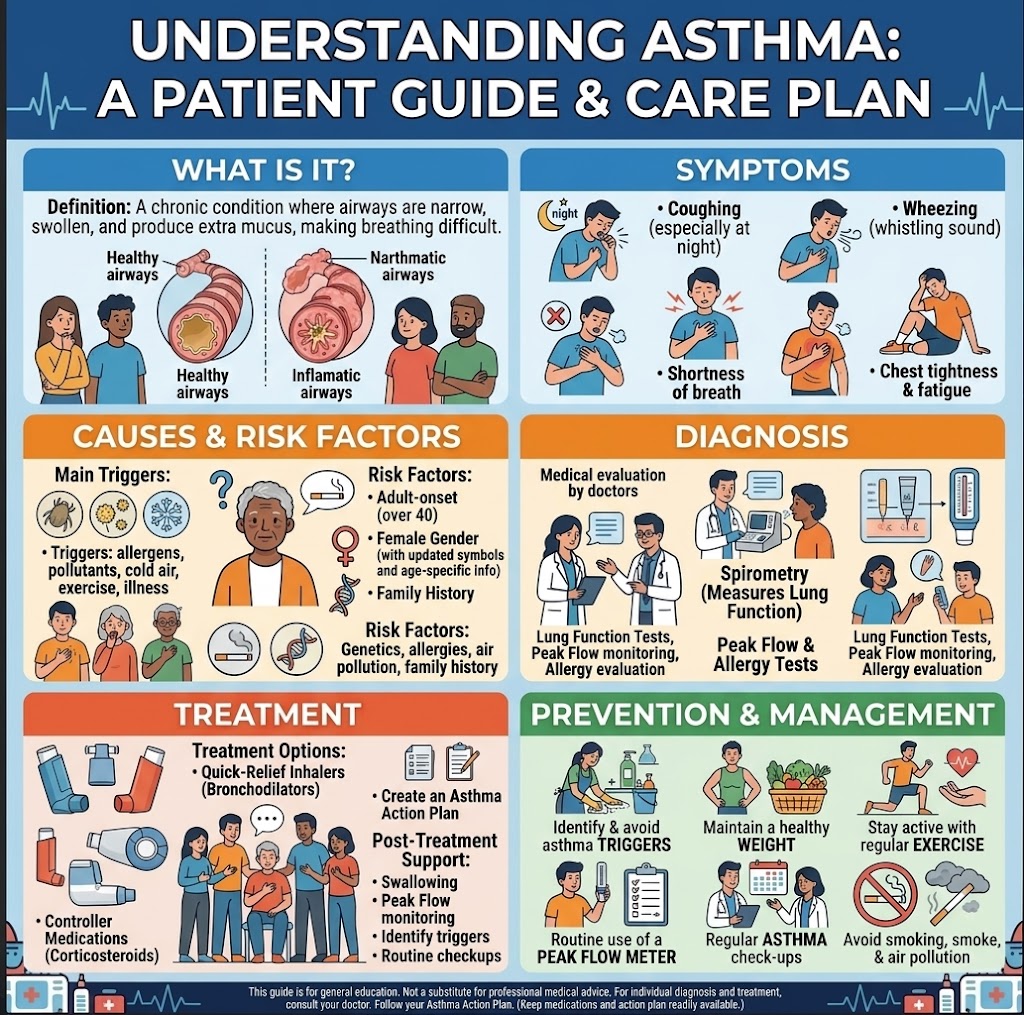
Asthma is a common long-term condition affecting the airways, the tubes that carry air to and from your lungs. In asthma, these airways become narrow, swell, and may produce extra mucus, making breathing difficult. This can lead to coughing, a whistling sound when breathing (wheezing), and shortness of breath. For some, asthma is a mild inconvenience; for others, it significantly impacts daily life and can cause severe, life-threatening attacks. While there's no cure, asthma symptoms can be effectively controlled with proper management and regular adjustments to treatment in collaboration with a healthcare provider.
Understanding the Condition
Understanding Asthma: A Guide for Non-Medical Persons
Understanding the Condition
Asthma is a common long-term condition affecting the airways, the tubes that carry air to and from your lungs. In asthma, these airways become narrow, swell, and may produce extra mucus, making breathing difficult. This can lead to coughing, a whistling sound when breathing (wheezing), and shortness of breath. For some, asthma is a mild inconvenience; for others, it significantly impacts daily life and can cause severe, life-threatening attacks. While there's no cure, asthma symptoms can be effectively controlled with proper management and regular adjustments to treatment in collaboration with a healthcare provider.
Common Symptoms
Shortness of Breath: Feeling like you can't get enough air.
Chest Tightness or Pain: A feeling of pressure or discomfort in the chest.
Wheezing: A whistling sound, especially when breathing out. This is a common sign in children.
Worsening Symptoms (Signs to Watch For): Asthma symptoms becoming more frequent or bothersome, increased difficulty breathing (even before you notice it), or needing to use a quick-relief inhaler more often.
Consultation Guide
Which Specialist to Meet
Before your visit, list all your symptoms, including how often they occur and what seems to trigger them. Bring a list of all current medications, including over-the-counter drugs and supplements. Prepare any questions you have for your doctor.
Book a doctor visit near me
Your doctor will ask about your symptoms, family history of asthma or allergies, and any exposures to irritants or allergens. They will listen to your breathing to check for wheezing or other abnormal sounds.
You will discuss your health background and symptoms with your doctor. They will use a stethoscope to listen to your lungs.
Identifies specific substances (allergens) that may trigger your asthma symptoms.
Imaging tests that provide detailed pictures of your lungs and chest to rule out other conditions that might be causing your symptoms.
This test is performed in a medical setting under strict supervision. You will be given small, increasing doses of aspirin, and the medical team will carefully monitor your breathing and sinus symptoms for any changes.
Long-Term Control Medications: These are taken daily, even when you feel well, to reduce airway inflammation and prevent symptoms and attacks. (Duration: Daily, ongoing, for several months to achieve full benefit.)
Quick-Relief (Rescue) Medications: Used to quickly open airways and relieve symptoms during an asthma attack. (Duration: As needed, for immediate relief.)
Allergy Shots (Immunotherapy): Injections containing tiny amounts of allergens to gradually reduce your immune system's reaction to triggers, thereby lessening asthma symptoms. (Duration: Typically a series lasting 3 to 5 years.)
Breathing Exercises, Speech Therapy, and Biofeedback: These techniques can be used, particularly if vocal cord dysfunction (which can mimic asthma) is present, to help control breathing and vocal cord movements. (Duration: Varies based on individual needs and therapist recommendations.)
Weight Management: Maintaining a healthy weight can improve symptoms of acid reflux, which is often linked to asthma. (Duration: Ongoing.)
Over-the-Counter Antacids: May help manage symptoms of acid reflux. (Duration: As needed.)
Follow an Asthma Action Plan: Work with your healthcare team to create a detailed, personalized plan for taking medications, monitoring symptoms, and managing asthma attacks. Adhere to this plan diligently.
Get Vaccinated: Stay current with flu and pneumonia vaccinations to prevent respiratory infections that can trigger asthma flare-ups.
Monitor Your Breathing: Learn to recognize early warning signs of an impending attack, such as slight coughing or wheezing. Regularly use a home peak flow meter to track your lung function, as changes can occur before you notice symptoms.
Treat Attacks Early: Act quickly when warning signs appear or peak flow measurements drop. Take your medication as instructed and stop any activity that may have triggered the attack. Seek medical help if symptoms don't improve.
Avoid Ozone Air Purifiers: Ozone generators do not effectively remove asthma triggers and can actually irritate your lungs, worsening asthma symptoms. Consider using high-efficiency particulate air (HEPA) filters instead, and clean/replace them regularly.
Consultation Guide
Trouble Sleeping: Difficulty sleeping caused by shortness of breath, coughing, or wheezing.
Coughing or Wheezing Attacks: Episodes that become worse with respiratory infections like a cold or the flu.
Identify and Avoid Triggers: Learn what causes or worsens your asthma (e.g., pollen, dust mites, mold, pet dander, smoke, cold air, air pollution, strong emotions, certain foods/medications) and take steps to avoid them.
Long-Term Monitoring and Self-Management
Diagnostic Procedures
You should consult with a primary care physician first. They may refer you to a pulmonologist (a doctor specializing in lung conditions) or an allergist (a doctor specializing in allergies) for further diagnosis and management.
Preparations Before Your Visit
Medical History and Physical Exam
What to Expect
This is the main test to diagnose asthma in individuals aged 5 and older. It measures how much air you can breathe in and out, and how quickly you can exhale.
What to Expect
You will sit and wear a nose clip. You'll breathe into a mouthpiece connected to a machine. You'll be asked to take a deep breath, then blow out as hard and fast as possible. This may be repeated several times. You might feel a brief moment of lightheadedness or shortness of breath.
A portable device used to measure the maximum speed of air you can exhale. It helps monitor your lung function at home.
What to Expect
You will hold the meter by the handgrip and slide the indicator to the bottom. After inhaling deeply, you'll seal your lips around the mouthpiece and blow out as forcefully and quickly as you can. This is typically repeated three times, and you record the highest reading. Your doctor will help set your personalized 'zones'.
What to Expect
Small amounts of common allergens are pricked or scratched onto your skin, usually on the back or forearm. Your doctor will then observe for reactions like redness, swelling, or itchiness. Blood tests can also be used.
What to Expect
For an X-ray, you will stand or lie down, and a technician will position your body to capture images. You need to remain still. A CT scan involves lying on a table that slides into a large, doughnut-shaped machine that takes multiple X-ray images. You may receive a contrast dye.
Aspirin Challenge (Desensitization)
A procedure to confirm Aspirin-Exacerbated Respiratory Disease (AERD) if suspected. This is not an allergy test but checks for a specific reaction.
What to Expect
Treatment Options
Medications
Take Medications as Prescribed: Do not alter your medication dosage or stop treatment without consulting your doctor, even if your asthma seems to be improving. Regular doctor visits are crucial to ensure correct usage and dosage.
Pay Attention to Quick-Relief Inhaler Use: If you find yourself relying frequently on your quick-relief inhaler, it indicates your asthma is not well-controlled. Consult your doctor to adjust your treatment plan.
Prevention & Long-Term Wellbeing
Lifestyle and Home Remedies
Dietary Adjustments: Avoiding foods and beverages that trigger acid reflux (such as fatty foods, alcohol, caffeine) can help. Some evidence suggests reducing salt intake or consuming omega-3 fatty acids might help, but more research is needed. (Duration: Ongoing.)
Prevention
Tags & Topics
Notice an error or need an update?
Help us keep medical information accurate. Report incorrect info or suggest an edit.


