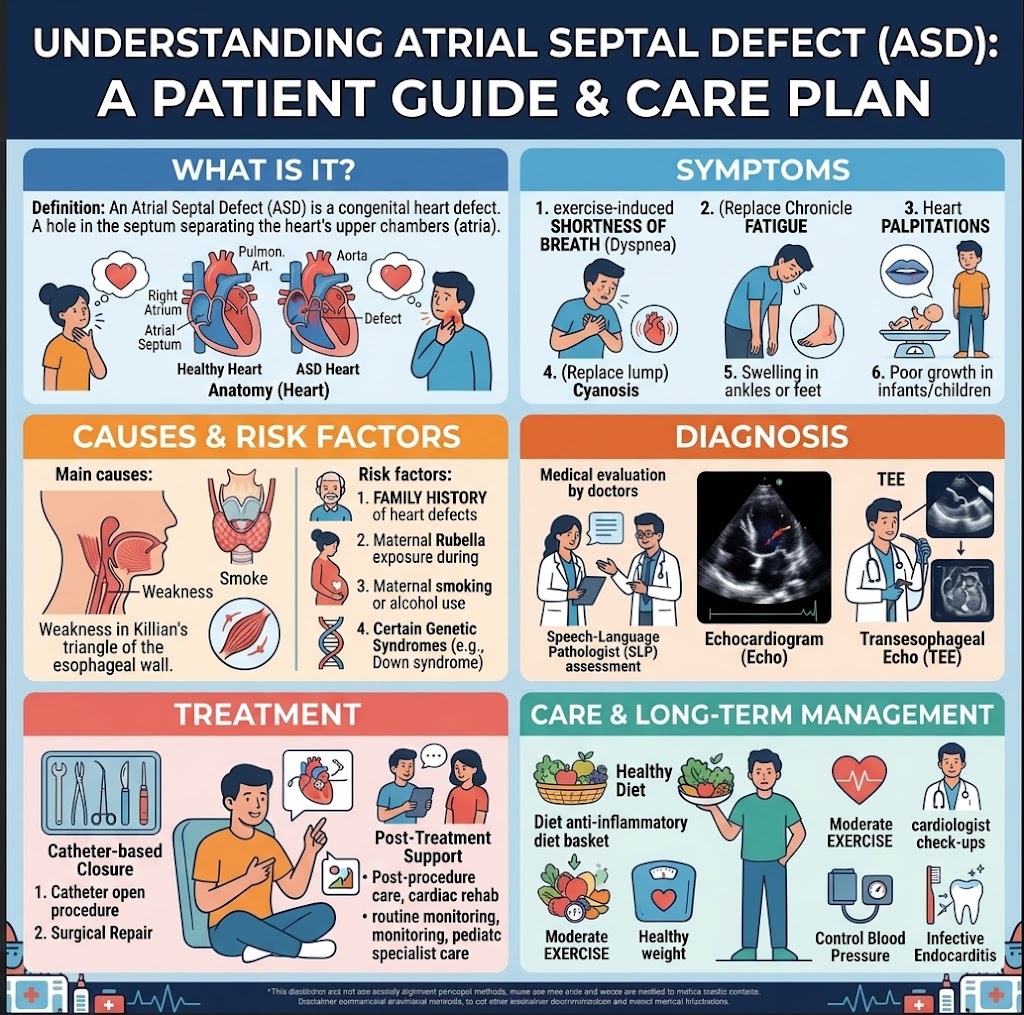
An atrial septal defect (ASD) is a congenital heart condition, meaning it's present at birth. It's a hole in the wall separating the heart's two upper chambers (atria), allowing extra blood to flow to the lungs. Small ASDs may close naturally or cause no issues. Large, untreated ASDs can strain the heart and lungs over time, leading to serious complications. Common types include secundum (most common, in middle wall), primum (lower wall, often with other defects), sinus venosus (upper wall, rare, often with other defects), and coronary sinus (rare, near heart's vein system).
Understanding the Condition
Atrial Septal Defect (ASD): Understanding a Hole in the Heart
Understanding the Condition
Common Symptoms
Shortness of Breath: Feeling short of breath, particularly during physical activity.
Tiredness/Fatigue: Unusual tiredness or fatigue, especially with activity.
Swelling: Swelling in the legs, feet, or belly.
Irregular Heartbeats: Irregular heart rhythms, also known as arrhythmias.
Palpitations: Skipped heartbeats or sensations of a rapid, pounding, or fluttering heart.
Consultation Guide
Which Specialist to Meet
Consult a cardiologist for adults or a pediatric cardiologist for children. A genetic counselor can also provide insights if there's a family history of heart defects.
Preparations Before Your Visit
List all current symptoms, including when they started. Prepare a complete medical history, including family history of heart conditions, and a list of all medications, vitamins, and supplements you are taking.
Book a doctor visit near me
Symptom Management: Medications can help manage symptoms and prevent complications. These may include diuretics for fluid reduction, drugs to improve heart function or blood pressure, or blood thinners to prevent clots. (Duration: Long-term, as prescribed, based on individual symptoms and condition.)
Consultation Guide
An atrial septal defect (ASD) is a congenital heart condition, meaning it's present at birth. It's a hole in the wall separating the heart's two upper chambers (atria), allowing extra blood to flow to the lungs. Small ASDs may close naturally or cause no issues. Large, untreated ASDs can strain the heart and lungs over time, leading to serious complications. Common types include secundum (most common, in middle wall), primum (lower wall, often with other defects), sinus venosus (upper wall, rare, often with other defects), and coronary sinus (rare, near heart's vein system).
Diagnostic Procedures
Uses sound waves to create moving images of your heart, showing its structure, function, and blood flow. Essential for visualizing an ASD.
What to Expect
Gel is applied to your chest, and a transducer is moved across the skin to capture images. It's generally painless and takes 20-60 minutes.
Electrocardiogram (ECG or EKG)
Records your heart's electrical signals to assess rhythm and rate. Can indicate strain on the heart's right side due to an ASD.
What to Expect
Sticky electrodes are placed on your chest and limbs, connected to a machine. This quick, painless test takes only a few minutes.
Uses radiation to create images of your heart, lungs, and blood vessels. Helps assess heart size and lung conditions related to increased blood flow from an ASD.
What to Expect
You stand or sit briefly while an image is taken. It's quick, painless, and involves minimal radiation.
Cardiac Catheterization
A thin tube (catheter) is inserted into a blood vessel (usually groin/arm) and guided to the heart to measure pressures, take samples, or get detailed X-ray images. Can also be used for ASD repair.
What to Expect
You'll receive local anesthetic and often a sedative. A small incision is made for catheter insertion. You might feel pressure but generally no pain. The procedure takes 30 minutes to several hours, followed by a few hours of lying still.
Treatment Options
Observation and Monitoring
Watchful Waiting: For small ASDs, particularly in children, doctors may simply monitor the defect, as many close on their own. (Duration: Ongoing observation with regular check-ups until closure or intervention is decided.)
Medications
Catheter-Based Repair (Device Closure): A minimally invasive procedure primarily for secundum ASDs. A catheter guides a special device, like a plug or patch, to close the hole without open surgery. (Duration: Typically a one-time procedure. Hospital stay is usually 1-2 days, with recovery in a few weeks.)
Surgical Procedures
Open-Heart or Minimally Invasive Repair: For larger or complex ASDs not suitable for catheter repair, surgery closes the hole with stitches or a patch. Open-heart involves a chest incision and temporary heart stop. Minimally invasive surgery uses smaller incisions between the ribs, offering less pain and quicker recovery. (Duration: Open-heart typically requires several days to a week in hospital, with full recovery taking 4-8 weeks. Minimally invasive surgery often has a shorter hospital stay (3-5 days) and quicker recovery (2-6 weeks).)
Medication Review: Discuss all medications, including over-the-counter drugs and supplements, with your doctor before conception, as some may need adjustment.
Genetic Counseling: If you have a family history of congenital heart defects, consult a genetic counselor to understand risks for future children.
Long-Term Wellbeing and Monitoring
Regular Cardiac Follow-Up: Lifelong follow-up with a cardiologist is essential, even after repair, to monitor heart health and address any potential complications.
Prevention & Long-Term Wellbeing
Prevention (during pregnancy)
Rubella Immunization: Ensure you are vaccinated against German measles (rubella) before pregnancy, as infection during early pregnancy increases the risk of congenital heart defects.
Avoid Harmful Substances: Abstain from alcohol, tobacco, and illicit drugs throughout pregnancy to minimize the risk of birth defects.
Chronic Condition Management: Work closely with your doctor to maintain strict control of conditions like diabetes or lupus before and during pregnancy.
Healthy Lifestyle: Adopt a heart-healthy diet, maintain appropriate weight, and engage in regular, physician-approved exercise to support cardiovascular health.
Pregnancy Planning (for individuals with ASD): If you have an ASD (repaired or not) and are considering pregnancy, consult your cardiologist and obstetrician to discuss risks and ensure appropriate care.
Tags & Topics
Notice an error or need an update?
Help us keep medical information accurate. Report incorrect info or suggest an edit.

